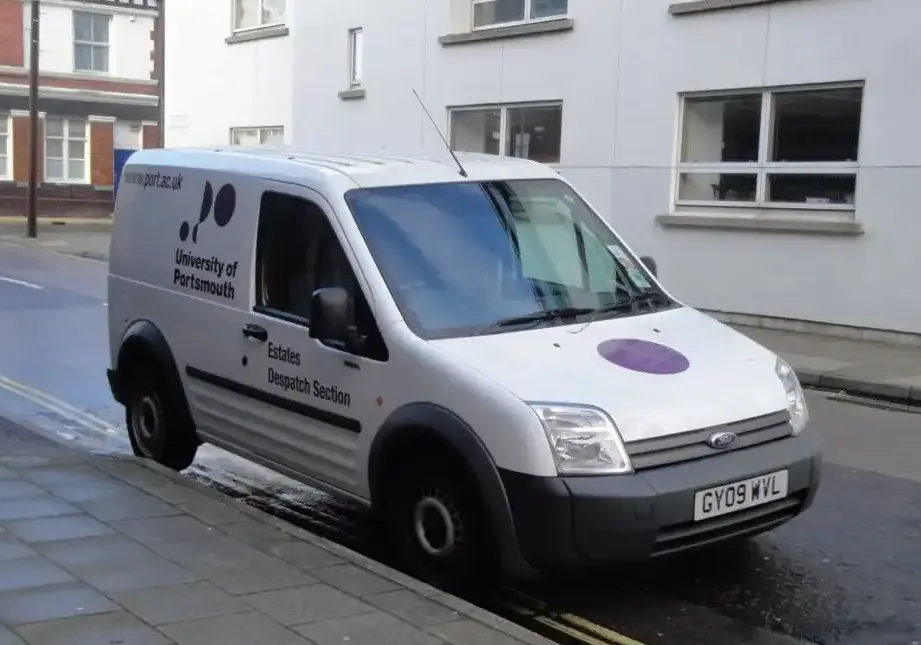
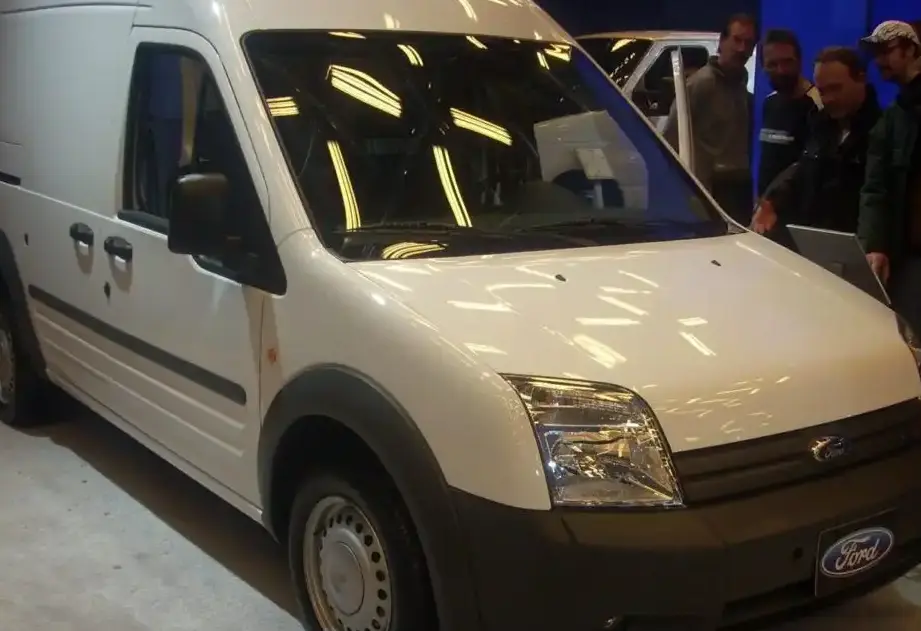
The Ford Transit Connect II Wagon L1 2.5 (169 Hp) SelectShift represents a significant iteration in Ford’s compact commercial and passenger vehicle offerings. Produced from 2013 to 2018, this variant occupied a middle ground within the second-generation Transit Connect lineup, appealing to buyers seeking a balance between utility, fuel efficiency, and a more refined driving experience than the base models. It was primarily marketed in North America and Europe, serving as a versatile option for small businesses, families, and individuals needing a practical vehicle with car-like handling. The L1 designation refers to the short wheelbase version of the wagon.
| Brand | Ford |
| Model | Transit Connect |
| Generation | Transit Connect II Wagon L1 |
| Type (Engine) | 2.5 (169 Hp) SelectShift |
| Start of production | 2013 |
| End of production | 2018 |
| Powertrain Architecture | Internal Combustion engine |
| Body type | Minivan |
| Seats | 5 |
| Doors | 5 |
| Fuel consumption (urban) | 11.2-12.4 l/100 km (21-19 US mpg) |
| Fuel consumption (extra urban) | 8.1-8.7 l/100 km (29-27 US mpg) |
| Fuel consumption (combined) | 9.8-10.7 l/100 km (24-22 US mpg) |
| Fuel Type | Petrol (Gasoline) |
| Power | 169 Hp @ 6000 rpm |
| Torque | 232 Nm @ 4500 rpm (171.11 lb.-ft. @ 4500 rpm) |
| Engine layout | Front, Transverse |
| Engine Model/Code | Duratec 25 |
| Engine displacement | 2488 cm3 (151.83 cu. in.) |
| Number of cylinders | 4 |
| Engine configuration | Inline |
| Cylinder Bore | 89 mm (3.5 in.) |
| Piston Stroke | 100 mm (3.94 in.) |
| Compression ratio | 9.7:1 |
| Number of valves per cylinder | 4 |
| Fuel injection system | Multi-port manifold injection |
| Engine aspiration | Naturally aspirated engine |
| Valvetrain | DOHC, i-VCT |
| Engine oil capacity | 5.4 l (5.71 US qt | 4.75 UK qt) |
| Coolant capacity | 8 l (8.45 US qt | 7.04 UK qt) |
| Trunk (boot) space – minimum | 1029 l (36.34 cu. ft.) |
| Trunk (boot) space – maximum | 2003 l (70.74 cu. ft.) |
| Fuel tank capacity | 60 l (15.85 US gal | 13.2 UK gal) |
| Permitted trailer load with brakes (12%) | 907 kg (1999.59 lbs.) |
| Length | 4418 mm (173.94 in.) |
| Width | 1834 mm (72.2 in.) |
| Width with mirrors folded | 1966 mm (77.4 in.) |
| Width including mirrors | 2137 mm (84.13 in.) |
| Height | 1844 mm (72.6 in.) |
| Wheelbase | 2662 mm (104.8 in.) |
| Front track | 1560 mm (61.42 in.) |
| Rear track | 1567 mm (61.69 in.) |
| Front overhang | 878 mm (34.57 in.) |
| Rear overhang | 878 mm (34.57 in.) |
| Minimum turning circle | 11.7 m (38.39 ft.) |
| Drivetrain | Front wheel drive |
| Number of gears | 6 |
| Gearbox type | Automatic transmission SelectShift |
| Front suspension | Independent, McPherson with coil spring and anti-roll bar |
| Rear suspension | Coil spring, Torsion |
| Front brakes | Ventilated discs |
| Rear brakes | Disc |
| Steering type | Steering rack and pinion |
| Power steering | Electric |
| Tires size | 215/55 R16 |
| Wheel rims size | 6.5J x 16 |
Powertrain & Engine Architecture
The heart of the Transit Connect L1 2.5 SelectShift is the Duratec 25 engine, a 2.5-liter inline-four cylinder gasoline engine. This engine, part of Ford’s Duratec family, is known for its relatively simple design and durability. It utilizes multi-port fuel injection and a double overhead camshaft (DOHC) valvetrain with intake variable camshaft timing (i-VCT) to optimize performance and fuel efficiency. The engine produces 169 horsepower at 6000 rpm and 171 lb-ft of torque at 4500 rpm. The “SelectShift” transmission is a six-speed automatic, offering smoother shifts and improved fuel economy compared to earlier four-speed automatics. This transmission was designed to provide a balance between responsiveness and efficiency, catering to the needs of both urban and highway driving.
Driving Characteristics
The 2.5-liter engine paired with the six-speed automatic transmission delivers adequate, though not exhilarating, performance. Acceleration is sufficient for everyday driving, but the Transit Connect isn’t designed for sporty driving. The automatic transmission is tuned for fuel economy, meaning it upshifts quickly to maintain lower engine speeds. This can sometimes result in the engine feeling strained when climbing hills or accelerating with a full load. Compared to the manual transmission versions, the automatic offers less driver engagement but greater convenience. The gear ratios are optimized for cruising, making it a comfortable vehicle for longer journeys. The front-wheel-drive configuration provides predictable handling, although it lacks the all-weather capability of an all-wheel-drive system.
Equipment & Trim Levels
The Transit Connect L1 2.5 SelectShift typically came standard with features such as air conditioning, power windows and locks, a basic audio system with USB connectivity, and stability control. Higher trim levels added features like a rearview camera, upgraded audio systems with touchscreen displays, Bluetooth connectivity, and alloy wheels. Interior upholstery was typically cloth, with optional leather available on some trims. The dashboard layout was functional and straightforward, prioritizing practicality over luxury. Optional extras included a panoramic sunroof, heated front seats, and various cargo management systems.
Chassis & Braking
The Transit Connect utilizes a McPherson strut front suspension and a torsion beam rear suspension. This setup provides a comfortable ride quality, particularly on smoother roads. The front suspension incorporates a stabilizer bar to reduce body roll during cornering. Braking duties are handled by ventilated discs at the front and solid discs at the rear. Anti-lock braking system (ABS) is standard, enhancing safety and control during emergency braking situations. The steering is rack-and-pinion with electric power steering, providing light and precise steering feel.
Market Reception & Comparison
The Transit Connect L1 2.5 SelectShift received generally positive reviews for its practicality, fuel efficiency, and car-like handling. Critics praised its spacious interior and versatile cargo area. However, some reviewers noted that the engine could feel underpowered when fully loaded or climbing steep hills. Compared to the base 1.6-liter engine option, the 2.5-liter provided a noticeable performance boost. In terms of fuel economy, the 2.5-liter automatic typically achieved around 22-24 mpg in combined driving, which was competitive for its class. Reliability was generally good, with few major issues reported.
Legacy
The Ford Transit Connect II, including the 2.5 SelectShift variant, established itself as a popular choice in the compact commercial and passenger van segment. The Duratec 25 engine, while not known for being particularly groundbreaking, proved to be a reliable and durable powerplant. On the used car market, these Transit Connects are often sought after for their affordability, practicality, and relatively low maintenance costs. Common issues are typically related to wear and tear items such as brakes, suspension components, and the occasional sensor failure. Overall, the Transit Connect L1 2.5 SelectShift remains a viable option for buyers seeking a versatile and economical vehicle.