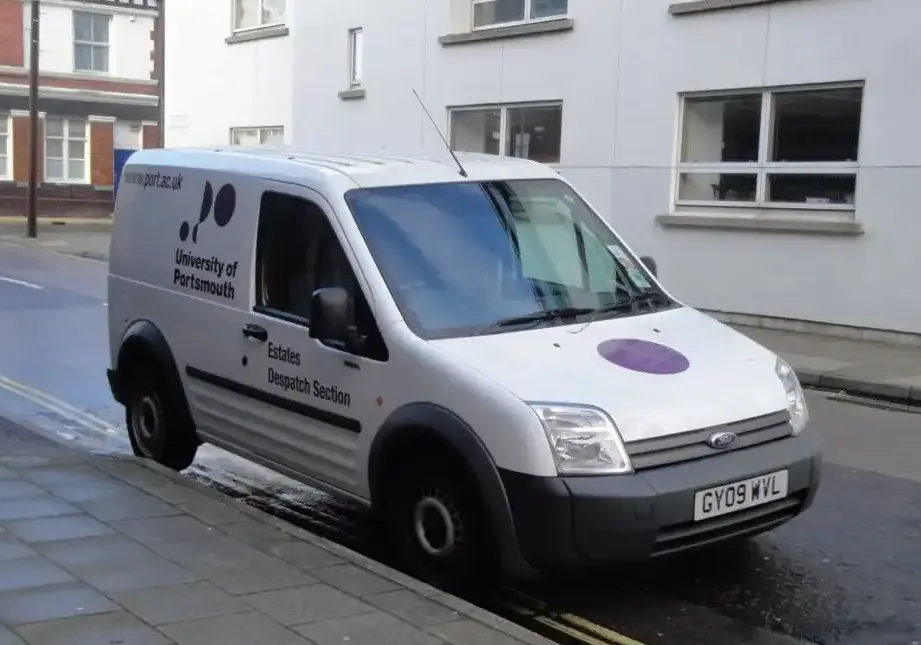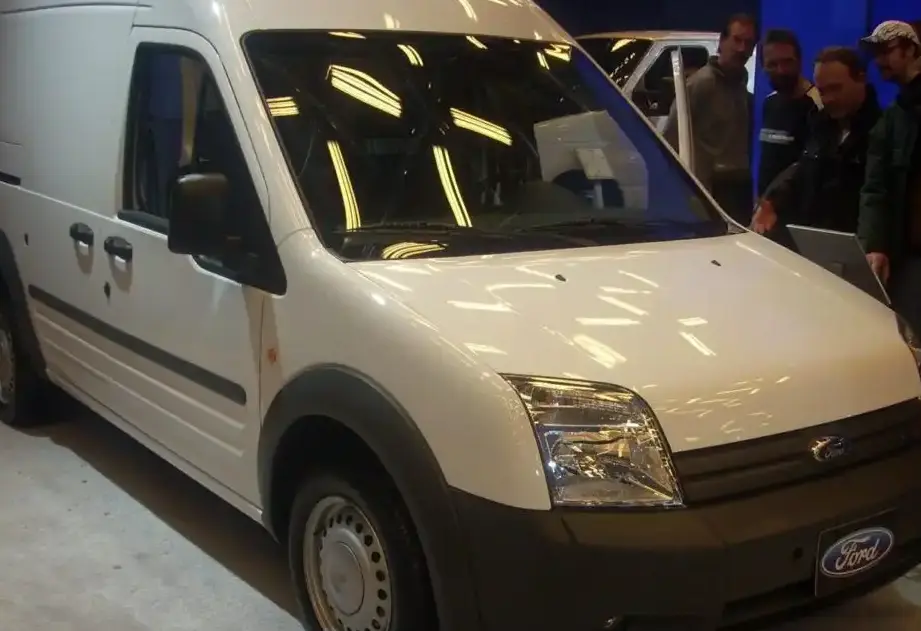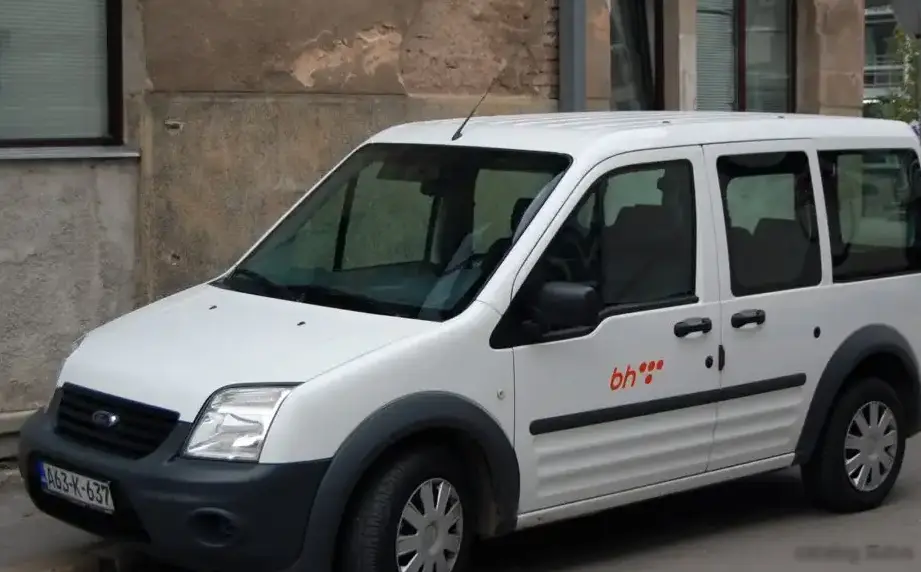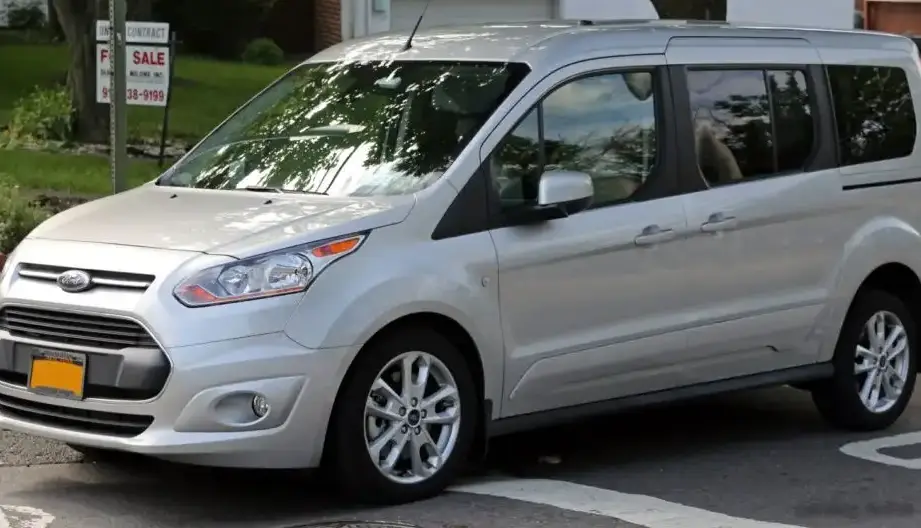
The Ford Transit Connect II Wagon L2 1.5 TDCi 75 horsepower Start-Stop is a compact panel van and passenger vehicle produced by Ford between 2015 and 2018. Part of the second generation of the Transit Connect, this variant occupied the entry-level position in the L2 (long wheelbase) wagon lineup, primarily aimed at budget-conscious buyers and those prioritizing fuel efficiency over outright performance. It was sold primarily in the European market, where compact vans are highly popular for both commercial and family use, though limited numbers were also available in North America. This model represented Ford’s attempt to offer a practical and economical vehicle in a segment increasingly focused on versatility.
Technical Specifications
| Brand | Ford |
| Model | Transit Connect |
| Generation | Transit Connect II Wagon L2 |
| Type (Engine) | 1.5 TDCi (75 Hp) Start-Stop |
| Start of production | 2015 year |
| End of production | 2018 year |
| Powertrain Architecture | Internal Combustion engine |
| Body type | Minivan |
| Seats | 5-7 |
| Doors | 5 |
| Fuel consumption (economy) – urban (NEDC) | 4.7-4.8 l/100 km (50 – 49 US mpg, 60.1 – 58.9 UK mpg, 21.3 – 20.8 km/l) |
| Fuel consumption (economy) – extra urban (NEDC) | 4.3 l/100 km (54.7 US mpg, 65.7 UK mpg, 23.3 km/l) |
| Fuel consumption (economy) – combined (NEDC) | 4.4 l/100 km (53.5 US mpg, 64.2 UK mpg, 22.7 km/l) |
| CO2 emissions (NEDC) | 115 g/km |
| Fuel Type | Diesel |
| Emission standard | Euro 6 |
| Weight-to-power ratio | 19.5 kg/Hp, 51.2 Hp/tonne |
| Weight-to-torque ratio | 6.7 kg/Nm, 150.1 Nm/tonne |
| Power | 75 Hp |
| Power per litre | 50 Hp/l |
| Torque | 220 Nm @ 1750-2000 rpm (162.26 lb.-ft. @ 1750-2000 rpm) |
| Engine layout | Front, Transverse |
| Engine Model/Code | Duratorq / XUGA |
| Engine displacement | 1499 cm3 (91.47 cu. in.) |
| Number of cylinders | 4 |
| Engine configuration | Inline |
| Cylinder Bore | 73.5 mm (2.89 in.) |
| Piston Stroke | 88.3 mm (3.48 in.) |
| Number of valves per cylinder | 2 |
| Fuel injection system | Diesel Commonrail |
| Engine aspiration | Turbocharger, Intercooler |
| Valvetrain | SOHC |
| Engine oil capacity | 6.2 l (6.55 US qt | 5.46 UK qt) |
| Coolant | 6 l (6.34 US qt | 5.28 UK qt) |
| Kerb Weight | 1466-1488 kg (3231.98 – 3280.48 lbs.) |
| Max. weight | 2270 kg (5004.49 lbs.) |
| Max load | 782-804 kg (1724.01 – 1772.52 lbs.) |
| Trunk (boot) space – minimum | 322 l (11.37 cu. ft.) |
| Trunk (boot) space – maximum | 2761 l (97.5 cu. ft.) |
| Fuel tank capacity | 60 l (15.85 US gal | 13.2 UK gal) |
| Permitted trailer load with brakes (12%) | 1200 kg (2645.55 lbs.) |
| Permitted trailer load without brakes | 750 kg (1653.47 lbs.) |
| Length | 4818 mm (189.69 in.) |
| Width | 1835 mm (72.24 in.) |
| Width including mirrors | 2137 mm (84.13 in.) |
| Height | 1840-1845 mm (72.44 – 72.64 in.) |
| Wheelbase | 3062 mm (120.55 in.) |
| Front track | 1568 mm (61.73 in.) |
| Rear (Back) track | 1584 mm (62.36 in.) |
| Front overhang | 878 mm (34.57 in.) |
| Rear overhang | 878 mm (34.57 in.) |
| Ride height (ground clearance) | 163 mm (6.42 in.) |
| Minimum turning circle (turning diameter) | 12.5 m (41.01 ft.) |
| Drivetrain Architecture | The Internal combustion engine (ICE) drives the front wheels of the vehicle. |
| Drive wheel | Front wheel drive |
| Number of gears and type of gearbox | 5 gears, manual transmission |
| Front suspension | Independent, type McPherson with coil spring and anti-roll bar |
| Rear suspension | Coil spring, Torsion |
| Front brakes | Ventilated discs, 320×25 mm |
| Rear brakes | Disc, 280×11 mm |
| Assisting systems | ABS (Anti-lock braking system) |
| Steering type | Steering rack and pinion |
| Power steering | Electric Steering |
| Tires size | 205/60 R16 |
| Wheel rims size | 6.5J x 16 |
INTRODUCTION
The Ford Transit Connect II Wagon L2 1.5 TDCi 75 hp Start-Stop, launched in 2015, represents a key iteration of Ford’s popular compact van. Built on the 1HX0/A3 platform shared with the Ford Focus, this variant was designed to offer a practical and affordable transportation solution for families and small businesses. The “L2” designation indicates the long wheelbase version, providing increased cargo and passenger space compared to the standard-length model. The 1.5 TDCi engine, a member of Ford’s Duratorq family, was specifically tuned to deliver fuel efficiency, making it a popular choice in Europe where diesel fuel and lower running costs are highly valued. The inclusion of Start-Stop technology further enhanced its eco-credentials.
Powertrain & Engine Architecture
The heart of this Transit Connect is the 1.5-liter Duratorq TDCi diesel engine, internally designated XUGA. This engine is a four-cylinder, inline configuration, featuring a single overhead camshaft (SOHC) and utilizing a turbocharger with intercooler to boost power and efficiency. The engine employs a common-rail direct fuel injection system, delivering fuel directly into the combustion chamber at high pressure for optimized combustion. The 75 horsepower output is achieved through careful calibration of the engine management system, prioritizing fuel economy over peak performance. The engine’s torque output of 220 Nm (162 lb-ft) is available from 1750-2000 rpm, providing reasonable pulling power for everyday driving. This variant was exclusively offered with a 5-speed manual transmission, chosen for its simplicity and contribution to fuel savings. The transmission’s gear ratios are geared towards maximizing fuel efficiency, with a relatively tall final drive.
Driving Characteristics
The 1.5 TDCi 75 hp Transit Connect L2 offers a utilitarian driving experience. Acceleration is modest, and overtaking requires careful planning. The engine feels strained when fully loaded or climbing hills. However, for typical urban and suburban driving, the power is adequate. The 5-speed manual transmission is light and easy to operate, but the gear ratios are spaced to prioritize economy rather than sporty performance. Compared to higher-output versions of the Transit Connect, such as those with the 1.6-liter EcoBoost petrol engine, this diesel variant feels significantly slower. However, it offers superior fuel economy and a more relaxed driving experience at cruising speeds. The suspension is tuned for comfort, providing a reasonably smooth ride even on uneven surfaces, though it can feel somewhat wallowy when cornering.
Equipment & Trim Levels
The 1.5 TDCi 75 hp Start-Stop typically came with a basic level of equipment, reflecting its position as the entry-level trim. Standard features generally included power steering, ABS brakes, driver and passenger airbags, and a basic audio system with USB connectivity. Interior upholstery was typically cloth, and the dashboard featured a functional but unpretentious design. Optional extras included air conditioning, alloy wheels, parking sensors, and a more advanced audio system with Bluetooth connectivity. Higher trim levels, such as the Limited, offered more luxurious features like leather upholstery, automatic climate control, and a touchscreen infotainment system, but were not available with the 75 hp engine.
Chassis & Braking
The Transit Connect II L2 utilizes a McPherson strut independent suspension at the front and a semi-independent torsion beam suspension at the rear. This setup provides a good balance between ride comfort and handling. The front brakes are ventilated discs, providing adequate stopping power, while the rear brakes are solid discs. ABS (Anti-lock Braking System) is standard, enhancing safety during emergency braking. The vehicle’s weight-to-power ratio of 19.5 kg/hp means that the braking system is adequately sized for the vehicle’s performance capabilities. Stabilizer bars are fitted to both the front and rear axles to reduce body roll during cornering.
Market Reception & Comparison
The Ford Transit Connect II L2 1.5 TDCi 75 hp Start-Stop was generally well-received by critics as a practical and economical vehicle. Its fuel efficiency was a major selling point, particularly in Europe. However, its modest performance was often criticized, especially when compared to more powerful alternatives. Compared to the 1.6-liter EcoBoost petrol version, the diesel offered significantly better fuel economy but lacked the petrol engine’s responsiveness. Against competitors like the Volkswagen Caddy and Citroën Berlingo, the Transit Connect offered a competitive price point and a spacious interior. Reliability was generally good, with the Duratorq diesel engine proving to be a durable and dependable unit.
Legacy
The 1.5 TDCi 75 hp engine, while not the most powerful option in the Transit Connect lineup, has proven to be a reliable and fuel-efficient powertrain. On the used car market, these models are often sought after by buyers looking for an affordable and practical van or family vehicle. Maintenance costs are relatively low, and parts availability is good. However, potential buyers should be aware of the potential for diesel particulate filter (DPF) issues, particularly if the vehicle has been primarily used for short journeys. Overall, the Ford Transit Connect II L2 1.5 TDCi 75 hp Start-Stop remains a viable option for those seeking a cost-effective and versatile vehicle.