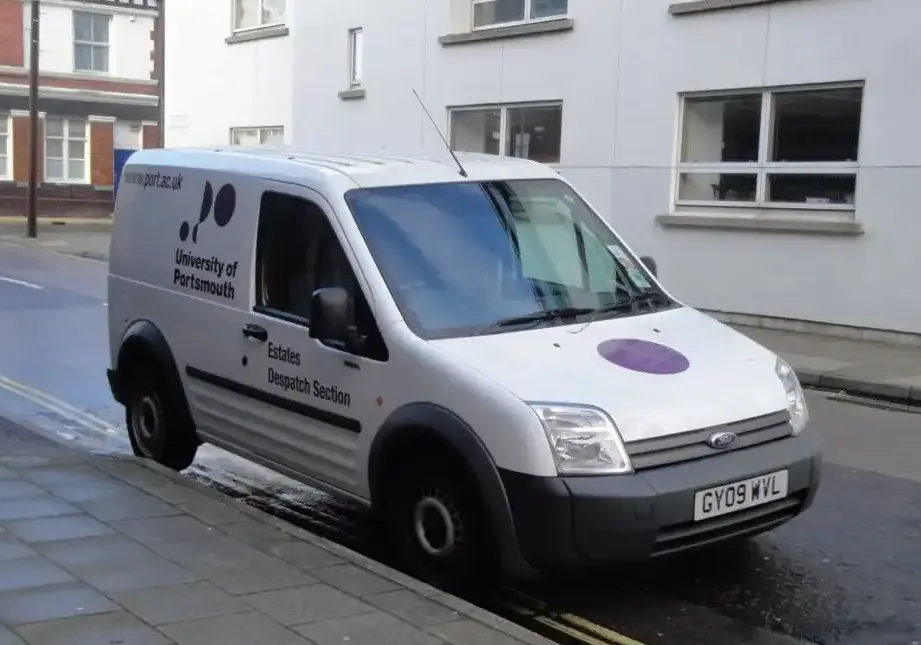
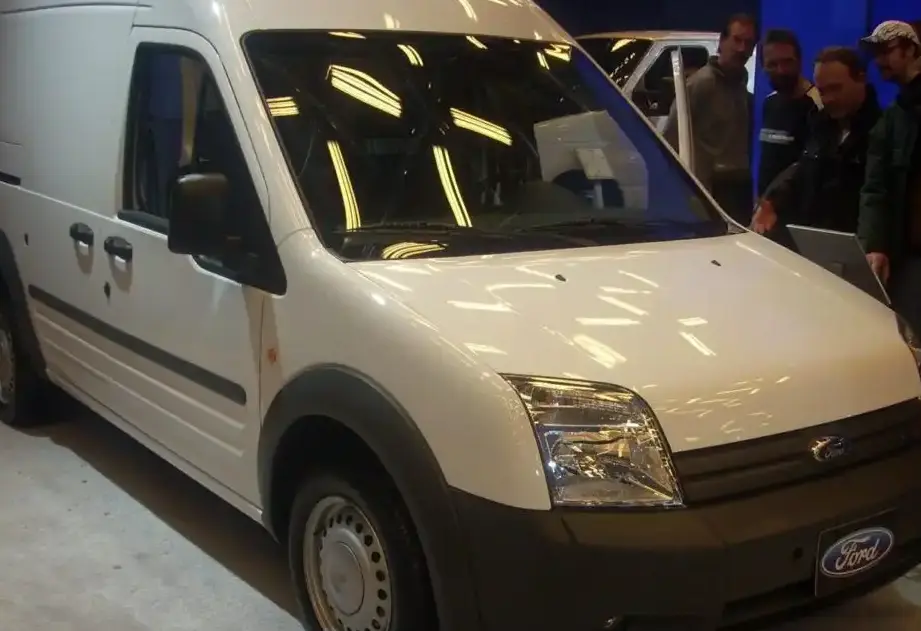
The Ford Transit Connect III FlexCab L1 2.0 EcoBlue (122 Hp) DSG is a commercial and passenger vehicle introduced in 2024 as part of the third generation of the Transit Connect line. Positioned as a versatile option within the range, this variant combines a 2.0-liter turbocharged diesel engine with a seven-speed dual-clutch transmission (DSG). It caters to businesses and families needing a compact van with reasonable fuel efficiency and practicality. The FlexCab L1 configuration denotes a short wheelbase and a flexible seating arrangement, offering a balance between cargo space and passenger comfort. This model represents Ford’s continued commitment to offering efficient and adaptable commercial vehicles in the European and increasingly, North American markets.
Technical Specifications
| Brand | Ford |
| Model | Transit Connect |
| Generation | Transit Connect III FlexCab L1 |
| Type (Engine) | 2.0 EcoBlue (122 Hp) DSG |
| Start of production | 2024 |
| Powertrain Architecture | Internal Combustion engine |
| Body type | Minivan |
| Seats | 5 |
| Doors | 5 |
| Fuel consumption at Low speed (WLTP) | 7.4 l/100 km (31.8 US mpg) |
| Fuel consumption at Medium speed (WLTP) | 5.5 l/100 km (42.8 US mpg) |
| Fuel consumption at high speed (WLTP) | 4.9 l/100 km (48 US mpg) |
| Fuel consumption at very high speed (WLTP) | 6 l/100 km (39.2 US mpg) |
| Combined fuel consumption (WLTP) | 5.7 l/100 km (41.3 US mpg) |
| CO2 emissions (WLTP) | 151 g/km |
| Fuel Type | Diesel |
| Maximum speed | 184 km/h (114.33 mph) |
| Emission standard | Euro 6e |
| Weight-to-power ratio | 13.7 kg/Hp |
| Weight-to-torque ratio | 5.2 kg/Nm |
| Power | 122 Hp |
| Torque | 320 Nm (236.02 lb.-ft.) |
| Engine layout | Front, Transverse |
| Engine Model/Code | EA288 evo |
| Engine displacement | 1968 cm3 (120.09 cu. in.) |
| Number of cylinders | 4 |
| Engine configuration | Inline |
| Cylinder Bore | 81 mm (3.19 in.) |
| Piston Stroke | 95.5 mm (3.76 in.) |
| Number of valves per cylinder | 4 |
| Fuel injection system | Diesel Commonrail |
| Engine aspiration | Turbocharger, Intercooler |
| Valvetrain | DOHC |
| Engine oil capacity | 5.5 l (5.81 US qt | 4.84 UK qt) |
| Kerb Weight | 1671 kg (3683.92 lbs.) |
| Max. weight | 2425 kg (5346.21 lbs.) |
| Max load | 754 kg (1662.29 lbs.) |
| Trunk (boot) space – maximum | 2500 l (88.29 cu. ft.) |
| Fuel tank capacity | 50 l (13.21 US gal | 11 UK gal) |
| AdBlue tank | 15 l (3.96 US gal | 3.3 UK gal) |
| Permitted trailer load with brakes (12%) | 1500 kg (3306.93 lbs.) |
| Permitted trailer load without brakes | 750 kg (1653.47 lbs.) |
| Permitted towbar download | 75 kg (165.35 lbs.) |
| Length | 4515 mm (177.76 in.) |
| Width | 1855 mm (73.03 in.) |
| Width with mirrors folded | 1931 mm (76.02 in.) |
| Width including mirrors | 2100 mm (82.68 in.) |
| Height | 1833 mm (72.17 in.) |
| Wheelbase | 2755 mm (108.46 in.) |
| Front track | 1565-1572 mm (61.61 – 61.89 in.) |
| Rear (Back) track | 1603-1606 mm (63.11 – 63.23 in.) |
| Front overhang | 903 mm (35.55 in.) |
| Rear overhang | 857 mm (33.74 in.) |
| Ride height (ground clearance) | 112 mm (4.41 in.) |
| Minimum turning circle (turning diameter) | 11.4 m (37.4 ft.) |
| Drivetrain Architecture | Front wheel drive |
| Number of gears and type of gearbox | 7 gears, automatic transmission DSG |
| Front suspension | Independent, type McPherson with coil spring and anti-roll bar |
| Rear suspension | Rigid axle suspension, Trailing arm, Coil spring |
| Front brakes | Ventilated discs |
| Rear brakes | Disc |
| Assisting systems | ABS (Anti-lock braking system) |
| Steering type | Steering rack and pinion |
| Power steering | Electric Steering |
| Tires size | 215/55 R17 |
| Wheel rims size | 6.5J x 17; 7J x 17 |
INTRODUCTION
The Ford Transit Connect III FlexCab L1 2.0 EcoBlue (122 Hp) DSG, launched in 2024, represents the latest iteration of Ford’s popular compact van. Built on the updated platform of the third-generation Transit Connect, this model aims to provide a balance of practicality, efficiency, and comfort. The “FlexCab” designation indicates a versatile interior layout with folding rear seats, while “L1” signifies the short wheelbase. This particular variant, powered by the 2.0-liter EcoBlue diesel engine and paired with a seven-speed DSG transmission, is designed to appeal to both commercial users and families seeking a multi-purpose vehicle. It serves as a key offering in Ford’s light commercial vehicle lineup, competing with rivals like the Volkswagen Caddy and Citroën Berlingo.
Powertrain & Engine Architecture
At the heart of the Transit Connect III FlexCab L1 2.0 EcoBlue (122 Hp) DSG lies the Ford EcoBlue 2.0-liter inline-four cylinder diesel engine, identified by the EA288 evo engine code. This engine utilizes a common-rail direct fuel injection system, delivering fuel at extremely high pressure for optimized combustion. A turbocharger with intercooling is employed to boost power and torque, enhancing both acceleration and load-carrying capability. The engine features a double overhead camshaft (DOHC) valvetrain with four valves per cylinder, contributing to efficient gas exchange. The 122 horsepower output is achieved through careful calibration of the engine management system. The seven-speed dual-clutch transmission (DSG) provides quick and smooth gear changes, improving both performance and fuel economy. The DSG’s automated shifting eliminates the need for a traditional manual clutch, making it easier to drive in urban environments.
Driving Characteristics
The 122 hp EcoBlue engine paired with the seven-speed DSG transmission delivers adequate performance for everyday driving. While not exceptionally quick, the Transit Connect L1 offers sufficient power for navigating city streets and maintaining comfortable speeds on the highway. The DSG transmission contributes to a responsive driving experience, with quick shifts and minimal torque interruption. Compared to higher-output versions of the EcoBlue engine, this variant prioritizes fuel efficiency over outright performance. The gear ratios are tuned for economy, resulting in a slightly less spirited acceleration compared to models with more horsepower. However, the readily available 320 Nm (236 lb-ft) of torque provides good pulling power, making it suitable for carrying loads. The front-wheel-drive configuration provides predictable handling, although it may exhibit some torque steer under hard acceleration.
Equipment & Trim Levels
The Transit Connect III FlexCab L1 2.0 EcoBlue (122 Hp) DSG typically comes equipped with a range of standard features designed for both practicality and comfort. These often include air conditioning, a basic audio system with Bluetooth connectivity, power windows and mirrors, and a driver information display. Safety features such as ABS, electronic stability control, and multiple airbags are also standard. The FlexCab configuration offers versatile seating options, with folding rear seats that can be configured to maximize cargo space. Optional extras may include a touchscreen infotainment system with navigation, parking sensors, a rearview camera, and upgraded interior trim materials. Higher trim levels may add features like cruise control, automatic headlights, and rain-sensing wipers.
Chassis & Braking
The Transit Connect III FlexCab L1 utilizes an independent McPherson strut suspension system at the front, providing a comfortable ride and responsive handling. The rear suspension employs a rigid axle with trailing arms and coil springs, offering a good balance between load-carrying capacity and ride quality. The braking system consists of ventilated discs at the front and solid discs at the rear, providing adequate stopping power. Anti-lock braking system (ABS) is standard, enhancing safety during emergency braking situations. The vehicle’s weight distribution and suspension tuning are optimized for stability and control, even when carrying a load. The electric power steering provides light and precise steering feel, making it easy to maneuver in tight spaces.
Market Reception & Comparison
The Ford Transit Connect III FlexCab L1 2.0 EcoBlue (122 Hp) DSG has been generally well-received by critics for its practicality, fuel efficiency, and versatility. The 2.0-liter EcoBlue engine is praised for its balance of power and economy, while the DSG transmission is noted for its smooth and responsive shifting. Compared to higher-output versions of the Transit Connect, this variant offers a more affordable entry point and better fuel economy, making it attractive to budget-conscious buyers. However, some reviewers have noted that the 122 hp engine can feel underpowered when the vehicle is fully loaded. Compared to competitors like the Volkswagen Caddy and Citroën Berlingo, the Transit Connect offers a competitive combination of features, price, and fuel efficiency.
Legacy
The Ford EcoBlue diesel engine, in its various iterations, has proven to be a reliable and durable powertrain. The 2.0-liter version, as found in the Transit Connect III, is expected to offer long-term reliability with proper maintenance. The DSG transmission, while more complex than a traditional manual gearbox, is generally reliable when serviced according to Ford’s recommendations. In the used car market, the Transit Connect III FlexCab L1 2.0 EcoBlue (122 Hp) DSG is likely to hold its value due to its practicality, fuel efficiency, and reputation for reliability. Its versatility and relatively low running costs make it an attractive option for both commercial and private buyers.