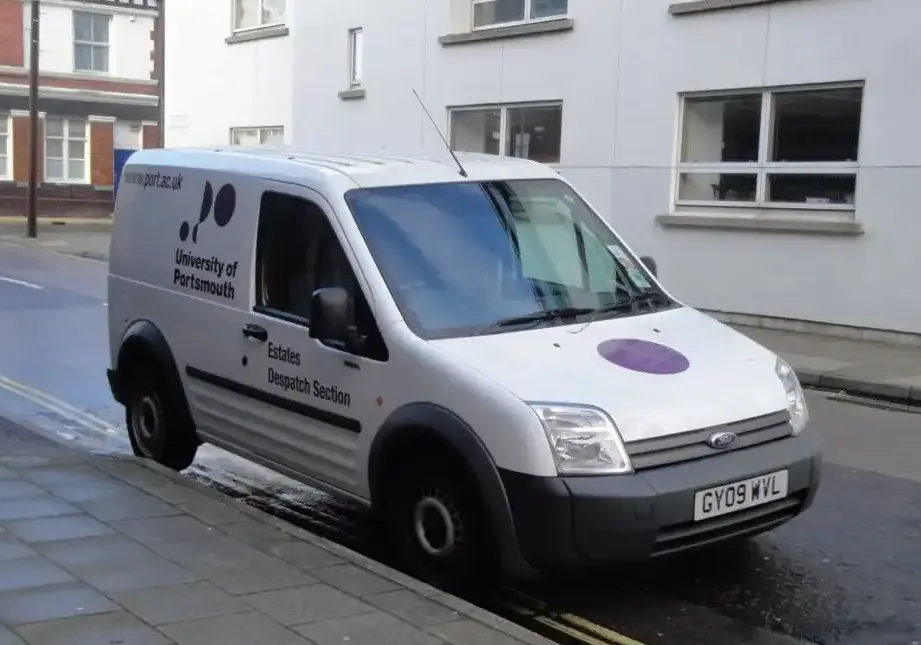
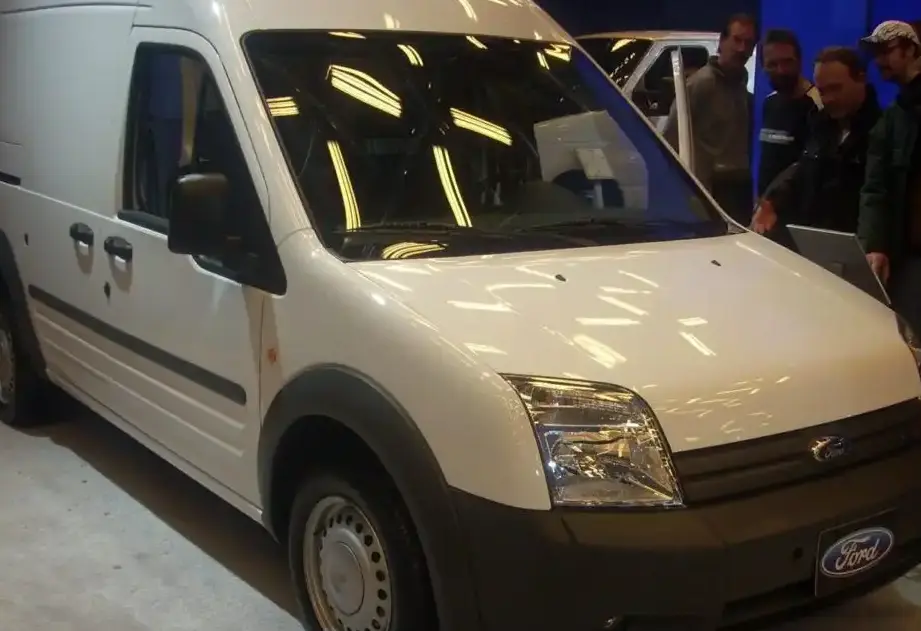
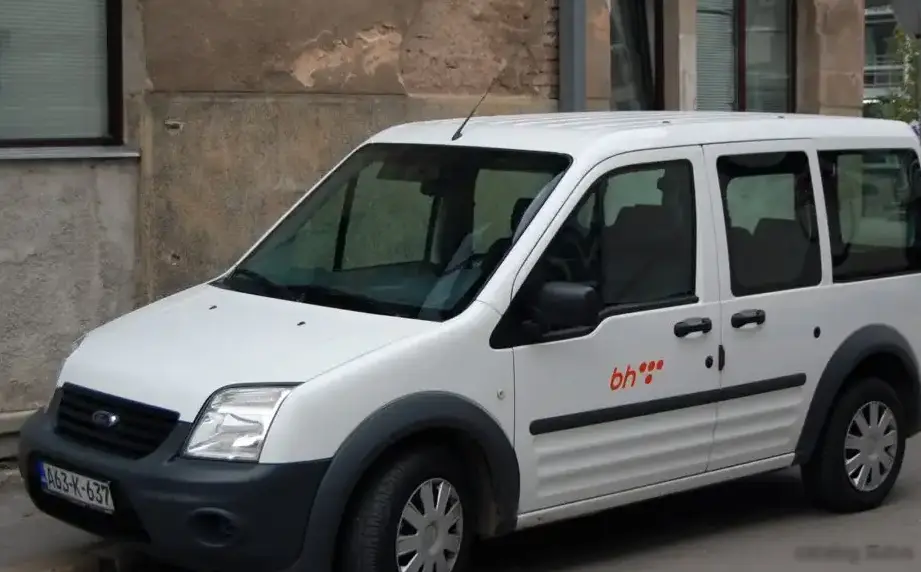
The Ford Transit Connect III Panel Van L1 2.0 EcoBlue (122 Hp) DSG represents a significant iteration in Ford’s popular compact commercial vehicle line, launched in 2024. Positioned as a versatile option within the third-generation Transit Connect range (introduced in 2018 for European markets, and 2022 for North America), this variant caters to businesses and tradespeople requiring a practical and relatively efficient cargo solution. The “L1” designation indicates the short wheelbase configuration, making it particularly suitable for urban environments where maneuverability is key. This model is primarily aimed at the European and increasingly, the North American market, where the Transit Connect has gained a reputation for reliability and low running costs.
Technical Specifications
| Brand | Ford |
| Model | Transit Connect |
| Generation | Transit Connect III Panel Van L1 |
| Type (Engine) | 2.0 EcoBlue (122 Hp) DSG |
| Start of production | 2024 |
| Powertrain Architecture | Internal Combustion engine |
| Body type | Minivan |
| Seats | 2 |
| Doors | 4-5 |
| Fuel consumption at Low speed (WLTP) | 7.1 l/100 km (33.1 US mpg, 39.8 UK mpg, 14.1 km/l) |
| Fuel consumption at Medium speed (WLTP) | 5.3 l/100 km (44.4 US mpg, 53.3 UK mpg, 18.9 km/l) |
| Fuel consumption at high speed (WLTP) | 4.8 l/100 km (49 US mpg, 58.9 UK mpg, 20.8 km/l) |
| Fuel consumption at very high speed (WLTP) | 5.9 l/100 km (39.9 US mpg, 47.9 UK mpg, 16.9 km/l) |
| Combined fuel consumption (WLTP) | 5.6 l/100 km (42 US mpg, 50.4 UK mpg, 17.9 km/l) |
| CO2 emissions (WLTP) | 147 g/km |
| Fuel Type | Diesel |
| Acceleration 0 – 100 km/h | 11.4 sec |
| Acceleration 0 – 62 mph | 11.4 sec |
| Acceleration 0 – 60 mph | 10.8 sec |
| Maximum speed | 184 km/h (114.33 mph) |
| Emission standard | Euro 6e |
| Weight-to-power ratio | 12.4 kg/Hp, 80.6 Hp/tonne |
| Weight-to-torque ratio | 4.7 kg/Nm, 211.5 Nm/tonne |
| Power | 122 Hp |
| Power per litre | 62 Hp/l |
| Torque | 320 Nm (236.02 lb.-ft.) |
| Engine layout | Front, Transverse |
| Engine Model/Code | EA288 evo |
| Engine displacement | 1968 cm3 (120.09 cu. in.) |
| Number of cylinders | 4 |
| Engine configuration | Inline |
| Cylinder Bore | 81 mm (3.19 in.) |
| Piston Stroke | 95.5 mm (3.76 in.) |
| Number of valves per cylinder | 4 |
| Fuel injection system | Diesel Commonrail |
| Engine aspiration | Turbocharger, Intercooler |
| Valvetrain | DOHC |
| Engine oil capacity | 5.5 l (5.81 US qt | 4.84 UK qt) |
| Kerb Weight | 1513-1530 kg (3335.59 – 3373.07 lbs.) |
| Max. weight | 2250 kg (4960.4 lbs.) |
| Max load | 720-737 kg (1587.33 – 1624.81 lbs.) |
| Trunk (boot) space – maximum | 3100 l (109.48 cu. ft.) |
| Fuel tank capacity | 50 l (13.21 US gal | 11 UK gal) |
| AdBlue tank | 15 l (3.96 US gal | 3.3 UK gal) |
| Permitted trailer load with brakes (12%) | 1500 kg (3306.93 lbs.) |
| Permitted trailer load without brakes | 750 kg (1653.47 lbs.) |
| Permitted towbar download | 75 kg (165.35 lbs.) |
| Length | 4500 mm (177.17 in.) |
| Width | 1855 mm (73.03 in.) |
| Width with mirrors folded | 1931 mm (76.02 in.) |
| Width including mirrors | 2100 mm (82.68 in.) |
| Height | 1856 mm (73.07 in.) |
| Wheelbase | 2755 mm (108.46 in.) |
| Front track | 1565-1572 mm (61.61 – 61.89 in.) |
| Rear (Back) track | 1603-1606 mm (63.11 – 63.23 in.) |
| Front overhang | 890 mm (35.04 in.) |
| Rear overhang | 855 mm (33.66 in.) |
| Ride height (ground clearance) | 160 mm (6.3 in.) |
| Minimum turning circle (turning diameter) | 11.4 m (37.4 ft.) |
| Approach angle | 14° |
| Departure angle | 19.3° |
| Drivetrain Architecture | The Internal combustion engine (ICE) drives the front wheels of the vehicle. |
| Drive wheel | Front wheel drive |
| Number of gears and type of gearbox | 7 gears, automatic transmission DSG |
| Front suspension | Independent, type McPherson with coil spring and anti-roll bar |
| Rear suspension | Rigid axle suspension, Trailing arm, Coil spring |
| Front brakes | Ventilated discs |
| Rear brakes | Disc |
| Assisting systems | ABS (Anti-lock braking system) |
| Steering type | Steering rack and pinion |
| Power steering | Electric Steering |
| Tires size | 215/55 R17 |
| Wheel rims size | 6.5J x 17; 7J x 17 |
Powertrain & Engine Architecture
At the heart of the Transit Connect L1 2.0 EcoBlue (122 Hp) DSG lies Ford’s 1.996-liter (rounded to 2.0L) EcoBlue turbocharged diesel engine, part of the EA288 evo family developed in collaboration with Volkswagen Group. This engine utilizes a common-rail direct fuel injection system, delivering fuel at extremely high pressure for optimized combustion. The engine features a single turbocharger with variable geometry (VGT) technology, enhancing low-end torque and responsiveness. The DOHC (Double Overhead Camshaft) valvetrain, with four valves per cylinder, further contributes to efficient gas exchange. Paired with this engine is a 7-speed dual-clutch transmission (DSG), offering smooth and rapid gear changes. The DSG transmission is known for its efficiency and contributes to the vehicle’s overall fuel economy. The engine is transversely mounted, driving the front wheels.
Driving Characteristics
The 122 horsepower and 320 Nm (236 lb-ft) of torque produced by the 2.0 EcoBlue engine, when coupled with the 7-speed DSG, provides adequate performance for typical commercial applications. Acceleration from 0-60 mph takes approximately 10.8 seconds, and the top speed is around 114 mph. While not a performance-oriented vehicle, the DSG transmission ensures brisk acceleration in everyday driving situations. The gear ratios are tuned for fuel efficiency and usability, prioritizing smooth operation over outright speed. Compared to higher-output versions of the EcoBlue engine (like the 180 hp variant), this setup offers a more economical driving experience, but with a noticeable reduction in overall power. The automatic transmission makes it particularly well-suited for urban driving, reducing driver fatigue in stop-and-go traffic.
Equipment & Trim Levels
The Transit Connect L1 2.0 EcoBlue (122 Hp) DSG typically comes equipped with a range of standard features geared towards practicality and driver comfort. These include air conditioning, a basic audio system with Bluetooth connectivity, power windows and locks, and a driver information display. Safety features such as ABS, Electronic Stability Control (ESC), and multiple airbags are standard. Higher trim levels may add features like a touchscreen infotainment system with navigation, upgraded upholstery, parking sensors, and a rearview camera. The interior is designed with durability in mind, featuring hard-wearing materials and a functional layout. Optional extras often include a cargo partition, additional lighting in the cargo area, and various storage solutions.
Chassis & Braking
The Transit Connect L1 utilizes a front-wheel-drive layout with an independent McPherson strut suspension at the front and a rigid axle suspension with trailing arms at the rear. This configuration provides a good balance between ride comfort and load-carrying capacity. The braking system consists of ventilated discs at the front and solid discs at the rear, providing adequate stopping power for the vehicle’s weight. ABS (Anti-lock Braking System) is standard, enhancing safety during emergency braking maneuvers. The steering is rack and pinion with electric power assistance, offering precise control and ease of maneuvering.
Market Reception & Comparison
The Ford Transit Connect L1 2.0 EcoBlue (122 Hp) DSG has been generally well-received in the market, particularly by businesses seeking a cost-effective and reliable commercial vehicle. Critics have praised its fuel efficiency, practicality, and maneuverability. Compared to other trims in the lineup, this variant offers a compelling balance between performance and economy. The higher-powered versions provide more spirited driving, but at the expense of fuel consumption. The 1.5L EcoBlue engine, while more fuel-efficient, offers less power and may struggle with heavier loads. The DSG transmission has received positive reviews for its smooth operation and efficiency.
Legacy
The 2.0 EcoBlue engine, in conjunction with the DSG transmission, has proven to be a relatively reliable powertrain. While long-term durability data is still emerging for the latest generation, the EA288 engine family has a solid reputation for robustness. On the used car market, the Transit Connect L1 2.0 EcoBlue (122 Hp) DSG is expected to hold its value reasonably well, due to its practicality, fuel efficiency, and the Ford brand’s reputation for reliability. Regular maintenance, including oil changes and adherence to Ford’s recommended service intervals, is crucial for ensuring the longevity of this powertrain.