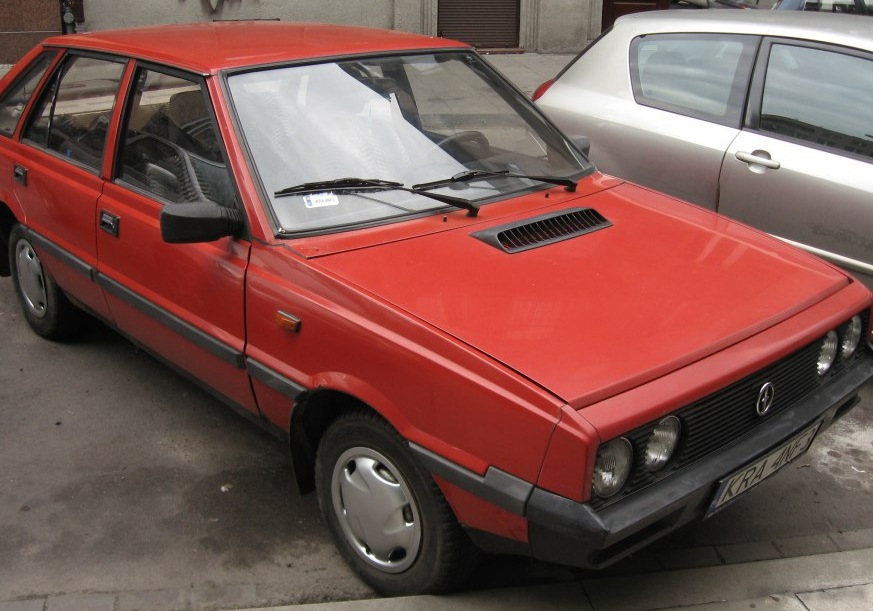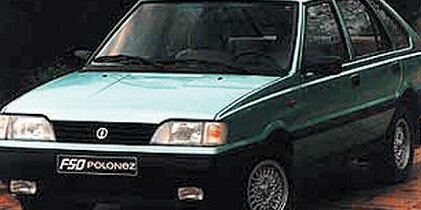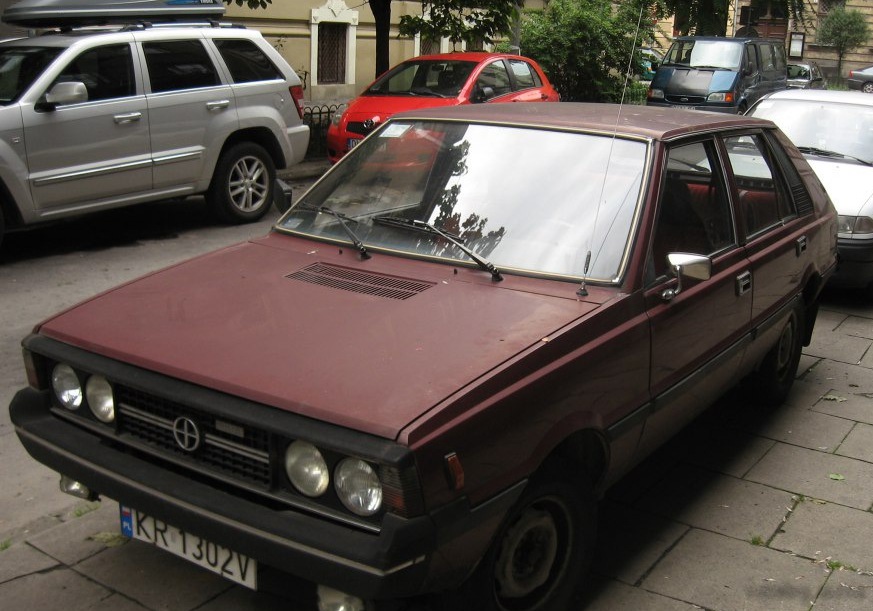
The FSO Polonez I 1.5, producing 75 horsepower, represents a significant chapter in Polish automotive history. Produced from 1977 to 1988, this variant of the Polonez I served as a mainstay of personal transportation in Poland during the final years of communist rule and the early transition period. It was a key model within the Polonez I range, which itself was based heavily on the Fiat 124 platform, but significantly modernized and adapted for Polish manufacturing capabilities and consumer needs. The Polonez I, and particularly the 1.5-liter version, aimed to provide a practical, affordable, and relatively modern vehicle for the Polish market, filling a crucial gap in domestic car production.
Technical Specifications
| Brand | FSO |
| Model | Polonez |
| Generation | Polonez I |
| Type (Engine) | 1.5 (75 Hp) |
| Start of Production | 1977 |
| End of Production | 1988 |
| Powertrain Architecture | Internal Combustion Engine |
| Body Type | Hatchback |
| Fuel Type | Petrol (Gasoline) |
| Power | 75 Hp |
| Engine Aspiration | Naturally Aspirated |
Powertrain & Engine Architecture
The FSO Polonez I 1.5 was powered by a 1498 cc (91.4 cubic inches) inline-four cylinder engine. This engine, internally designated as the 1500, was a development of the Fiat 124’s engine, but with modifications to improve reliability and adapt to Polish production standards. It featured a single overhead camshaft (SOHC) valvetrain, operating two valves per cylinder. Fuel delivery was managed by a Weber carburetor, a common setup for vehicles of this era. The engine’s 75 horsepower output at 5,500 rpm and 88 lb-ft of torque at 3,500 rpm were modest, but sufficient for the Polonez’s intended purpose. The engine block was cast iron, contributing to its durability, while the cylinder head was aluminum. The Polonez I 1.5 was typically paired with a four-speed manual transmission, although a three-speed automatic transmission was also available, albeit less common. The automatic transmission was sourced from outside Poland, and its availability varied depending on the production year and export market.
Driving Characteristics
The Polonez I 1.5, particularly in its manual transmission guise, offered a utilitarian driving experience. Acceleration was leisurely, with a 0-60 mph time estimated around 16-18 seconds. The four-speed manual transmission had relatively widely spaced gear ratios, prioritizing fuel economy over outright performance. The automatic transmission further dulled acceleration, making the car feel even slower. Handling was adequate for everyday driving, but the Polonez I was not designed for sporty performance. The suspension, consisting of independent front suspension with MacPherson struts and a live axle rear suspension, provided a reasonably comfortable ride, although it could feel somewhat bouncy on uneven surfaces. Steering was by a recirculating ball system, which lacked the precision of more modern steering technologies. The car’s relatively light weight (around 2,200 lbs) helped to mitigate the effects of the modest engine power.
Equipment & Trim Levels
The Polonez I 1.5 was generally offered in a fairly basic trim level, reflecting its position as an affordable family car. Standard equipment typically included cloth upholstery, basic instrumentation (speedometer, fuel gauge, temperature gauge), and a heater. Optional extras, depending on the year and market, could include a radio, upgraded interior trim, and a sunroof. The dashboard layout was functional but somewhat dated, even by the standards of the late 1970s and early 1980s. Interior space was a strong point for the Polonez I, offering ample room for passengers and luggage, especially considering its compact exterior dimensions. The hatchback body style provided convenient access to the cargo area.
Chassis & Braking
The Polonez I utilized a body-on-frame construction, a relatively archaic design for the time, but one that simplified manufacturing and repair. The chassis was robust and durable, but it also contributed to the car’s relatively high weight. The front suspension featured MacPherson struts, coil springs, and an anti-roll bar. The rear suspension employed a live axle with leaf springs. Braking was initially provided by drum brakes on all four wheels, but later models (particularly those intended for export) were upgraded with front disc brakes. The braking system was adequate for normal driving conditions, but lacked the stopping power of more modern vehicles. Power steering was not typically offered on the Polonez I 1.5.
Market Reception & Comparison
The FSO Polonez I 1.5 was generally well-received in Poland, where it filled a critical need for affordable personal transportation. It was significantly more modern and comfortable than the older FSO Warszawa, which it partially replaced. However, it faced competition from imported vehicles, particularly used cars from Western Europe. Critics often noted the Polonez I’s dated design, modest performance, and relatively low build quality. Compared to other 1.5-liter cars of the era, the Polonez I offered a good balance of space and affordability, but it lagged behind in terms of performance and refinement. The automatic transmission version, while offering convenience, was often criticized for its sluggishness and reduced fuel economy. The manual transmission version was generally preferred by those seeking better performance and fuel efficiency.
Legacy
The FSO Polonez I 1.5 holds a significant place in Polish automotive history as a symbol of the country’s industrial capabilities during a period of political and economic change. While not a technologically advanced vehicle by Western standards, it provided reliable transportation for millions of Polish families. The 1.5-liter engine proved to be relatively durable and easy to maintain, contributing to the Polonez I’s longevity. Today, the Polonez I 1.5 is a popular classic car in Poland, appreciated for its nostalgic value and its representation of a bygone era. Parts availability can be challenging, but a dedicated community of enthusiasts continues to keep these cars on the road. The Polonez I, and the 1.5 variant in particular, remains a recognizable and fondly remembered vehicle in Poland, representing a unique chapter in the country’s automotive heritage.