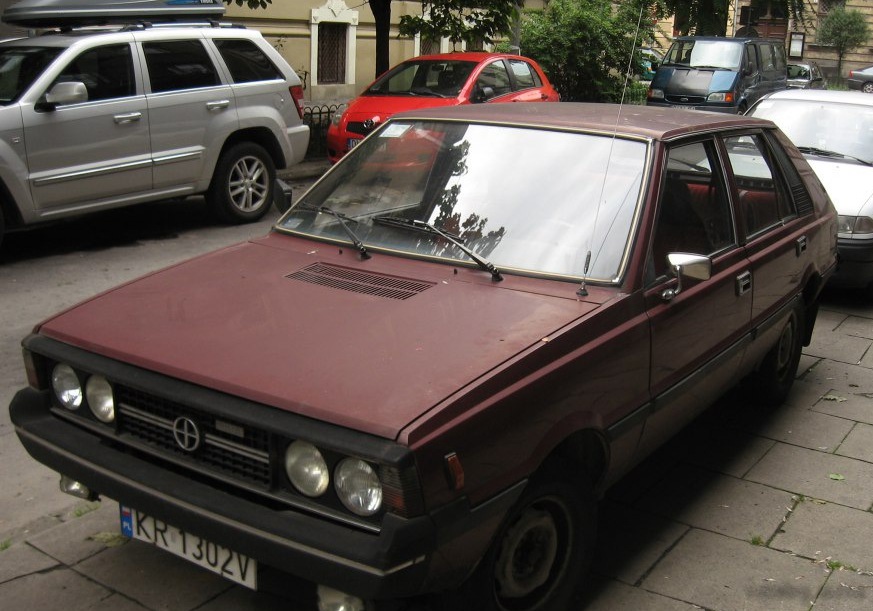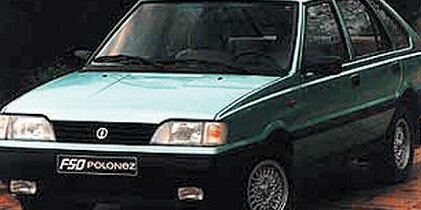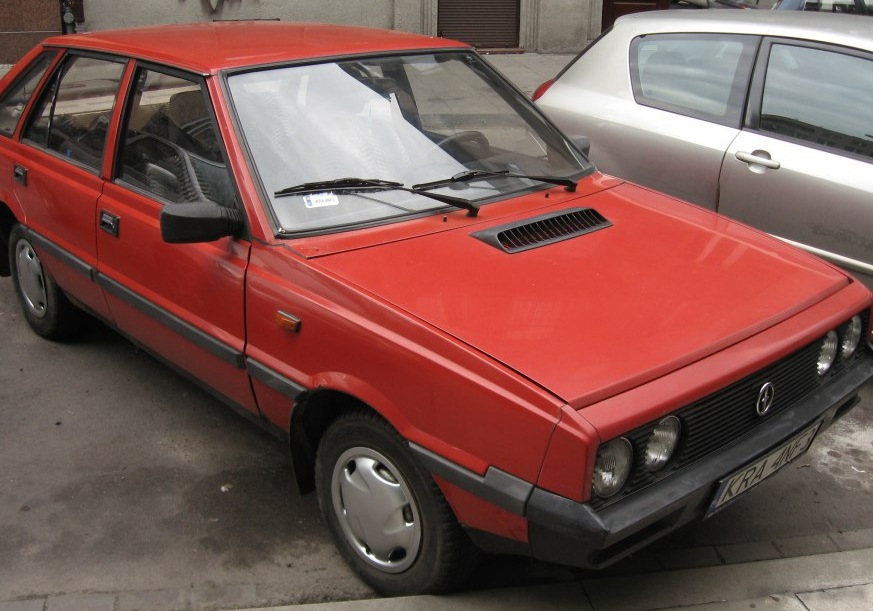
The FSO Polonez II 1.5, producing 75 horsepower, represents a significant iteration of Poland’s domestically produced automobile, manufactured between 1988 and 1992. Positioned as a mainstream, affordable family car, it occupied a crucial role in the Polish automotive market during a period of economic and political transition. The Polonez II, building upon the original Polonez design from the 1970s, aimed to offer a more modern and refined experience, though it remained fundamentally rooted in the aging platform. This 1.5-liter variant served as a core model within the Polonez II range, offering a balance between cost, fuel economy, and usability for the average Polish consumer. It was a direct descendant of the FSO 1500 and 1300 models, inheriting much of their mechanical layout but with updated styling and some improvements to interior comfort.
Technical Specifications
| Brand | FSO |
| Model | Polonez |
| Generation | Polonez II |
| Type (Engine) | 1.5 (75 Hp) |
| Start of Production | 1988 |
| End of Production | 1992 |
| Powertrain Architecture | Internal Combustion Engine |
| Body Type | Hatchback |
| Fuel Type | Petrol (Gasoline) |
| Power | 75 Hp |
| Engine Aspiration | Naturally Aspirated |
Powertrain & Engine Architecture
The Polonez II 1.5 utilized a 1498cc inline-four cylinder engine, designated as the 652 engine. This engine was a development of earlier FSO designs, featuring a cast iron block and an aluminum cylinder head. It employed a single overhead camshaft (SOHC) valvetrain, operating two valves per cylinder. Fuel delivery was managed by a single, two-barrel carburetor – typically a Solex C35F – a relatively simple and robust system common for vehicles of this era and market segment. The engine’s 75 horsepower output was achieved at 5500 rpm, with peak torque of approximately 88 lb-ft (120 Nm) at 3500 rpm. The engine was mated to a four-speed manual transmission as standard, though a five-speed manual was also available on some models. The automatic transmission option, while less common, was a three-speed unit, providing a more convenient driving experience but at the cost of some performance and fuel efficiency. The engine’s design prioritized durability and ease of maintenance over outright performance, reflecting the realities of the Polish automotive industry at the time.
Driving Characteristics
The Polonez II 1.5, particularly in its automatic transmission guise, offered a decidedly unhurried driving experience. Acceleration was modest, with a 0-60 mph (0-97 km/h) time estimated to be around 16-18 seconds. The three-speed automatic transmission featured relatively widely spaced gear ratios, resulting in noticeable shifts and a lack of responsiveness compared to the manual versions. The engine’s torque curve was relatively flat, providing adequate pulling power for everyday driving, but it lacked the punch needed for quick overtaking maneuvers. The suspension, consisting of independent front suspension with MacPherson struts and a live axle with trailing arms at the rear, provided a comfortable ride on most road surfaces, though it was prone to body roll in corners. Steering was by a recirculating ball system, offering a somewhat vague and indirect feel. Compared to the more powerful Polonez II variants, such as those equipped with the 1.6-liter engine, the 1.5-liter model felt noticeably slower and less refined. However, it offered a more economical option for buyers prioritizing fuel efficiency and affordability.
Equipment & Trim Levels
The Polonez II 1.5 was typically offered in relatively basic trim levels, reflecting its position as an affordable family car. Standard equipment generally included cloth upholstery, a basic instrument cluster, and manually operated windows and door locks. Heating and ventilation were standard, but air conditioning was a rare option. The interior design was functional but lacked the sophistication of Western European or Japanese competitors. Higher trim levels, such as the “Lux” variant, offered upgrades such as upgraded upholstery, a more comprehensive instrument panel, and additional chrome trim. Optional extras included a radio, a sunroof, and upgraded wheels. The dashboard layout was relatively simple, with clearly labeled controls and a focus on practicality. The Polonez II 1.5’s interior was designed to withstand the rigors of daily use and to be easily maintained.
Chassis & Braking
The Polonez II utilized a body-on-frame construction, a relatively archaic design by the late 1980s, but one that contributed to the car’s robustness and ease of repair. The front suspension featured MacPherson struts, coil springs, and an anti-roll bar. The rear suspension employed a live axle with trailing arms and leaf springs. Braking was initially provided by drum brakes on all four wheels, though later models often featured front disc brakes. The braking system was adequate for normal driving conditions, but lacked the stopping power and modulation of more modern systems. Steering was by a recirculating ball mechanism, providing a relatively heavy and imprecise feel. The Polonez II’s chassis was designed to prioritize durability and affordability over handling precision. The car’s relatively high center of gravity and soft suspension contributed to noticeable body roll in corners.
Market Reception & Comparison
The Polonez II 1.5 was generally well-received in the Polish market, where it offered a domestically produced alternative to imported vehicles, which were often expensive and difficult to obtain due to import restrictions. Critics praised the car’s affordability, spaciousness, and robust construction. However, it was also criticized for its outdated design, poor fuel economy (compared to some Western European rivals), and lack of refinement. Compared to other Polonez II variants, the 1.5-liter model was seen as a sensible and economical choice for buyers prioritizing practicality over performance. The 1.6-liter version offered more power and a slightly more refined driving experience, but at a higher price point. The diesel-powered Polonez II, while offering excellent fuel economy, was known for its noisy and agricultural engine. The Polonez II 1.5 occupied a sweet spot in the lineup, offering a reasonable balance of cost, performance, and usability.
Legacy
The FSO Polonez II 1.5, while not a technological marvel, holds a significant place in Polish automotive history. It represented a symbol of national pride and a vital source of transportation for many Polish families during a period of significant social and economic change. The 652 engine, while simple in design, proved to be remarkably durable and reliable, and many Polonez II 1.5 models remain on the road today. In the used car market, the Polonez II 1.5 is valued for its affordability, simplicity, and ease of maintenance. Parts availability can be a challenge, but a dedicated community of enthusiasts continues to support the preservation of these classic Polish automobiles. The Polonez II 1.5 serves as a reminder of a bygone era in automotive history, when durability and practicality were often prioritized over performance and luxury.