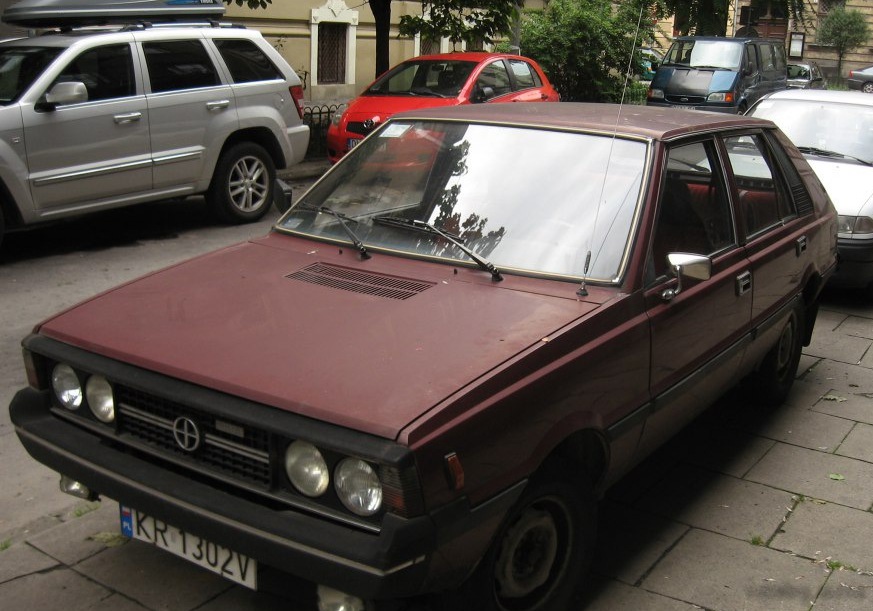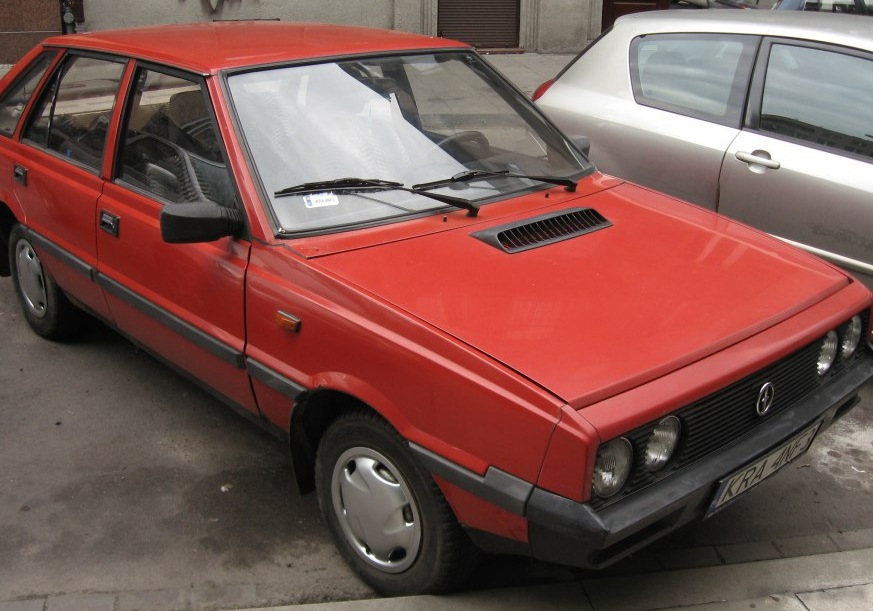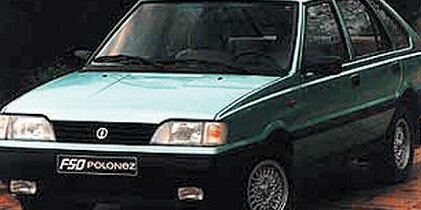
The FSO Polonez III 1.4 i 16V MPi, produced from 1992 to 2002, represents a significant evolution of the Polonez lineage, a car deeply rooted in Polish automotive history. This variant, equipped with a 1.4-liter, 16-valve multi-point fuel-injected engine producing 103 horsepower, occupied a middle ground within the Polonez III range, offering a balance between performance and affordability. It was a key model for FSO (Fabryka Samochodów Osobowych), Poland’s primary automobile manufacturer during the period, catering to a domestic market transitioning towards more modern vehicles. The Polonez III, based on the aging but robust platform originally derived from the Fiat 124, continued to be a popular choice for Polish drivers due to its practicality, spaciousness, and relatively low cost.
Technical Specifications
| Brand | FSO |
| Model | Polonez |
| Generation | Polonez III |
| Type (Engine) | 1.4 i 16V MPi (103 Hp) |
| Start of production | 1992 year |
| End of production | 2002 year |
| Powertrain Architecture | Internal Combustion engine |
| Body type | Hatchback |
| Seats | 5 |
| Doors | 3/5 |
| Fuel consumption (economy) – combined | 7.3 l/100 km |
| Fuel consumption (economy) – combined | 32.2 US mpg |
| Fuel consumption (economy) – combined | 38.7 UK mpg |
| Fuel consumption (economy) – combined | 13.7 km/l |
| Fuel Type | Petrol (Gasoline) |
| Acceleration 0 – 100 km/h | 12 sec |
| Acceleration 0 – 62 mph | 12 sec |
| Acceleration 0 – 60 mph | 11.4 sec |
| Maximum speed | 158 km/h |
| Maximum speed | 98.18 mph |
| Weight-to-power ratio | 10.8 kg/Hp |
| Weight-to-power ratio | 92.4 Hp/tonne |
| Weight-to-torque ratio | 8.8 kg/Nm |
| Weight-to-torque ratio | 113.9 Nm/tonne |
| Power | 103 Hp @ 6000 rpm |
| Power per litre | 73.7 Hp/l |
| Torque | 127 Nm @ 5000 rpm |
| Torque | 93.67 lb.-ft. @ 5000 rpm |
| Engine layout | Front, Longitudinal |
| Engine displacement | 1398 cm3 |
| Engine displacement | 85.31 cu. in. |
| Number of cylinders | 4 |
| Engine configuration | Inline |
| Cylinder Bore | 75 mm |
| Cylinder Bore | 2.95 in. |
| Piston Stroke | 79 mm |
| Piston Stroke | 3.11 in. |
| Compression ratio | 9.5:1 |
| Number of valves per cylinder | 4 |
| Fuel injection system | Multi-port manifold injection |
| Engine aspiration | Naturally aspirated engine |
| Valvetrain | DOHC |
| Kerb Weight | 1115 kg |
| Kerb Weight | 2458.15 lbs |
| Max. weight | 1540 kg |
| Max. weight | 3395.12 lbs |
| Max load | 425 kg |
| Max load | 936.96 lbs |
| Trunk (boot) space – minimum | 300 l |
| Trunk (boot) space – minimum | 10.59 cu. ft. |
| Trunk (boot) space – maximum | 1070 l |
| Trunk (boot) space – maximum | 37.79 cu. ft. |
| Fuel tank capacity | 45 l |
| Fuel tank capacity | 11.89 US gal |
| Fuel tank capacity | 9.9 UK gal |
| Length | 4318 mm |
| Length | 170 in. |
| Width | 1650 mm |
| Width | 64.96 in. |
| Height | 1420 mm |
| Height | 55.91 in. |
| Wheelbase | 2509 mm |
| Wheelbase | 98.78 in. |
| Front track | 1315 mm |
| Front track | 51.77 in. |
| Rear (Back) track | 1292 mm |
| Rear (Back) track | 50.87 in. |
| Drivetrain Architecture | The Internal combustion engine (ICE) drives the rear wheels of the vehicle. |
| Drive wheel | Rear wheel drive |
| Number of gears and type of gearbox | 5 gears, manual transmission |
| Front suspension | Coil spring |
| Rear suspension | Coil spring |
| Front brakes | Disc |
| Rear brakes | Disc |
| Steering type | Steering rack and pinion |
| Tires size | 175/70 R13 |
Powertrain & Engine Architecture
The heart of the Polonez III 1.4 i 16V MPi is the 1398cc inline-four cylinder engine. This engine, designated with codes like F8Q, was a significant upgrade over the earlier, simpler Polonez engines. The 16-valve cylinder head, coupled with multi-point fuel injection, allowed for improved breathing and more efficient combustion. The engine featured a double overhead camshaft (DOHC) valvetrain, further enhancing its performance capabilities. The engine’s longitudinal front-engine, rear-wheel-drive layout was a carryover from the original Fiat 124 design, a configuration somewhat unusual for contemporary European cars. The five-speed manual transmission was the standard offering for this variant, providing a reasonable level of control over the engine’s power. While an automatic transmission was available on some Polonez models, it was less common with the 1.4 16V engine due to the potential for reduced performance and increased fuel consumption.
Driving Characteristics
The 1.4 i 16V MPi Polonez offered a noticeable improvement in performance compared to the lower-powered versions. With 103 horsepower, it could achieve a 0-60 mph time of around 11.4 seconds and a top speed of approximately 98 mph. However, it wasn’t a particularly quick car by modern standards. The rear-wheel-drive configuration provided a unique driving experience, offering a degree of handling balance not typically found in front-wheel-drive hatchbacks. The five-speed manual transmission allowed drivers to keep the engine in its optimal power band, but the relatively long gearing meant that frequent shifting was necessary, especially when accelerating. Compared to the more powerful (but also more expensive) Polonez variants, such as those with larger engines, the 1.4 16V prioritized fuel efficiency and affordability over outright speed.
Equipment & Trim Levels
The Polonez III 1.4 i 16V MPi typically came with a fairly basic level of equipment, reflecting its position as a mainstream, value-oriented vehicle. Standard features generally included cloth upholstery, a basic instrument cluster, and manual windows and door locks. Higher trim levels, often denoted by suffixes like “GL” or “GTE”, added features such as central locking, electric windows, a more sophisticated stereo system, and upgraded interior trim. Optional extras included a sunroof, alloy wheels, and metallic paint. The interior design was functional but somewhat dated, even for the early 1990s, with a focus on durability rather than luxury.
Chassis & Braking
The Polonez III utilized a relatively simple chassis design, featuring coil springs and a stabilizer bar on both the front and rear axles. The rear-wheel-drive layout necessitated a solid rear axle, which contributed to a somewhat firm ride quality. Braking was initially equipped with disc brakes on all four wheels, a feature that was later downgraded to drum brakes on the rear in some markets to reduce production costs. The steering was a rack-and-pinion system, providing reasonably precise control. Tire size was typically 175/70 R13, offering a balance between comfort and handling.
Market Reception & Comparison
The Polonez III 1.4 i 16V MPi was generally well-received in Poland, where it offered a practical and affordable transportation solution. Critics praised its spaciousness, durability, and relatively low running costs. However, it was also criticized for its dated design, somewhat crude interior, and less-than-stellar performance compared to more modern Western European cars. Compared to other Polonez variants, the 1.4 16V offered a good compromise between performance and fuel economy. The larger-engined models provided more power but consumed significantly more fuel, while the smaller-engined versions were noticeably slower. The 1.4 16V was often seen as a sensible choice for drivers who prioritized practicality and affordability over outright performance.
Legacy
The FSO Polonez III 1.4 i 16V MPi, while not a groundbreaking vehicle, holds a significant place in Polish automotive history. It represented a final attempt to modernize a classic design and keep FSO competitive in a rapidly changing market. The 1.4 16V engine proved to be relatively reliable, and many examples are still on the road today, often maintained by dedicated enthusiasts. In the used car market, Polonez III 1.4 i 16V MPi models are relatively affordable and offer a unique glimpse into a bygone era of automotive engineering. Its rear-wheel-drive layout and simple mechanicals make it a popular choice for classic car enthusiasts and those seeking a straightforward, easily maintainable vehicle.