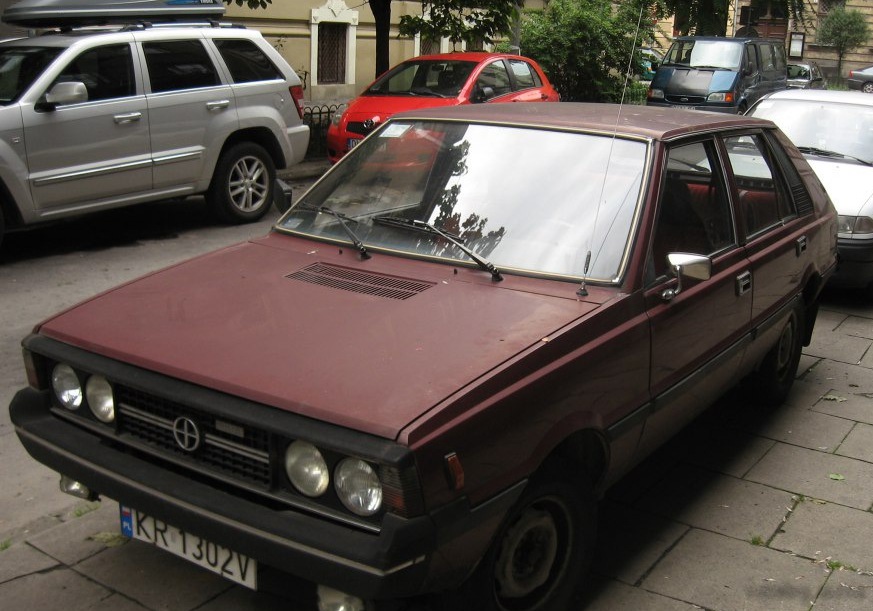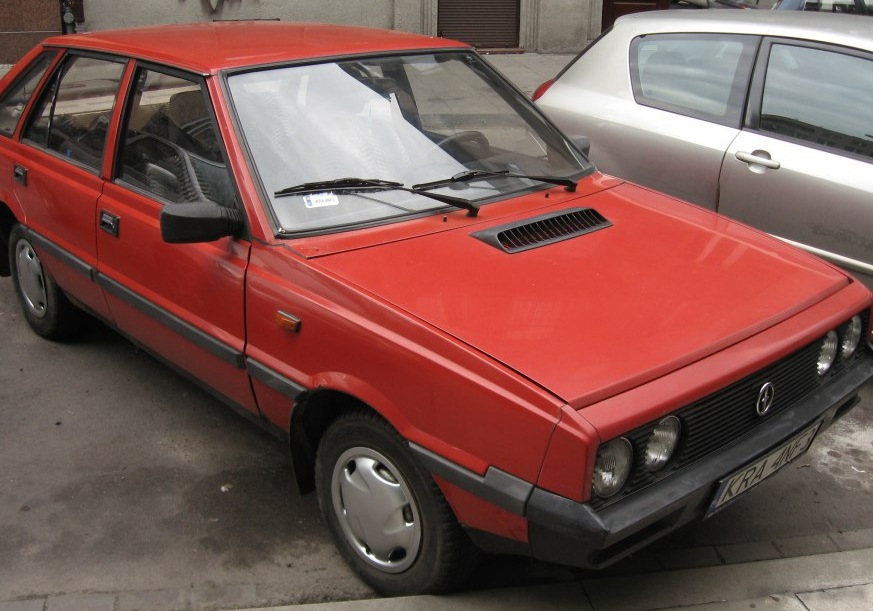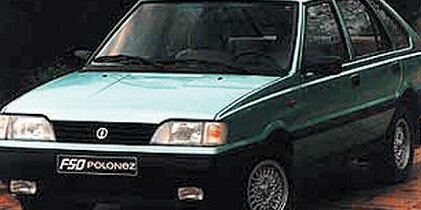
The FSO Polonez III 1.5 GL (82 hp) was a mainstay of the Polish automotive market from 1992 until 2002, representing a significant evolution of the Polonez lineage. Positioned as a mid-range offering within the Polonez III lineup, it aimed to provide a balance of affordability, practicality, and reasonable performance for Polish families. The Polonez III itself was based on the aging, but robust, Fiat 124 platform, extensively modified and updated over decades of production by FSO (Fabryka Samochodów Osobowych), the state-owned manufacturer. This particular 1.5 GL variant, with its carburetor-fed engine and five-speed manual transmission, was a common sight on Polish roads and played a crucial role in providing personal transportation during a period of economic transition.
Technical Specifications
| Brand | FSO |
| Model | Polonez |
| Generation | Polonez III |
| Type (Engine) | 1.5 GL (82 Hp) |
| Start of production | 1992 year |
| End of production | 2002 year |
| Powertrain Architecture | Internal Combustion engine |
| Body type | Hatchback |
| Seats | 5 |
| Doors | 3/5 |
| Fuel consumption (economy) – combined | 8.7 l/100 km |
| Fuel consumption (economy) – combined | 27 US mpg |
| Fuel consumption (economy) – combined | 32.5 UK mpg |
| Fuel consumption (economy) – combined | 11.5 km/l |
| Fuel Type | Petrol (Gasoline) |
| Acceleration 0 – 100 km/h | 18 sec |
| Acceleration 0 – 62 mph | 18 sec |
| Acceleration 0 – 60 mph | 17.1 sec |
| Maximum speed | 155 km/h |
| Maximum speed | 96.31 mph |
| Weight-to-power ratio | 13.6 kg/Hp |
| Weight-to-power ratio | 73.5 Hp/tonne |
| Weight-to-torque ratio | 9.8 kg/Nm |
| Weight-to-torque ratio | 102.2 Nm/tonne |
| Power | 82 Hp @ 5200 rpm |
| Power per litre | 55.4 Hp/l |
| Torque | 114 Nm @ 3400 rpm |
| Torque | 84.08 lb.-ft. @ 3400 rpm |
| Engine layout | Front, Longitudinal |
| Engine displacement | 1481 cm3 |
| Engine displacement | 90.38 cu. in. |
| Number of cylinders | 4 |
| Engine configuration | Inline |
| Cylinder Bore | 77 mm |
| Cylinder Bore | 3.03 in. |
| Piston Stroke | 79.5 mm |
| Piston Stroke | 3.13 in. |
| Compression ratio | 9.2:1 |
| Number of valves per cylinder | 2 |
| Fuel injection system | Carburettor |
| Engine aspiration | Naturally aspirated engine |
| Kerb Weight | 1115 kg |
| Kerb Weight | 2458.15 lbs |
| Max. weight | 1540 kg |
| Max. weight | 3395.12 lbs |
| Max load | 425 kg |
| Max load | 936.96 lbs |
| Trunk (boot) space – minimum | 300 l |
| Trunk (boot) space – minimum | 10.59 cu. ft. |
| Trunk (boot) space – maximum | 1070 l |
| Trunk (boot) space – maximum | 37.79 cu. ft. |
| Fuel tank capacity | 45 l |
| Fuel tank capacity | 11.89 US gal | 9.9 UK gal |
| Length | 4318 mm |
| Length | 170 in. |
| Width | 1650 mm |
| Width | 64.96 in. |
| Height | 1420 mm |
| Height | 55.91 in. |
| Wheelbase | 2509 mm |
| Wheelbase | 98.78 in. |
| Front track | 1315 mm |
| Front track | 51.77 in. |
| Rear (Back) track | 1292 mm |
| Rear (Back) track | 50.87 in. |
| Drivetrain Architecture | The Internal combustion engine (ICE) drives the rear wheels of the vehicle. |
| Drive wheel | Rear wheel drive |
| Number of gears and type of gearbox | 5 gears, manual transmission |
| Front suspension | Coil spring |
| Rear suspension | Coil spring |
| Front brakes | Disc |
| Rear brakes | Disc |
| Tires size | 175/70 R13 |
Powertrain & Engine Architecture
The heart of the Polonez III 1.5 GL was the FSO 1.5-liter inline-four cylinder engine. This engine, derived from the original Fiat 124 design, was designated with engine codes such as SF101. It featured a relatively simple, pushrod-operated valve train with two valves per cylinder. Crucially, this version utilized a carburetor for fuel delivery, a technology increasingly outdated in Western Europe by the 1990s, but still common in Eastern European production. The carburetor provided adequate, if not particularly refined, fuel atomization. The engine’s longitudinal front-engine, rear-wheel-drive layout was a carryover from the original Fiat 124, contributing to the Polonez’s unique driving characteristics. The five-speed manual transmission, while not known for its precision, was durable and well-suited to the engine’s power band. Gear ratios were relatively tall, prioritizing fuel economy over outright acceleration.
Driving Characteristics
The 82 hp and 114 Nm (84 lb-ft) of torque produced by the 1.5 GL engine translated to modest performance. Acceleration from 0 to 100 km/h (0-62 mph) took around 18 seconds, and top speed was limited to approximately 155 km/h (96 mph). Compared to other Polonez III variants, such as those equipped with the larger 1.6-liter engine or the diesel options, the 1.5 GL felt noticeably less powerful. However, the lower power output also meant lighter stress on the drivetrain, potentially contributing to improved long-term reliability. The rear-wheel-drive configuration provided a distinct driving feel, particularly in slippery conditions, requiring a more cautious approach to throttle application. The tall gear ratios made highway cruising relatively economical, but required frequent downshifts for overtaking maneuvers.
Equipment & Trim Levels
The Polonez III 1.5 GL occupied a middle ground in terms of equipment. Standard features typically included basic cloth upholstery, a simple dashboard layout with analog gauges, and manual windows and door locks. Heating and ventilation were standard, but air conditioning was rarely fitted, even as an option. The GL trim generally offered slightly more comfortable seats and improved interior trim compared to the base models. Optional extras included a radio, upgraded speakers, and occasionally, power steering. The interior was functional and durable, but lacked the refinement of contemporary Western European cars.
Chassis & Braking
The Polonez III utilized a body-on-frame construction, a design choice that contributed to its robustness but also added weight. Suspension consisted of coil springs all around, providing a reasonably comfortable ride, although it could feel somewhat wallowy in corners. The front brakes were disc brakes, while the rear brakes were typically disc brakes as well, a relatively advanced setup for a car in this price range. However, the braking system lacked modern features such as ABS. The 175/70 R13 tires provided adequate grip for normal driving conditions, but were not particularly sporty.
Market Reception & Comparison
The Polonez III 1.5 GL was primarily a domestic market vehicle. It was valued for its affordability, spaciousness, and relatively simple mechanical design. Critics often pointed to its outdated technology, particularly the carburetor and the body-on-frame construction. Compared to the diesel-powered Polonez models, the 1.5 GL offered better refinement and acceleration, but at the cost of fuel economy. Against the larger-engined Polonez variants, it provided a more economical option, albeit with significantly less performance. Its main competition came from other domestically produced vehicles and increasingly, used Western European cars.
Legacy
The FSO Polonez III 1.5 GL, while not a technological marvel, holds a significant place in Polish automotive history. Its simple, robust design made it relatively easy to maintain and repair, even decades after production ceased. Today, it is a popular choice among classic car enthusiasts in Poland, valued for its nostalgic appeal and affordability. The carburetor-fed engine requires regular maintenance, but parts are generally readily available. The Polonez III 1.5 GL remains a testament to Polish engineering ingenuity and a reminder of a bygone era in automotive manufacturing.