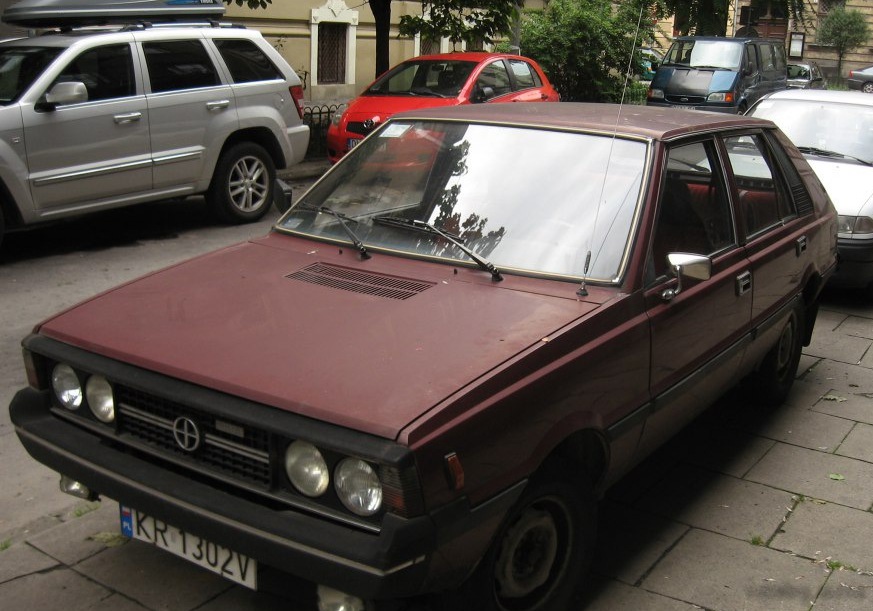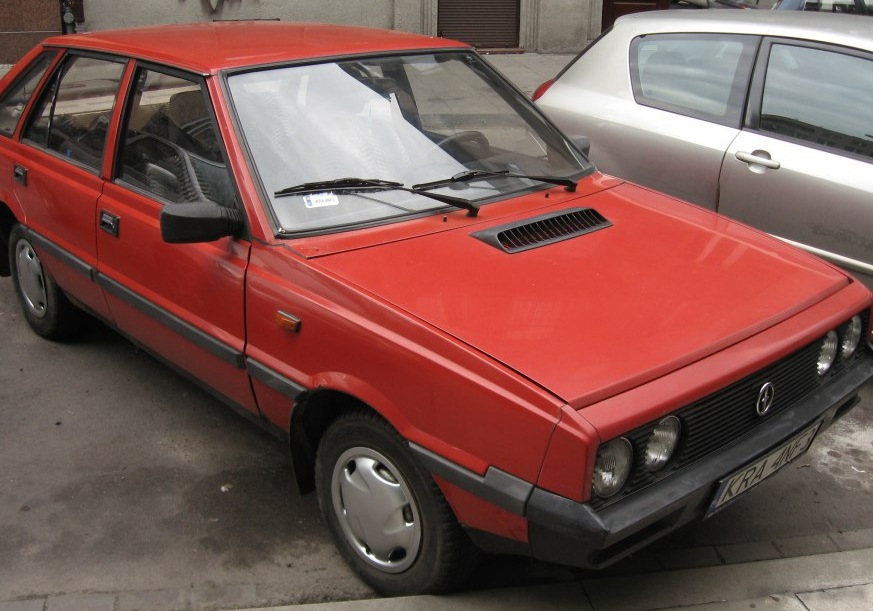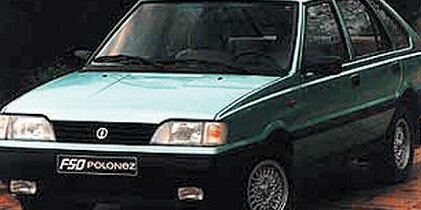
The FSO Polonez III 1.6 i GLi, producing 81 horsepower, was a mainstay of the Polish automotive market from 1992 until 2002. Representing a significant evolution of the Polonez lineage, the III series aimed to modernize the aging platform while remaining affordable for Polish consumers. The 1.6 i GLi trim occupied a middle ground within the Polonez III range, offering a balance between performance, fuel economy, and available features. It was positioned above the base models and below the more powerful, though less common, variants. The Polonez III was built upon the stretched chassis of the Fiat 124, a design dating back to the 1960s, but with substantial modifications over the years.
Technical Specifications
| Brand | FSO |
| Model | Polonez |
| Generation | Polonez III |
| Type (Engine) | 1.6 i GLi (81 Hp) |
| Start of production | 1992 |
| End of production | 2002 |
| Powertrain Architecture | Internal Combustion engine |
| Body type | Hatchback |
| Seats | 5 |
| Doors | 3/5 |
| Fuel consumption (combined) | 8.1 l/100 km (29 US mpg, 34.9 UK mpg, 12.3 km/l) |
| Fuel Type | Petrol (Gasoline) |
| Acceleration 0 – 100 km/h | 15 sec |
| Acceleration 0 – 62 mph | 15 sec |
| Acceleration 0 – 60 mph | 14.3 sec |
| Maximum speed | 156 km/h (96.93 mph) |
| Weight-to-power ratio | 13.8 kg/Hp (72.6 Hp/tonne) |
| Weight-to-torque ratio | 8.9 kg/Nm (112.1 Nm/tonne) |
| Power | 81 Hp @ 5200 rpm |
| Power per litre | 50.7 Hp/l |
| Torque | 125 Nm @ 3200 rpm (92.2 lb.-ft. @ 3200 rpm) |
| Engine layout | Front, Longitudinal |
| Engine displacement | 1598 cm3 (97.52 cu. in.) |
| Number of cylinders | 4 |
| Engine configuration | Inline |
| Cylinder Bore | 80 mm (3.15 in.) |
| Piston Stroke | 79.5 mm (3.13 in.) |
| Compression ratio | 9.5:1 |
| Number of valves per cylinder | 2 |
| Fuel injection system | Single-point injection |
| Engine aspiration | Naturally aspirated engine |
| Kerb Weight | 1115 kg (2458.15 lbs.) |
| Max. weight | 1540 kg (3395.12 lbs.) |
| Max load | 425 kg (936.96 lbs.) |
| Trunk (boot) space – minimum | 300 l (10.59 cu. ft.) |
| Trunk (boot) space – maximum | 1070 l (37.79 cu. ft.) |
| Fuel tank capacity | 45 l (11.89 US gal | 9.9 UK gal) |
| Length | 4318 mm (170 in.) |
| Width | 1650 mm (64.96 in.) |
| Height | 1420 mm (55.91 in.) |
| Wheelbase | 2509 mm (98.78 in.) |
| Front track | 1315 mm (51.77 in.) |
| Rear (Back) track | 1292 mm (50.87 in.) |
| Drivetrain Architecture | The Internal combustion engine (ICE) drives the rear wheels of the vehicle. |
| Drive wheel | Rear wheel drive |
| Number of gears and type of gearbox | 5 gears, manual transmission |
| Front suspension | Coil spring |
| Rear suspension | Coil spring |
| Front brakes | Disc |
| Rear brakes | Disc |
| Tires size | 175/70 R13 |
Powertrain & Engine Architecture
The heart of the Polonez III 1.6 i GLi was the FSO 1.6-liter inline-four cylinder engine. This engine, internally designated with various codes depending on the specific year and minor revisions, was a development of earlier FSO designs, ultimately tracing its roots back to the Fiat 124’s engine. The 1.6-liter unit featured a single overhead camshaft (SOHC) operating two valves per cylinder. Fuel delivery was handled by a single-point fuel injection system, a relatively basic setup compared to the multi-point injection systems becoming more common in Western Europe at the time. This system contributed to the engine’s modest power output and relatively simple maintenance requirements. The engine was mounted longitudinally in the front of the vehicle, driving the rear wheels. The five-speed manual transmission was the standard offering for this trim, providing a reasonable spread of gears for both city driving and highway cruising.
Driving Characteristics
The 81 horsepower and 92.2 lb-ft of torque produced by the 1.6 i GLi engine translated to adequate, but not exhilarating, performance. Acceleration from 0 to 60 mph took around 14.3 seconds, and top speed was approximately 97 mph. The rear-wheel-drive layout provided a somewhat engaging driving experience, particularly for those accustomed to front-wheel-drive cars. However, the Polonez III’s relatively high weight and basic suspension setup meant that it wasn’t particularly nimble in corners. The five-speed manual transmission offered a decent level of control, but the gear ratios were spaced to prioritize fuel economy over outright performance. Compared to the more powerful (but rarer) versions of the Polonez III, the 1.6 i GLi felt noticeably slower, but it offered a more forgiving and economical driving experience.
Equipment & Trim Levels
The GLi trim level represented a step up in terms of equipment compared to the base Polonez III models. Standard features typically included cloth upholstery, a basic stereo system, and a more comprehensive instrument cluster. Power steering was often an optional extra, as were features like electric windows and central locking. The interior design was functional but dated, reflecting the Polonez III’s origins in an older design. The dashboard layout was straightforward, with clearly labeled controls. The 3/5 door hatchback body style provided reasonable practicality, with a trunk capacity ranging from 10.59 to 37.79 cubic feet depending on the rear seats being folded down.
Chassis & Braking
The Polonez III utilized a body-on-frame construction, a design choice that contributed to its robustness but also its relatively high weight. The suspension consisted of coil springs all around, with a relatively simple setup designed for comfort rather than sporty handling. The front brakes were discs, while the rear brakes were also discs, a relatively uncommon feature for a car in this price range at the time. The tires were typically 175/70 R13, providing adequate grip for normal driving conditions. The steering was a recirculating ball system, which offered a somewhat vague feel but required minimal maintenance.
Market Reception & Comparison
The FSO Polonez III 1.6 i GLi was generally well-received in Poland as an affordable and practical family car. Critics praised its spacious interior, robust construction, and relatively low running costs. However, it was also criticized for its dated design, basic features, and somewhat lackluster performance. Compared to other cars in its class, such as the Skoda Favorit or the Lada Samara, the Polonez III offered a more spacious interior and a more comfortable ride, but it lacked the modern features and refinement of some of its competitors. Fuel economy was reasonable for the time, averaging around 29 US mpg.
Legacy
The FSO Polonez III 1.6 i GLi remains a common sight on Polish roads today, testament to its durability and affordability. While it’s no longer in production, it holds a nostalgic place in the hearts of many Polish car enthusiasts. The 1.6-liter engine proved to be relatively reliable, although regular maintenance is essential to keep it running smoothly. Parts availability can be a challenge, but many components are still available from specialist suppliers. In the used car market, the Polonez III 1.6 i GLi is valued for its simplicity, affordability, and classic Polish charm. It represents a significant chapter in the history of the Polish automotive industry.