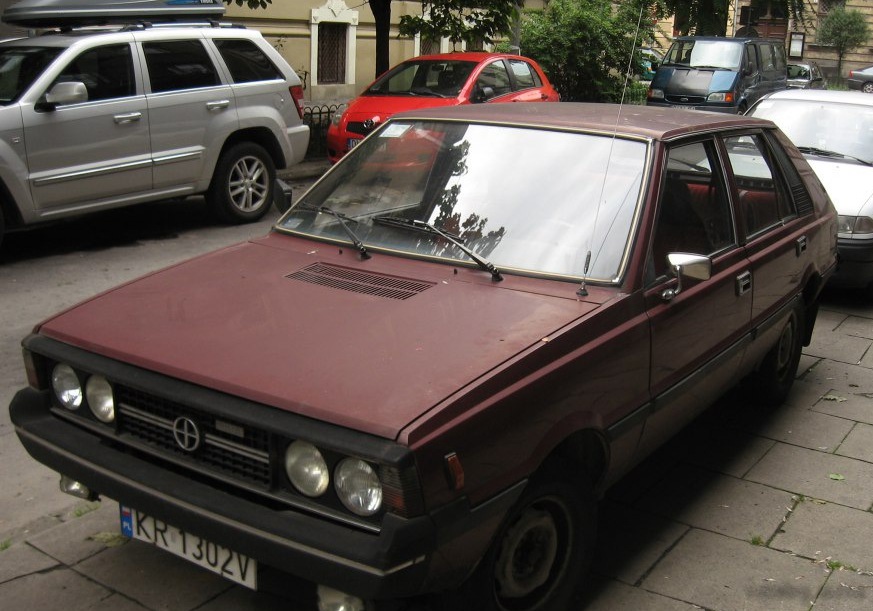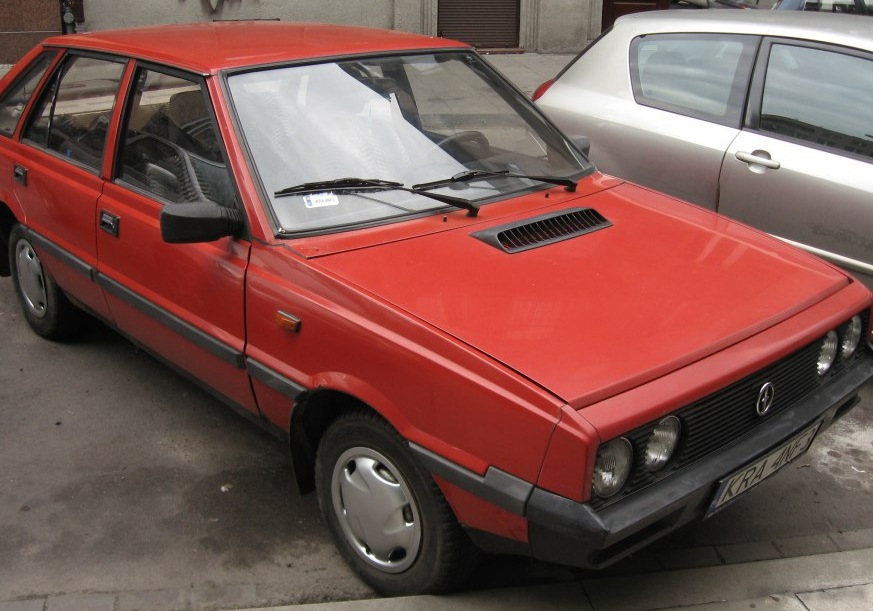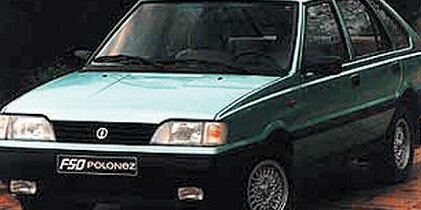
The FSO Polonez III 1.9 D, producing 70 horsepower, was a mainstay of the Polish automotive market from 1992 until 2002. Representing a significant update to the Polonez line, the III series aimed to modernize the aging platform while retaining its affordability and practicality. This diesel variant, powered by the 1.9-liter engine, occupied a crucial position in the lineup, offering a fuel-efficient alternative to the gasoline-powered models and appealing to buyers prioritizing economy over outright performance. The Polonez, throughout its history, was a symbol of Polish automotive engineering, evolving from a licensed Fiat design into a uniquely Polish vehicle. The 1.9 D version, while not exported in significant numbers, played a vital role in domestic transportation and commercial use.
Technical Specifications
| Brand | FSO |
| Model | Polonez |
| Generation | Polonez III |
| Type (Engine) | 1.9 D (70 Hp) |
| Start of production | 1992 |
| End of production | 2002 |
| Powertrain Architecture | Internal Combustion engine |
| Body type | Hatchback |
| Seats | 5 |
| Doors | 3/5 |
| Fuel consumption (combined) | 6.5 l/100 km (36.2 US mpg, 43.5 UK mpg, 15.4 km/l) |
| Fuel Type | Diesel |
| Acceleration 0 – 100 km/h | 20 sec |
| Acceleration 0 – 62 mph | 20 sec |
| Acceleration 0 – 60 mph | 19 sec |
| Maximum speed | 140 km/h (86.99 mph) |
| Weight-to-power ratio | 16.2 kg/Hp (61.7 Hp/tonne) |
| Weight-to-torque ratio | 9.5 kg/Nm (105.7 Nm/tonne) |
| Power | 70 Hp @ 4600 rpm |
| Power per litre | 36.7 Hp/l |
| Torque | 120 Nm @ 2000 rpm (88.51 lb.-ft. @ 2000 rpm) |
| Engine layout | Front, Longitudinal |
| Engine displacement | 1905 cm3 (116.25 cu. in.) |
| Number of cylinders | 4 |
| Engine configuration | Inline |
| Cylinder Bore | 83 mm (3.27 in.) |
| Piston Stroke | 88 mm (3.46 in.) |
| Compression ratio | 23:1 |
| Number of valves per cylinder | 2 |
| Fuel injection system | Precombustion chamber injection |
| Engine aspiration | Naturally aspirated engine |
| Valvetrain | OHC |
| Kerb Weight | 1135 kg (2502.25 lbs.) |
| Max. weight | 1560 kg (3439.21 lbs.) |
| Max load | 425 kg (936.96 lbs.) |
| Trunk (boot) space – minimum | 300 l (10.59 cu. ft.) |
| Trunk (boot) space – maximum | 1070 l (37.79 cu. ft.) |
| Fuel tank capacity | 45 l (11.89 US gal | 9.9 UK gal) |
| Length | 4318 mm (170 in.) |
| Width | 1650 mm (64.96 in.) |
| Height | 1420 mm (55.91 in.) |
| Wheelbase | 2509 mm (98.78 in.) |
| Front track | 1315 mm (51.77 in.) |
| Rear (Back) track | 1292 mm (50.87 in.) |
| Drivetrain Architecture | The Internal combustion engine (ICE) drives the rear wheels of the vehicle. |
| Drive wheel | Rear wheel drive |
| Number of gears and type of gearbox | 5 gears, manual transmission |
| Front suspension | Coil spring |
| Rear suspension | Coil spring |
| Front brakes | Disc |
| Rear brakes | Disc |
| Tires size | 175/70 R13 |
Powertrain & Engine Architecture
The heart of the Polonez III 1.9 D was the 1.9-liter, four-cylinder diesel engine. This engine, often identified by codes such as the Andoria 4C90, was a robust and relatively simple design. It utilized precombustion chamber injection, a common diesel technology of the era, where fuel was injected into a pre-chamber before entering the main cylinder. This design aided in cold starting and reduced engine noise compared to direct injection systems. The engine featured an overhead camshaft (OHC) valvetrain operating two valves per cylinder. While not a high-revving engine, it delivered a respectable 70 horsepower at 4600 rpm and 120 Nm (88.51 lb.-ft.) of torque at 2000 rpm. The engine was mounted longitudinally in the front of the vehicle, driving the rear wheels. The five-speed manual transmission was the standard offering, providing a reasonable spread of gears for maximizing fuel efficiency and managing the engine’s torque characteristics.
Driving Characteristics
The 1.9 D Polonez III was not known for its blistering acceleration. The 0-60 mph time of around 19 seconds reflects its focus on economy rather than performance. However, the engine’s torque delivery made it surprisingly capable for everyday driving and hauling loads. The rear-wheel-drive configuration provided a balanced feel, although the relatively soft suspension and high center of gravity meant it wasn’t a particularly sporty vehicle. Compared to the gasoline-powered Polonez variants, the 1.9 D offered significantly better fuel economy, making it a popular choice for commercial users and those covering long distances. The manual transmission, while not particularly refined, allowed drivers to effectively utilize the engine’s torque band. The gear ratios were spaced to prioritize fuel efficiency, with a relatively tall fifth gear for highway cruising.
Equipment & Trim Levels
The Polonez III 1.9 D was typically offered in fairly basic trim levels, reflecting its affordability. Standard equipment generally included cloth upholstery, a simple dashboard layout, and manual windows and door locks. Heating and ventilation were standard, but air conditioning was rarely fitted. Optional extras included upgraded audio systems, power windows, and central locking. The interior was functional and durable, designed to withstand the rigors of daily use. The 3/5 door configuration offered varying levels of practicality, with the five-door version providing easier access to the rear seats. The rear seats could be folded down to increase cargo space, adding to the vehicle’s versatility.
Chassis & Braking
The Polonez III utilized a body-on-frame construction, a relatively archaic design by the 1990s, but one that contributed to its robustness. The suspension consisted of coil springs all around, providing a comfortable, if somewhat wallowy, ride. Front brakes were discs, while rear brakes were also discs, a relatively uncommon feature for a vehicle in this price range. The steering was a recirculating ball system, offering a direct feel but lacking in precision. The 175/70 R13 tires provided adequate grip for normal driving conditions, but were not designed for high-performance handling.
Market Reception & Comparison
The Polonez III 1.9 D was well-received in Poland as a practical and affordable vehicle. Critics praised its fuel efficiency and durability, but noted its outdated design and lack of refinement. Compared to other trims in the Polonez lineup, the 1.9 D offered the best fuel economy but the slowest acceleration. The gasoline-powered versions provided more power but at the cost of increased fuel consumption. In terms of reliability, the 1.9 D engine proved to be quite robust, although maintenance could be challenging due to the limited availability of parts outside of Poland.
Legacy
The FSO Polonez III 1.9 D represents a significant chapter in Polish automotive history. While it may not have been a technological marvel, it served as a reliable and affordable mode of transportation for many Polish families and businesses. Today, the Polonez III 1.9 D is becoming increasingly collectible, particularly among enthusiasts of Eastern European cars. The engine, while simple, is known for its longevity, and well-maintained examples can still provide years of service. The Polonez’s unique design and historical significance ensure its place as a memorable vehicle in the automotive landscape.