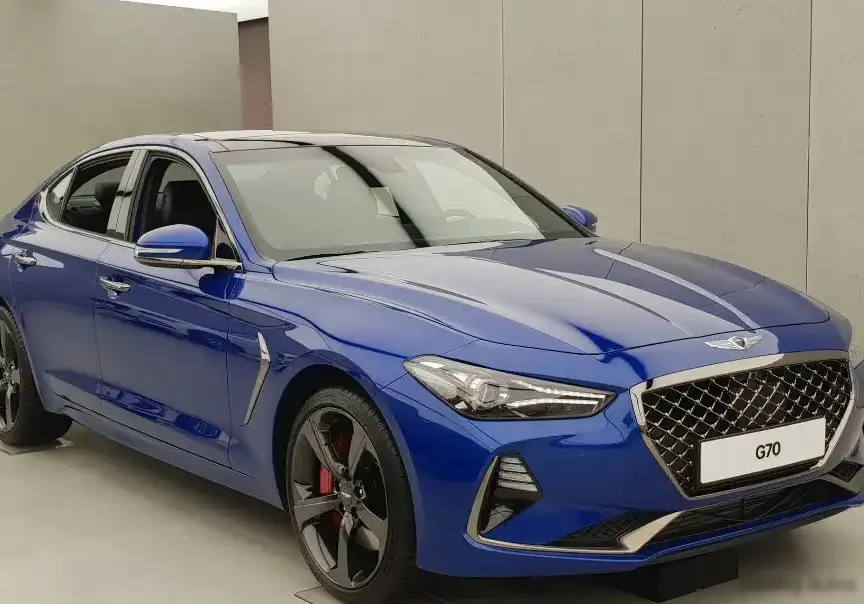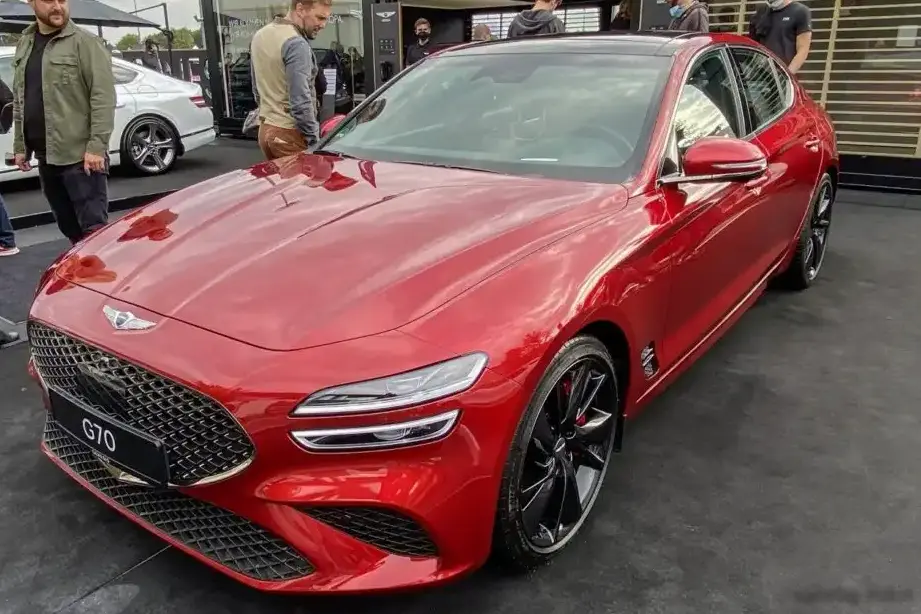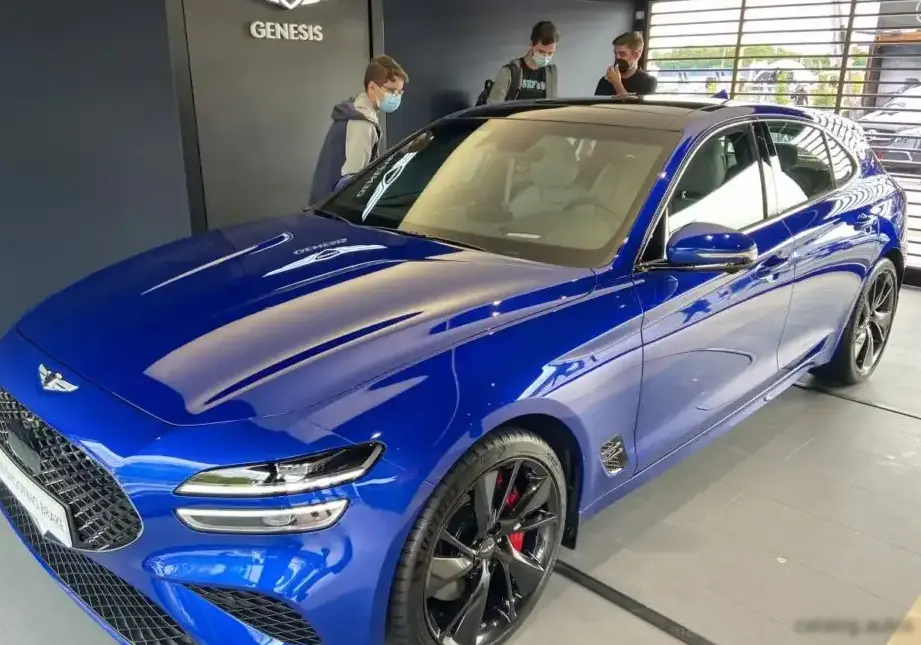
The Genesis G70 Shooting Brake, introduced in late 2021 with a facelift, represents a significant expansion of the G70 model line. Specifically, the 2.2 CRDi (200 horsepower) variant, paired with an eight-speed automatic transmission and all-wheel drive (AWD), aimed to offer a blend of efficiency, practicality, and luxury within the premium compact executive estate (wagon) segment. Positioned as a mid-range offering, it slotted between the more affordable 2.0-liter gasoline models and the higher-performance 3.3-liter turbocharged variants. This Shooting Brake body style was initially offered in Europe, expanding the G70’s appeal beyond the sedan configuration and catering to buyers prioritizing cargo space and versatility.
Technical Specifications
| Brand | Genesis |
| Model | G70 |
| Generation | G70 Shooting Brake (facelift 2021) |
| Type (Engine) | 2.2 CRDi (200 Hp) AWD Automatic |
| Start of production | November, 2021 |
| Powertrain Architecture | Internal Combustion engine |
| Body type | Station wagon (estate) |
| Seats | 5 |
| Doors | 5 |
| Fuel consumption at Low speed (WLTP) | 9.9-10.5 l/100 km (23.8 – 22.4 US mpg, 28.5 – 26.9 UK mpg, 10.1 – 9.5 km/l) |
| Fuel consumption at Medium speed (WLTP) | 7.3-7.6 l/100 km (32.2 – 30.9 US mpg, 38.7 – 37.2 UK mpg, 13.7 – 13.2 km/l) |
| Fuel consumption at high speed (WLTP) | 6.2-6.4 l/100 km (37.9 – 36.8 US mpg, 45.6 – 44.1 UK mpg, 16.1 – 15.6 km/l) |
| Fuel consumption at very high speed (WLTP) | 7.3 l/100 km (32.2 US mpg, 38.7 UK mpg, 13.7 km/l) |
| Combined fuel consumption (WLTP) | 7.3-7.5 l/100 km (32.2 – 31.4 US mpg, 38.7 – 37.7 UK mpg, 13.7 – 13.3 km/l) |
| CO2 emissions (WLTP) | 191-196 g/km |
| Fuel Type | Diesel |
| Acceleration 0 – 100 km/h | 8.2 sec |
| Acceleration 0 – 62 mph | 8.2 sec |
| Acceleration 0 – 60 mph | 7.8 sec |
| Maximum speed | 225 km/h (139.81 mph) |
| Emission standard | Euro 6d |
| Weight-to-power ratio | 9.4 kg/Hp, 106.7 Hp/tonne |
| Weight-to-torque ratio | 4.3 kg/Nm, 234.7 Nm/tonne |
| Power | 200 Hp @ 3800 rpm |
| Power per litre | 91 Hp/l |
| Torque | 440 Nm @ 1750-2750 rpm (324.53 lb.-ft. @ 1750-2750 rpm) |
| Engine layout | Front, Longitudinal |
| Engine Model/Code | R II / D4HC |
| Engine displacement | 2199 cm3 (134.19 cu. in.) |
| Number of cylinders | 4 |
| Engine configuration | Inline |
| Cylinder Bore | 85.4 mm (3.36 in.) |
| Piston Stroke | 96 mm (3.78 in.) |
| Compression ratio | 16:1 |
| Number of valves per cylinder | 4 |
| Fuel injection system | Diesel Commonrail |
| Engine aspiration | Turbocharger, Intercooler |
| Engine oil capacity | 6.3 l (6.66 US qt | 5.54 UK qt) |
| Coolant | 9.82 l (10.38 US qt | 8.64 UK qt) |
| Engine systems | Start & Stop System, Particulate filter |
| Kerb Weight | 1875 kg (4133.67 lbs.) |
| Max. weight | 2335 kg (5147.79 lbs.) |
| Max load | 460 kg (1014.13 lbs.) |
| Trunk (boot) space – minimum | 403 l (14.23 cu. ft.) |
| Trunk (boot) space – maximum | 1535 l (54.21 cu. ft.) |
| Fuel tank capacity | 60 l (15.85 US gal | 13.2 UK gal) |
| Length | 4685 mm (184.45 in.) |
| Width | 1850 mm (72.83 in.) |
| Height | 1400 mm (55.12 in.) |
| Wheelbase | 2835 mm (111.61 in.) |
| Front track | 1592 mm (62.68 in.) |
| Rear (Back) track | 1596 mm (62.83 in.) |
| Front overhang | 805 mm (31.69 in.) |
| Rear overhang | 1045 mm (41.14 in.) |
| Ride height (ground clearance) | 130 mm (5.12 in.) |
| Drag coefficient (Cd) | 0.28 |
| Minimum turning circle (turning diameter) | 11 m (36.09 ft.) |
| Drivetrain Architecture | The Internal combustion engine (ICE) drives the rear wheels permanently, and the front wheels are driven through an electrically or mechanically operated clutch if necessary. |
| Drive wheel | All wheel drive (4×4) |
| Number of gears and type of gearbox | 8 gears, automatic transmission |
| Front suspension | Independent type McPherson |
| Rear suspension | Independent multi-link suspension |
| Front brakes | Ventilated discs, 345 mm |
| Rear brakes | Ventilated discs, 320 mm |
| Assisting systems | ABS (Anti-lock braking system) |
| Steering type | Steering rack and pinion |
| Power steering | Electric Steering |
| Tires size | Front wheel tires: 225/50 R17; 225/45 R18; 225/40 ZR19Rear wheel tires: 225/50 R17; 225/45 R18; 255/35 ZR19 |
| Wheel rims size | Front wheel rims: 7.0J x 17; 8.0J x 18; 8.0J x 19Rear wheel rims: 7.0J x 17; 8.0J x 18; 8.5J x 19 |
Powertrain & Engine Architecture
The heart of this G70 Shooting Brake variant is the Hyundai-Kia R II 2.2-liter inline-four cylinder diesel engine, designated D4HC. This engine utilizes a cast iron block and an aluminum cylinder head, incorporating a turbocharger with an intercooler to boost power and efficiency. The engine employs a common-rail direct injection system, delivering fuel at extremely high pressures for optimized combustion. It features four valves per cylinder and a compression ratio of 16:1. The engine produces 200 horsepower at 3800 rpm and a substantial 440 Nm (324.53 lb-ft) of torque between 1750 and 2750 rpm. This broad torque curve is a hallmark of modern diesel engines, providing strong pulling power across a wide range of engine speeds. The engine is mated to a smooth-shifting eight-speed automatic transmission, which sends power to all four wheels via Genesis’s AWD system. This system typically operates in a rear-wheel-drive bias, engaging the front wheels when traction is needed.
Driving Characteristics
The 2.2 CRDi automatic offers a comfortable and refined driving experience. While not overtly sporty, the engine’s torque output provides ample acceleration for everyday driving and highway cruising. The eight-speed automatic transmission is well-tuned, offering smooth gear changes and contributing to relaxed long-distance travel. Compared to the more powerful 3.3-liter turbocharged gasoline engine, the 2.2 CRDi prioritizes fuel economy and usability over outright performance. The AWD system enhances stability and grip, particularly in inclement weather conditions. The gear ratios are optimized for fuel efficiency, with taller gearing in higher gears to reduce engine speed at cruising speeds. The 0-60 mph time of around 7.8 seconds is respectable, but noticeably slower than the quicker G70 variants.
Equipment & Trim Levels
The 2.2 CRDi AWD automatic typically came well-equipped, reflecting Genesis’s commitment to luxury. Standard features generally included leather upholstery, heated and ventilated front seats, a large touchscreen infotainment system with navigation, a premium sound system, and a suite of advanced driver-assistance systems (ADAS) such as adaptive cruise control, lane-keeping assist, and automatic emergency braking. Optional extras could include a panoramic sunroof, upgraded interior trim materials, and a head-up display. Trim levels varied by market, but generally offered increasing levels of luxury and technology.
Chassis & Braking
The G70 Shooting Brake utilizes a McPherson strut front suspension and a multi-link rear suspension, providing a good balance of ride comfort and handling. The suspension is tuned to prioritize comfort, but still offers decent body control in corners. Braking duties are handled by ventilated discs on all four wheels, providing ample stopping power. The front brakes measure 345mm in diameter, while the rear brakes are 320mm. An anti-lock braking system (ABS) is standard, along with electronic stability control.
Market Reception & Comparison
The Genesis G70 Shooting Brake, and specifically the 2.2 CRDi variant, was generally well-received by automotive critics. The diesel engine was praised for its fuel efficiency and strong torque output, making it a practical choice for long-distance drivers. The spaciousness of the Shooting Brake body style was also a major selling point. Compared to gasoline-powered G70 models, the 2.2 CRDi offered superior fuel economy, but less outright performance. Compared to competitors like the BMW 3 Series Touring and Audi A4 Avant, the G70 Shooting Brake offered a compelling value proposition, with a generous level of standard equipment and a competitive price point.
Legacy
The 2.2 CRDi engine in the G70 Shooting Brake has proven to be a relatively reliable powertrain. While diesel engines can be susceptible to issues with the diesel particulate filter (DPF) if not driven on longer journeys regularly, the R II engine has generally demonstrated good durability. On the used car market, the 2.2 CRDi variant represents a sensible choice for buyers seeking a comfortable, fuel-efficient, and well-equipped luxury estate. Its combination of practicality, refinement, and value continues to make it an attractive option in the premium compact executive segment.