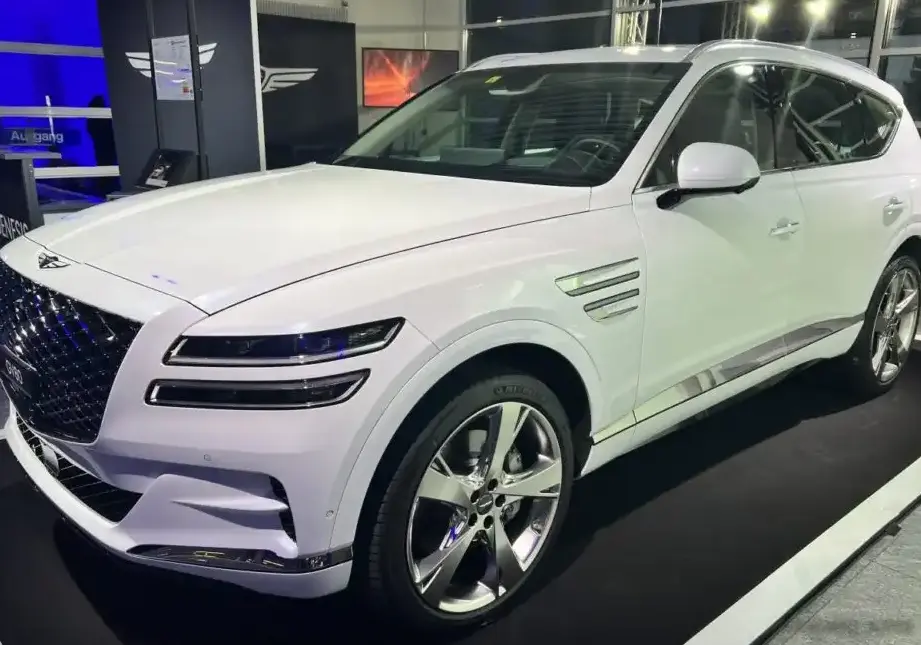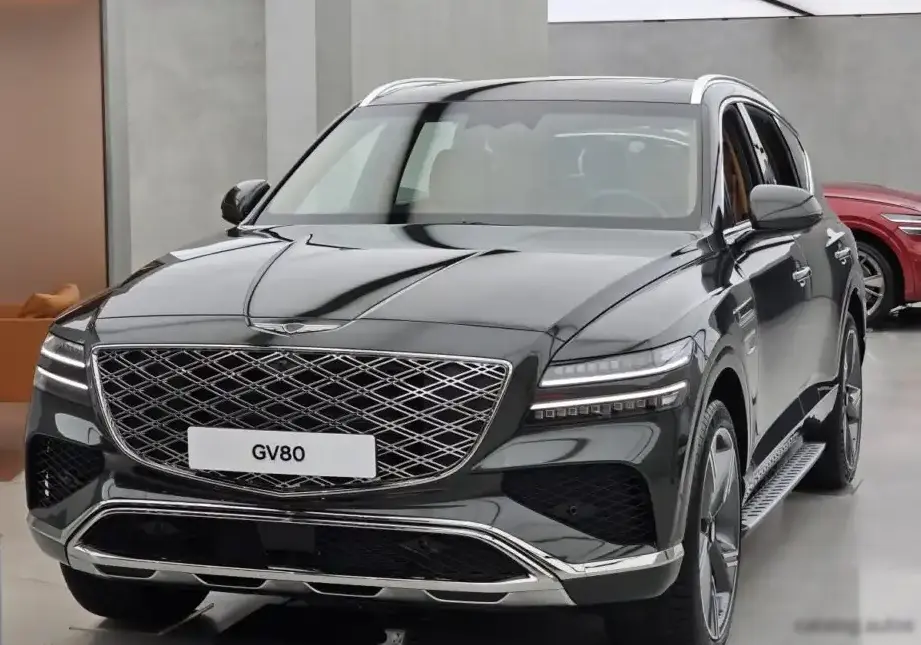
The Genesis GV80, particularly the facelifted 2023 model year, represents a significant step forward for Hyundai’s luxury brand. Introduced in September 2023, the 3.5 T-GDi V6 variant, equipped with a twin-turbocharged 3.5-liter engine producing 380 horsepower and an eight-speed automatic transmission coupled with all-wheel drive, sits at the top of the GV80 lineup. Offered with either six or seven seats, this configuration aims to deliver a blend of luxury, performance, and practicality within the mid-size SUV segment. The 2023 facelift brought revised styling, enhanced technology, and refinements to the driving experience, solidifying the GV80’s position as a competitor to established European and domestic luxury SUVs.
Technical Specifications
| Brand | Genesis |
| Model | GV80 |
| Generation | GV80 (facelift 2023) |
| Type | 3.5 T-GDi V6 (380 Hp) AWD Automatic 6-7 Seat |
| Start of production | September, 2023 |
| Powertrain Architecture | Internal Combustion engine |
| Body type | SUV |
| Seats | 6-7 |
| Doors | 5 |
| Fuel consumption (urban) | 14.7 l/100 km (16 US mpg, 19.2 UK mpg, 6.8 km/l) |
| Fuel consumption (extra urban) | 10.9 l/100 km (21.6 US mpg, 25.9 UK mpg, 9.2 km/l) |
| Fuel consumption (combined) | 13 l/100 km (18.1 US mpg, 21.7 UK mpg, 7.7 km/l) |
| CO2 emissions | 223 g/km |
| Fuel Type | Petrol (Gasoline) |
| Weight-to-power ratio | 5.9 kg/Hp, 169.6 Hp/tonne |
| Weight-to-torque ratio | 4.2 kg/Nm, 236.6 Nm/tonne |
| Power | 380 Hp @ 5800 rpm |
| Power per litre | 109.5 Hp/l |
| Torque | 530 Nm @ 1300-4500 rpm (390.91 lb.-ft. @ 1300-4500 rpm) |
| Engine layout | Front, Longitudinal |
| Engine Model/Code | Smartstream / G6DS |
| Engine displacement | 3470 cm3 (211.75 cu. in.) |
| Number of cylinders | 6 |
| Engine configuration | V-engine |
| Cylinder Bore | 92 mm (3.62 in.) |
| Piston Stroke | 87 mm (3.43 in.) |
| Compression ratio | 11:1 |
| Number of valves per cylinder | 4 |
| Fuel injection system | Direct injection and Multi-port manifold injection |
| Engine aspiration | Twin-Turbo, Intercooler |
| Valvetrain | DOHC |
| Engine oil capacity | 7 l (7.4 US qt | 6.16 UK qt) |
| Coolant | 15.5 l (16.38 US qt | 13.64 UK qt) |
| Kerb Weight | 2240-2275 kg (4938.35 – 5015.52 lbs.) |
| Max. weight | 2960 kg (6525.68 lbs.) |
| Max load | 685-720 kg (1510.17 – 1587.33 lbs.) |
| Trunk (boot) space – minimum | 328 l (11.58 cu. ft.) |
| Trunk (boot) space – maximum | 2030 l (71.69 cu. ft.) |
| Fuel tank capacity | 80 l (21.13 US gal | 17.6 UK gal) |
| Permitted trailer load with brakes (12%) | 2722 kg (6000.98 lbs.) |
| Length | 4940 mm (194.49 in.) |
| Width | 1975 mm (77.76 in.) |
| Height | 1715 mm (67.52 in.) |
| Wheelbase | 2955 mm (116.34 in.) |
| Front track | 1674 mm (65.91 in.) |
| Rear (Back) track | 1689 mm (66.5 in.) |
| Front overhang | 880 mm (34.65 in.) |
| Rear overhang | 1105 mm (43.5 in.) |
| Ride height (ground clearance) | 206 mm (8.11 in.) |
| Drag coefficient (Cd) | 0.33 |
| Minimum turning circle (turning diameter) | 12 m (39.37 ft.) |
| Drivetrain Architecture | The Internal combustion engine (ICE) drives the rear wheels permanently, and the front wheels are driven through an electrically or mechanically operated clutch if necessary. |
| Drive wheel | All wheel drive (4×4) |
| Number of gears and type of gearbox | 8 gears, automatic transmission |
| Front suspension | Coil spring, Independent multi-link suspension, Transverse stabilizer |
| Rear suspension | Independent multi-link spring suspension with stabilizer |
| Front brakes | Ventilated discs, 380 mm |
| Rear brakes | Ventilated discs, 360 mm |
| Assisting systems | ABS (Anti-lock braking system) |
| Steering type | Steering rack and pinion |
| Power steering | Electric Steering |
| Tires size | 265/50 R20; 265/40 R22 |
| Wheel rims size | 8.5J x 20; 9.5J x 22 |
Powertrain & Engine Architecture
The heart of the GV80 3.5 T-GDi is Hyundai’s Smartstream G6DS 3.5-liter twin-turbocharged V6 engine. This engine utilizes a combination of direct injection and multi-port fuel injection to optimize combustion efficiency and power delivery. The twin-turbocharger setup, employing electronically controlled wastegates, minimizes turbo lag and provides a broad torque curve. The engine boasts a compression ratio of 11:1 and a dual overhead camshaft (DOHC) valvetrain. The eight-speed automatic transmission, developed in-house by Hyundai, is designed for smooth and responsive shifting. It features shift-by-wire technology, eliminating the traditional mechanical linkage. The all-wheel-drive system is primarily rear-biased, enhancing driving dynamics, and can dynamically distribute torque between the front and rear axles based on road conditions and driver input.
Driving Characteristics
The 380-horsepower output and 530 Nm (390.91 lb-ft) of torque deliver brisk acceleration. While official 0-60 mph times vary, independent tests consistently place it in the low-to-mid 5-second range. The eight-speed automatic transmission is well-tuned, providing seamless gear changes and contributing to a refined driving experience. Compared to lower-trim GV80 models with the 2.5-liter turbocharged four-cylinder engine, the V6 offers significantly more power and a more effortless feel, particularly when fully loaded or towing. The rear-biased all-wheel-drive system enhances handling and provides a more engaging driving experience than front-wheel-drive based SUVs. However, the GV80 prioritizes comfort over outright sportiness, with a focus on a smooth ride and quiet cabin.
Equipment & Trim Levels
The 3.5 T-GDi typically comes standard with a high level of equipment, including leather upholstery, heated and ventilated front seats, a panoramic sunroof, a premium sound system, and a comprehensive suite of advanced driver-assistance systems (ADAS). These systems often include adaptive cruise control, lane-keeping assist, blind-spot monitoring, and automatic emergency braking. Optional extras can include a rear-seat entertainment system, upgraded leather trim, and a head-up display. The interior design emphasizes luxury and sophistication, with high-quality materials and a minimalist aesthetic.
Chassis & Braking
The GV80 utilizes a robust chassis with independent multi-link suspension at all four corners. The suspension is tuned for comfort, but also provides good body control. Stabilizer bars are fitted front and rear to reduce body roll during cornering. The braking system consists of ventilated discs on all four wheels, with larger discs (380mm front, 360mm rear) on the 3.5 T-GDi model to handle the increased performance. Anti-lock braking system (ABS) and electronic stability control are standard features.
Market Reception & Comparison
The Genesis GV80, and particularly the 3.5 T-GDi variant, has been well-received by automotive critics. It’s praised for its luxurious interior, comfortable ride, and strong performance. Fuel economy, however, is a common criticism, with combined figures around 18.1 US mpg being typical. Compared to competitors like the BMW X5, Mercedes-Benz GLE, and Audi Q7, the GV80 offers a compelling value proposition, often undercutting them in price while providing a similar level of luxury and features. Reliability data is still emerging, but early indications suggest that the GV80 is proving to be a reliable vehicle.
Legacy
The 2023 facelifted GV80 3.5 T-GDi represents a significant milestone for Genesis, demonstrating the brand’s ability to compete with established luxury automakers. The Smartstream V6 engine and eight-speed automatic transmission are expected to be reliable powertrains, although long-term durability data is still being collected. On the used car market, these models are expected to hold their value well due to their combination of luxury, performance, and features. As Genesis continues to expand its lineup, the GV80 3.5 T-GDi will likely be remembered as a pivotal model that helped establish the brand as a serious contender in the luxury SUV segment.