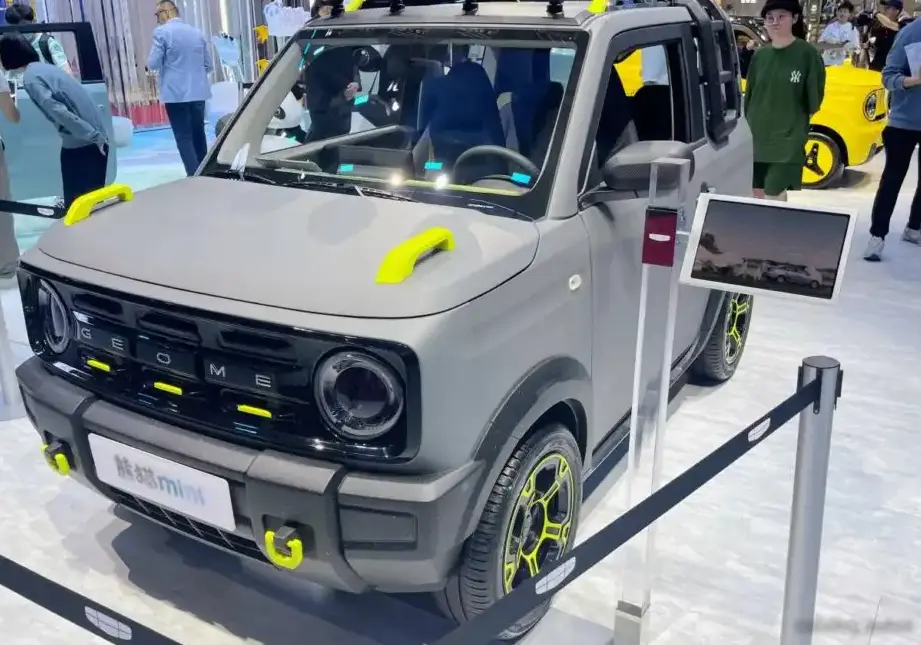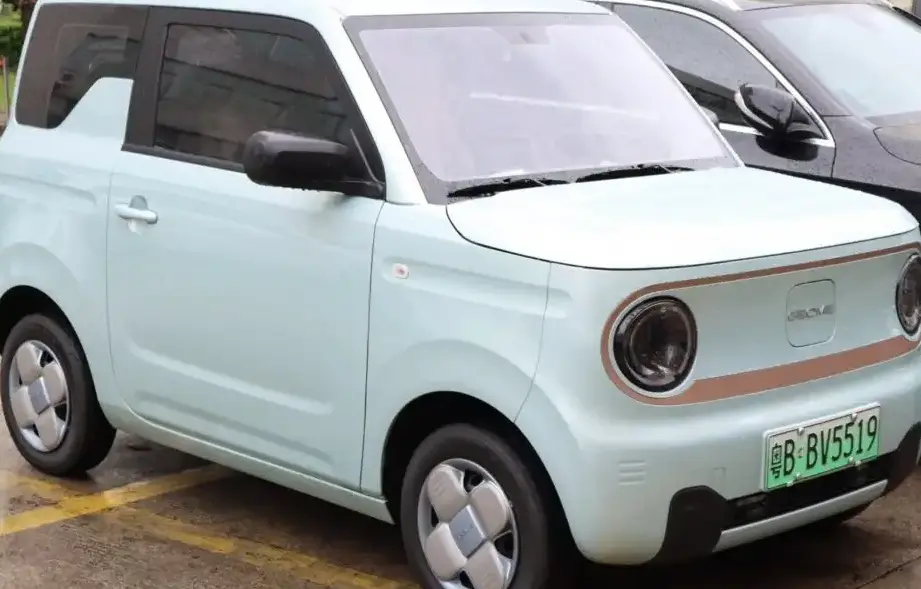
The Geometry Panda Mini 17.03 kWh (41 hp) Electric is a battery electric vehicle (BEV) introduced in December 2022 by Geometry, a sub-brand of the Chinese automaker Zeekr (owned by Geely). Positioned as an entry-level urban microcar, the Panda Mini is designed for short-distance city commuting and is primarily marketed in the Chinese automotive market. It represents a growing trend towards affordable, compact electric vehicles aimed at addressing congestion and air quality concerns in densely populated areas. The Panda Mini is built on a dedicated electric vehicle platform and distinguishes itself with its diminutive size, rear-wheel drive configuration, and focus on practicality.
Technical Specifications
| Brand | Geometry |
| Model | Panda Mini |
| Generation | Panda Mini |
| Type (Engine) | 17.03 kWh (41 Hp) Electric |
| Start of production | December, 2022 |
| Powertrain Architecture | BEV (Electric Vehicle) |
| Body type | Hatchback |
| Seats | 4 |
| Doors | 3 |
| Fuel Type | Electricity |
| Maximum speed | 100 km/h (62.14 mph) |
| Weight-to-power ratio | 19.2 kg/Hp, 52 Hp/tonne |
| Weight-to-torque ratio | 7.2 kg/Nm, 139.6 Nm/tonne |
| Gross battery capacity | 17.03 kWh |
| Battery technology | Lithium iron phosphate (LiFePO4) |
| Battery location | Below the floor |
| All-electric range (CLTC) | 200 km (124.27 mi) |
| Electric motor power | 41 Hp |
| Electric motor Torque | 110 Nm (81.13 lb.-ft.) |
| Electric motor location | Rear axle, Transverse |
| Electric motor type | Synchronous |
| System power | 41 Hp |
| System torque | 110 Nm (81.13 lb.-ft.) |
| Kerb Weight | 788-797 kg (1737.24 – 1757.08 lbs.) |
| Length | 3065 mm (120.67 in.) |
| Width | 1522 mm (59.92 in.) |
| Height | 1600-1610 mm (62.99 – 63.39 in.) |
| Wheelbase | 2015 mm (79.33 in.) |
| Front track | 1315 mm (51.77 in.) |
| Rear (Back) track | 1311 mm (51.61 in.) |
| Ride height (ground clearance) | 170 mm (6.69 in.) |
| Minimum turning circle (turning diameter) | 8 m (26.25 ft.) |
| Drivetrain Architecture | One electric motor drives the rear wheels. |
| Drive wheel | Rear wheel drive |
| Number of gears and type of gearbox | 1 gears, automatic transmission |
| Front suspension | Independent type McPherson |
| Rear suspension | Independent multi-link suspension |
| Front brakes | Disc |
| Rear brakes | Drum |
| Assisting systems | ABS (Anti-lock braking system) |
| Steering type | Steering rack and pinion |
| Power steering | Electric Steering |
| Tires size | 155/70 R13; 155/65 R14 |
| Wheel rims size | 13; 14 |
Powertrain & Engine Architecture
The Geometry Panda Mini utilizes a single electric motor located on the rear axle, delivering 41 horsepower and 110 Nm (81.13 lb.-ft.) of torque. This rear-wheel drive configuration is relatively uncommon in this segment and contributes to a unique driving feel. The vehicle is powered by a 17.03 kWh Lithium Iron Phosphate (LiFePO4) battery pack, positioned under the floor to maximize interior space. LiFePO4 batteries are known for their thermal stability and longer lifespan compared to some other lithium-ion chemistries, though they generally offer lower energy density. The Panda Mini employs a single-speed automatic transmission, simplifying operation and focusing on ease of use for urban driving. The electric motor is a synchronous type, chosen for its efficiency and reliability.
Driving Characteristics
The Panda Mini’s 41 hp output and single-speed transmission result in modest acceleration. It’s designed for navigating city streets rather than highway cruising. The rear-wheel drive layout provides a slightly different handling balance compared to front-wheel drive competitors, offering a bit more playful handling in dry conditions. The single gear ratio is optimized for low-speed torque, making it responsive in stop-and-go traffic. While not a performance vehicle, the Panda Mini offers sufficient power for its intended purpose. The CLTC-rated range of 200 km (124.27 miles) is adequate for daily commutes and errands within urban environments.
Equipment & Trim Levels
As an entry-level vehicle, the Geometry Panda Mini focuses on essential features. Standard equipment typically includes air conditioning, power windows, a basic infotainment system with Bluetooth connectivity, and ABS. Interior upholstery is generally simple and durable, prioritizing practicality over luxury. Higher trim levels may offer features such as a larger touchscreen display, a reversing camera, and upgraded interior materials. The overall interior design is minimalist and functional, maximizing space within the compact dimensions of the vehicle.
Chassis & Braking
The Panda Mini features an independent McPherson strut suspension at the front and an independent multi-link suspension at the rear, providing a relatively comfortable ride considering its size and price point. The front brakes are disc brakes, while the rear brakes are drum brakes – a cost-saving measure common in this segment. The electric steering system provides light and easy steering, making it maneuverable in tight spaces. The vehicle’s relatively low curb weight (788-797 kg / 1737.24 – 1757.08 lbs.) contributes to its agility and efficiency.
Market Reception & Comparison
The Geometry Panda Mini has been well-received in the Chinese market as an affordable and practical electric city car. Critics have praised its compact size, ease of parking, and reasonable range for urban use. Compared to other entry-level electric vehicles in China, the Panda Mini stands out with its rear-wheel drive configuration and relatively spacious interior for its size. Its fuel economy (electricity consumption) is competitive within its class. Reliability reports are still emerging, but the use of a LiFePO4 battery suggests good long-term durability.
Legacy
The Geometry Panda Mini represents a significant step towards making electric mobility accessible to a wider range of consumers. Its focus on affordability and practicality addresses a key barrier to EV adoption. While its long-term reliability remains to be fully assessed, the use of proven technologies like the LiFePO4 battery and a simple electric powertrain suggests a reasonable expectation of durability. As the electric vehicle market continues to evolve, the Panda Mini serves as an example of how compact, affordable EVs can play a crucial role in reducing emissions and improving urban air quality. Its success in the Chinese market may influence the development of similar micro-EVs in other parts of the world.