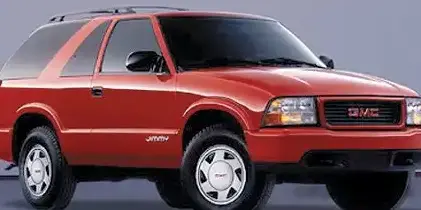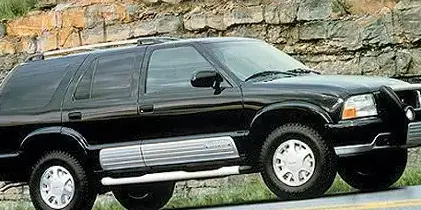
The GMC Jimmy LWB 4.3i V6 4×4 Automatic, produced from 1994 to 2001, represents a significant iteration of GMC’s compact SUV offering. Part of the second generation of the Jimmy (1983-2001), the “LWB” designation signifies the longer wheelbase version, offering increased interior space and cargo capacity compared to the standard-length model. This variant, powered by the 4.3-liter V6 engine and paired with a four-speed automatic transmission, was positioned as a versatile, family-oriented vehicle capable of both on-road comfort and moderate off-road capability. It competed directly with vehicles like the Ford Explorer, Chevrolet Blazer, and Jeep Cherokee, offering a blend of truck-based durability and SUV convenience.
Technical Specifications
| Brand | GMC |
| Model | Jimmy |
| Generation | Jimmy LWB |
| Type (Engine) | 4.3i V6 (190 Hp) 4×4 Automatic |
| Start of production | 1994 |
| End of production | 2001 |
| Powertrain Architecture | Internal Combustion engine |
| Body type | SUV |
| Seats | 5 |
| Doors | 5 |
| Fuel consumption (urban) | 15.7 l/100 km (15 US mpg, 18 UK mpg) |
| Fuel consumption (extra urban) | 11.7 l/100 km (20.1 US mpg, 24.1 UK mpg) |
| Fuel Type | Petrol (Gasoline) |
| Weight-to-power ratio | 9.9 kg/Hp |
| Weight-to-torque ratio | 5.5 kg/Nm |
| Power | 190 Hp @ 4400 rpm |
| Power per litre | 44.2 Hp/l |
| Torque | 339 Nm @ 2800 rpm (250.03 lb.-ft. @ 2800 rpm) |
| Maximum engine speed | 5600 rpm |
| Engine layout | Front, Longitudinal |
| Engine Model/Code | L35 |
| Engine displacement | 4300 cm3 (262.4 cu. in.) |
| Number of cylinders | 6 |
| Engine configuration | V-engine |
| Cylinder Bore | 101.6 mm (4 in.) |
| Piston Stroke | 88.4 mm (3.48 in.) |
| Compression ratio | 9.2:1 |
| Number of valves per cylinder | 2 |
| Fuel injection system | Multi-port manifold injection |
| Engine aspiration | Naturally aspirated |
| Engine oil capacity | 4.3 l (4.54 US qt, 3.78 UK qt) |
| Coolant capacity | 11.1 l (11.73 US qt, 9.77 UK qt) |
| Kerb Weight | 1875 kg (4133.67 lbs.) |
| Max. weight | 2427 kg (5350.62 lbs.) |
| Max load | 552 kg (1216.95 lbs.) |
| Trunk (boot) space – minimum | 456 l (16.1 cu. ft.) |
| Trunk (boot) space – maximum | 2098 l (74.09 cu. ft.) |
| Fuel tank capacity | 68 l (17.96 US gal, 14.96 UK gal) |
| Permitted trailer load with brakes (12%) | 2540 kg (5599.74 lbs.) |
| Length | 4669 mm (183.82 in.) |
| Width | 1722 mm (67.8 in.) |
| Height | 1631 mm (64.21 in.) |
| Wheelbase | 2718 mm (107.01 in.) |
| Front track | 1453 mm (57.2 in.) |
| Rear track | 1400 mm (55.12 in.) |
| Ride height (ground clearance) | 190 mm (7.48 in.) |
| Minimum turning circle | 13.5 m (44.29 ft.) |
| Drive wheel | All wheel drive (4×4) |
| Number of gears | 4 |
| Gearbox type | Automatic transmission |
| Front suspension | Torsion |
| Rear suspension | Leaf spring |
| Front brakes | Ventilated discs |
| Rear brakes | Disc |
| Assisting systems | ABS (Anti-lock braking system) |
| Steering type | Steering rack and pinion |
| Power steering | Hydraulic |
| Tires size | 235/70 R15 |
| Wheel rims size | 7.0J x 15 |
Powertrain & Engine Architecture
The heart of the Jimmy LWB 4.3i was the 4.3-liter (262 cubic inch) V6 engine, designated the L35. This engine was a member of General Motors’ widely used “300 series” of V6 engines, known for their durability and relatively simple design. It featured a 90-degree V-angle, two valves per cylinder, and a cast iron block with aluminum cylinder heads. Fuel delivery was handled by a multi-port fuel injection system, providing adequate performance for the vehicle’s intended use. The engine produced 190 horsepower at 4400 rpm and 339 Nm (250 lb-ft) of torque at 2800 rpm. The four-speed automatic transmission (likely a 4L60E) was chosen for its ease of use and suitability for both on-road driving and light off-roading. This transmission featured electronic control for smoother shifting and improved fuel efficiency compared to older hydraulic systems.
Driving Characteristics
The 4.3L V6 and automatic transmission combination in the Jimmy LWB provided adequate, though not exhilarating, performance. Acceleration was reasonable for everyday driving, but the vehicle wasn’t particularly quick. The automatic transmission’s gear ratios were tuned for torque multiplication, prioritizing usability over outright speed. Compared to the available five-speed manual transmission, the automatic offered less driver engagement but greater convenience, especially in urban environments. The longer wheelbase of the LWB model contributed to a more stable ride compared to the shorter wheelbase Jimmy, but the leaf spring rear suspension could result in a somewhat bouncy ride when unladen. The 4×4 system, typically part-time with a two-speed transfer case, allowed for improved traction in slippery conditions, but wasn’t designed for serious off-road trails.
Equipment & Trim Levels
The Jimmy LWB 4.3i 4×4 Automatic typically came with a fairly standard equipment list for the time. Base models included features like air conditioning, power steering, a tilt steering wheel, and cloth upholstery. Higher trim levels, such as the SLT, added features like upgraded audio systems, power windows and locks, cruise control, and alloy wheels. Optional extras included a sunroof, leather upholstery, and a towing package. Interior design was functional and durable, prioritizing practicality over luxury. The dashboard layout was straightforward, with easy-to-read gauges and logically placed controls.
Chassis & Braking
The Jimmy LWB utilized a body-on-frame construction, providing a robust and durable platform. Front suspension consisted of independent torsion bars, while the rear suspension employed leaf springs. This setup was typical for truck-based SUVs of the era. Braking duties were handled by ventilated discs at the front and discs at the rear, with ABS (Anti-lock Braking System) becoming increasingly common as a standard feature. The steering system was a rack-and-pinion setup with hydraulic power assist, providing reasonably precise steering feel. The tires, typically 235/70R15, were chosen for a balance of on-road comfort and off-road traction.
Market Reception & Comparison
The GMC Jimmy LWB 4.3i 4×4 Automatic was generally well-received by consumers and critics alike. It was praised for its spacious interior, comfortable ride (especially with the LWB), and capable 4×4 system. However, some reviewers noted that the engine could feel underpowered when fully loaded or climbing steep hills. Fuel economy was also a common criticism, typical for a vehicle of its size and type. Compared to the manual transmission versions, the automatic offered less fuel efficiency and slightly reduced performance. Against competitors like the Ford Explorer and Chevrolet Blazer, the Jimmy offered a similar level of capability and features, often at a slightly lower price point.
Legacy
The GMC Jimmy LWB 4.3i V6 4×4 Automatic has become a popular choice among enthusiasts and collectors. The L35 V6 engine is known for its reliability and relatively simple maintenance requirements. While not a high-performance vehicle, it provides a dependable and capable platform for both daily driving and light off-roading. Today, well-maintained examples command reasonable prices in the used car market, appealing to those seeking a classic SUV with a blend of practicality, durability, and nostalgic charm. Common issues to look for include rust, particularly in areas prone to corrosion, and potential wear and tear on the automatic transmission. Overall, the Jimmy LWB remains a testament to a bygone era of truck-based SUVs, offering a unique combination of features and characteristics.