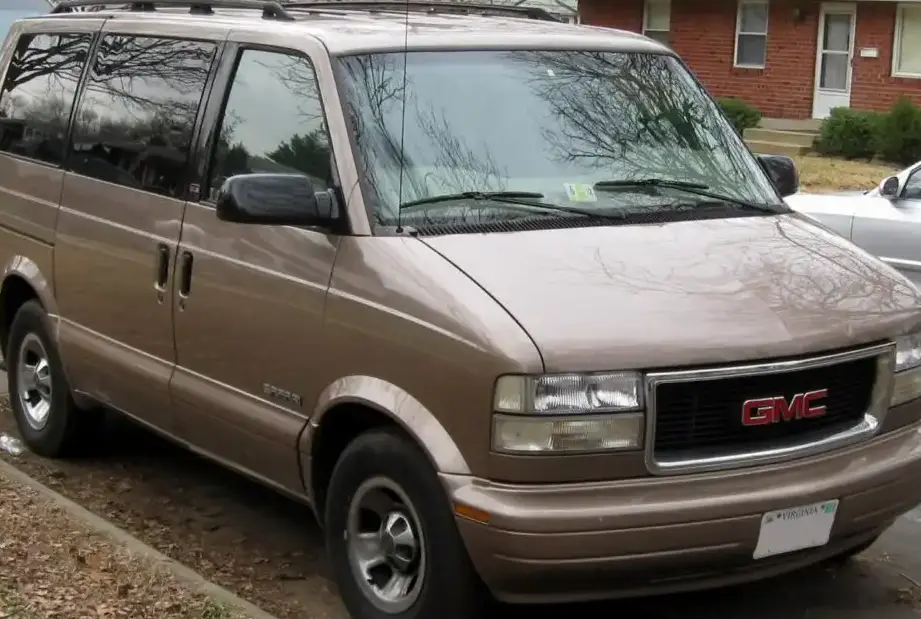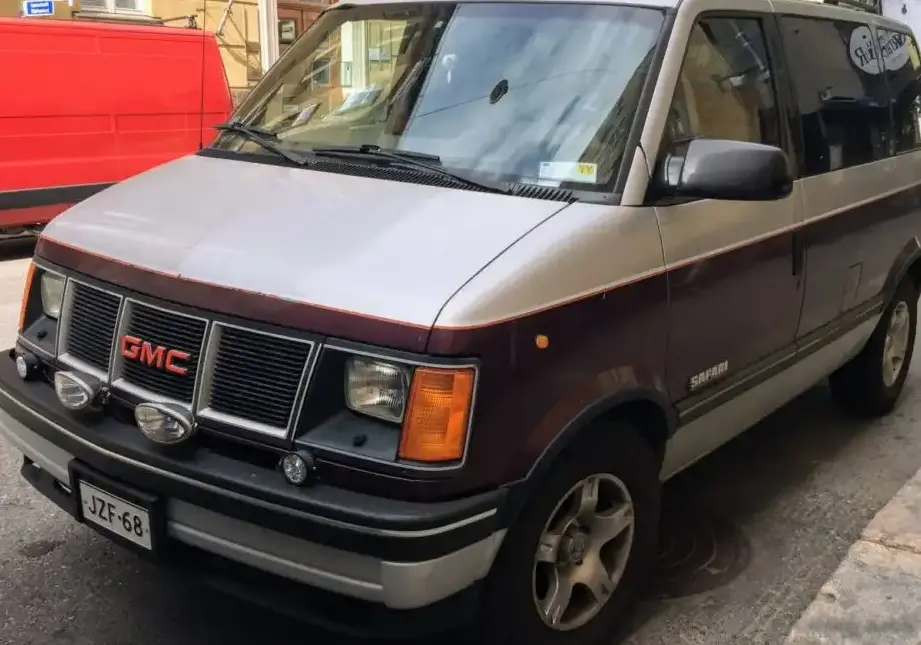
The GMC Safari I 2.5 EFi (92 Hp) represents a significant entry point into the first generation of the GMC Safari minivan, produced from 1985 to 1994. Positioned as a more affordable option within the Safari lineup, this variant catered to buyers prioritizing practicality and basic transportation over outright performance. The Safari, along with its Chevrolet Venture and Oldsmobile Silhouette counterparts, was GM’s response to the growing popularity of minivans, aiming to capture a share of the family vehicle market dominated by Chrysler’s offerings. This particular 2.5-liter engine and 5-speed manual transmission combination offered a balance between fuel economy and usability, though it was often overshadowed by the more powerful V6 options available.
Technical Specifications
| Brand | GMC |
| Model | Safari |
| Generation | Safari I |
| Type (Engine) | 2.5 EFi (92 Hp) |
| Start of production | 1985 |
| End of production | 1994 |
| Powertrain Architecture | Internal Combustion engine |
| Body type | Minivan |
| Seats | 7 |
| Doors | 3 |
| Fuel Type | Petrol (Gasoline) |
| Power | 92 Hp @ 4400 rpm |
| Power per litre | 37.2 Hp/l |
| Torque | 182 Nm @ 2800 rpm / 134.24 lb.-ft. @ 2800 rpm |
| Engine layout | Front, Longitudinal |
| Engine Model/Code | 151 CID |
| Engine displacement | 2474 cm3 / 150.97 cu. in. |
| Number of cylinders | 4 |
| Engine configuration | Inline |
| Cylinder Bore | 101.6 mm / 4 in. |
| Piston Stroke | 76.2 mm / 3 in. |
| Compression ratio | 9.3:1 |
| Fuel injection system | Multi-port manifold injection |
| Engine aspiration | Naturally aspirated engine |
| Trunk (boot) space – minimum | 626 l / 22.11 cu. ft. |
| Trunk (boot) space – maximum | 4128 l / 145.78 cu. ft. |
| Fuel tank capacity | 64 l / 16.91 US gal | 14.08 UK gal |
| Length | 4490 mm / 176.77 in. |
| Width | 1956 mm / 77.01 in. |
| Height | 1905 mm / 75 in. |
| Wheelbase | 2819 mm / 110.98 in. |
| Front track | 1654 mm / 65.12 in. |
| Rear (Back) track | 1654 mm / 65.12 in. |
| Front overhang | 777 mm / 30.59 in. |
| Rear overhang | 894 mm / 35.2 in. |
| Drag coefficient (Cd) | 0.38 |
| Drivetrain Architecture | The Internal combustion engine (ICE) drives the rear wheels of the vehicle. |
| Drive wheel | Rear wheel drive |
| Number of gears and type of gearbox | 5 gears, manual transmission |
| Front suspension | Independent coil spring |
| Rear suspension | Leaf spring |
| Front brakes | Disc |
| Rear brakes | Drum |
| Tires size | 195/75 R15 |
| Wheel rims size | 15 |
Powertrain & Engine Architecture
The heart of the Safari I 2.5 EFi is the 151 cubic inch (2.474 liter) inline-four cylinder engine. This engine, designated with various codes depending on the year, was a relatively simple and robust design. It featured a cast iron block and cylinder head, and utilized a multi-port fuel injection system for improved efficiency and drivability compared to earlier carbureted engines. The 9.3:1 compression ratio was a compromise between performance and the fuel quality available at the time. The engine’s valvetrain employed a single overhead camshaft (SOHC) design, keeping the engine relatively compact. Paired with this engine was a 5-speed manual transmission, offering drivers more control over gear selection and potentially better fuel economy than the available automatic options. This transmission was a standard offering, designed for durability and ease of maintenance.
Driving Characteristics
The 92 horsepower output of the 2.5-liter engine in the Safari I resulted in modest, but adequate, performance. Acceleration was not brisk, and fully loading the minivan with passengers and cargo significantly impacted its ability to climb hills or merge onto highways. The 5-speed manual transmission helped to mitigate some of these limitations, allowing drivers to keep the engine in its optimal power band. Gear ratios were fairly widely spaced, prioritizing fuel economy over rapid acceleration. Compared to the V6-powered Safaris, this variant felt noticeably slower and required more planning when overtaking. However, the lighter engine weight contributed to slightly improved handling and a more nimble feel, particularly in city driving.
Equipment & Trim Levels
The 2.5 EFi trim of the Safari I was generally considered the base model. Standard features typically included cloth upholstery, a basic AM/FM radio, and manual windows and locks. Air conditioning was often an optional extra, as were power windows and upgraded sound systems. The interior was designed for practicality and durability, with hard-wearing materials and a focus on maximizing space. The dashboard layout was functional but lacked the aesthetic refinements found in higher trim levels. Optional extras could include a rear window defroster, cruise control, and upgraded interior trim packages.
Chassis & Braking
The Safari I utilized a body-on-frame construction, a common practice for vans and trucks at the time. The front suspension consisted of independent coil springs, providing a reasonably comfortable ride. The rear suspension employed a traditional leaf spring setup, which was robust and capable of handling heavy loads but could result in a somewhat bumpy ride, especially when unladen. Braking duties were handled by disc brakes at the front and drum brakes at the rear. The braking system was adequate for normal driving conditions, but the rear drum brakes lacked the stopping power and fade resistance of disc brakes. The 195/75 R15 tires provided a reasonable balance between ride comfort and handling.
Market Reception & Comparison
The Safari I 2.5 EFi was viewed by automotive critics as a sensible, if unexciting, option for families on a budget. Its fuel economy was a selling point, particularly in the mid-1980s when gasoline prices were volatile. However, its lack of power and relatively basic features were often criticized. Compared to the V6-powered Safaris, the 2.5 EFi offered significantly lower performance but at a lower purchase price. The V6 models were favored by buyers who needed to tow trailers or frequently carried heavy loads. Reliability was generally good, although the 2.5-liter engine was known to be prone to oil leaks as it aged.
Legacy
The GMC Safari I 2.5 EFi, while not the most glamorous or powerful version of the Safari, remains a popular choice among collectors and enthusiasts seeking a classic American minivan. Its simplicity and relatively low maintenance costs make it an appealing option for those looking for a vintage vehicle. The 2.5-liter engine, while not known for its longevity, is relatively easy to repair and parts are still readily available. In the used car market today, these Safaris are often found in well-preserved condition, offering a nostalgic glimpse into the early days of the minivan revolution. The 5-speed manual transmission is particularly sought after by enthusiasts who appreciate its engaging driving experience.