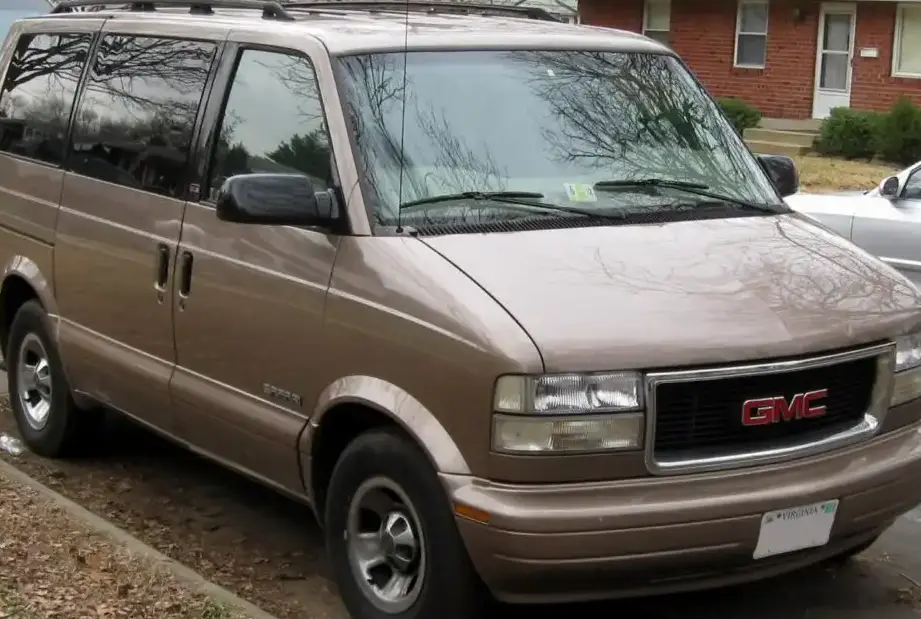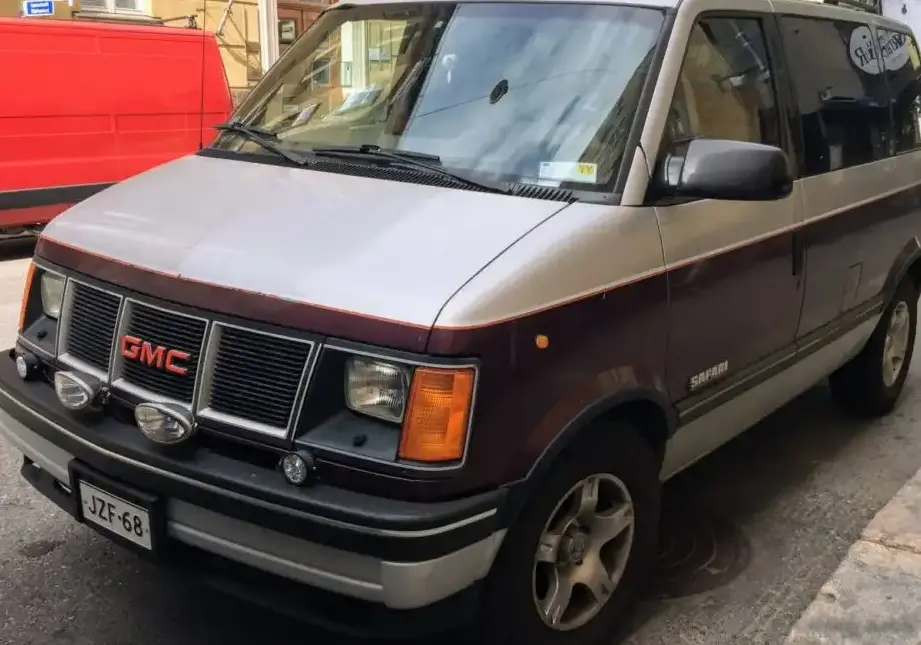
The GMC Safari I 4.3i V6, produced from 1989 to 1994, represents the initial iteration of GMC’s full-size van offering. Positioned as a practical and spacious family vehicle, the Safari competed directly with the Ford Econoline and Dodge Ram Van in the North American market. This particular variant, equipped with the 4.3-liter V6 engine and a 5-speed manual transmission, served as a mid-range option within the Safari lineup, offering a balance between affordability and capability. The first generation Safari (and its Chevrolet counterpart, the Astro) were notable for being among the last American vans to utilize a body-on-frame construction, contributing to their robust nature and suitability for both passenger and light-duty commercial applications.
Technical Specifications
| Brand | GMC |
| Model | Safari |
| Generation | Safari I |
| Type (Engine) | 4.3i V6 (145 Hp) |
| Start of production | 1989 year |
| End of production | 1994 year |
| Powertrain Architecture | Internal Combustion engine |
| Body type | Minivan |
| Seats | 7 |
| Doors | 3 |
| Fuel Type | Petrol (Gasoline) |
| Weight-to-power ratio | 10.9 kg/Hp, 91.8 Hp/tonne |
| Weight-to-torque ratio | 4.7 kg/Nm, 214.6 Nm/tonne |
| Power | 145 Hp @ 4000 rpm |
| Power per litre | 33.7 Hp/l |
| Torque | 339 Nm @ 2800 rpm, 250.03 lb.-ft. @ 2800 rpm |
| Engine layout | Front, Longitudinal |
| Engine Model/Code | 262 CID |
| Engine displacement | 4300 cm3, 262.4 cu. in. |
| Number of cylinders | 6 |
| Engine configuration | V-engine |
| Cylinder Bore | 101.6 mm, 4 in. |
| Piston Stroke | 88.39 mm, 3.48 in. |
| Compression ratio | 9.3:1 |
| Fuel injection system | Carburettor |
| Engine aspiration | Naturally aspirated engine |
| Engine oil capacity | 4.3 l, 4.54 US qt | 3.78 UK qt |
| Coolant | 12.8 l, 13.53 US qt | 11.26 UK qt |
| Kerb Weight | 1580 kg, 3483.3 lbs |
| Trunk (boot) space – minimum | 626 l, 22.11 cu. ft |
| Trunk (boot) space – maximum | 4128 l, 145.78 cu. ft |
| Fuel tank capacity | 64 l, 16.91 US gal | 14.08 UK gal |
| Length | 4490 mm, 176.77 in |
| Width | 1956 mm, 77.01 in |
| Height | 1905 mm, 75 in |
| Wheelbase | 2819 mm, 110.98 in |
| Front track | 1654 mm, 65.12 in |
| Rear (Back) track | 1654 mm, 65.12 in |
| Front overhang | 777 mm, 30.59 in |
| Rear overhang | 894 mm, 35.2 in |
| Drivetrain Architecture | The Internal combustion engine (ICE) drives the rear wheels of the vehicle. |
| Drive wheel | Rear wheel drive |
| Number of gears and type of gearbox | 5 gears, manual transmission |
| Front suspension | Independent coil spring |
| Rear suspension | Leaf spring |
| Front brakes | Disc |
| Rear brakes | Drum |
| Tires size | 195/75 R15 |
| Wheel rims size | 15 |
Powertrain & Engine Architecture
The heart of the Safari I 4.3i V6 is the 262 cubic inch (4.3-liter) V6 engine. This engine, part of GMC’s small-block V6 family, utilized a cast-iron block and cylinder heads. The 4.3L engine employed a two-barrel carburetor for fuel delivery, a relatively simple system for the time, prioritizing reliability and ease of maintenance over ultimate efficiency. The engine featured a pushrod valvetrain, a design choice common in American V6 and V8 engines of this era, contributing to its compact size and relatively low cost. The 5-speed manual transmission provided a more engaging driving experience compared to the available automatic option, and allowed the driver to better utilize the engine’s torque. The transmission’s gear ratios were geared towards providing adequate acceleration and cruising ability for a full-size van.
Driving Characteristics
The 145 horsepower and 250 lb-ft of torque produced by the 4.3L V6, when paired with the 5-speed manual transmission, resulted in a driving experience that prioritized usability over outright performance. Acceleration was adequate for everyday driving, but the Safari I 4.3i V6 wasn’t designed for quick sprints. The manual transmission allowed drivers to keep the engine in its optimal power band, improving responsiveness when merging onto highways or climbing hills. Compared to the available automatic transmission, the manual offered better fuel economy and a more connected feel. However, it lacked the convenience of an automatic, especially in stop-and-go traffic. The rear-wheel-drive configuration provided a stable platform, but also meant that the van was susceptible to oversteer in slippery conditions.
Equipment & Trim Levels
The Safari I 4.3i V6 typically came standard with features considered essential for a family van in the early 1990s. These included cloth upholstery, an AM/FM radio, and basic instrumentation. Air conditioning was a popular option, as were power windows and locks. Higher trim levels offered upgrades such as upgraded sound systems, cruise control, and more comfortable seating. The interior was designed with practicality in mind, featuring durable materials and a spacious layout. The van’s modular seating arrangement allowed for flexible cargo and passenger configurations.
Chassis & Braking
The Safari I utilized a traditional body-on-frame construction, providing a robust and durable chassis. The front suspension consisted of independent coil springs, while the rear suspension employed leaf springs. This setup prioritized load-carrying capacity and ride comfort over sporty handling. The braking system featured disc brakes on the front wheels and drum brakes on the rear. While adequate for normal driving conditions, the braking system lacked the stopping power of more modern systems. The 15-inch wheels were typically fitted with 195/75 R15 tires, providing a balance between ride comfort and handling.
Market Reception & Comparison
The GMC Safari I 4.3i V6 was generally well-received by consumers seeking a practical and affordable full-size van. Critics praised its spacious interior, robust construction, and relatively low price. However, some reviewers noted its dated styling and lack of advanced features compared to some of its competitors. Compared to the higher-output V6 options, the 4.3L engine offered a more economical choice, but at the expense of performance. The 4.3L manual transmission combination was favored by those who prioritized fuel efficiency and driver involvement.
Legacy
The GMC Safari I 4.3i V6, while not a particularly groundbreaking vehicle, played a significant role in the full-size van segment during its production run. The 4.3L V6 engine proved to be a reliable and durable powerplant, and many examples are still on the road today. The Safari’s body-on-frame construction contributed to its longevity, making it a popular choice for conversion vans and commercial applications. In the used car market, the Safari I 4.3i V6 remains an affordable and practical option for those seeking a spacious and reliable van, though maintenance and repair costs can increase with age. The combination of the 4.3L engine and 5-speed manual transmission is often sought after by enthusiasts who appreciate its simplicity and durability.