
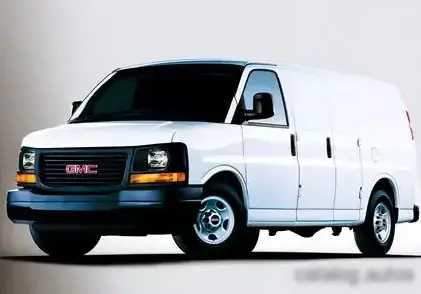
The GMC Savana 5.3, producing 301 horsepower, represents a significant configuration within the broader Savana full-size van lineup produced between 1996 and 2002. Part of the second generation of the Savana (and its Chevrolet Express counterpart), this variant aimed to provide a balance of power and capability for commercial and personal use, slotting in as a mid-to-upper tier offering within the range. The Savana, along with the Express, replaced the older Chevy Van/GMC Vandura models, offering a more modern design and improved features. This generation focused on providing a robust platform for various applications, from cargo hauling to passenger transport.
Technical Specifications
| Brand | GMC |
| Model | Savana |
| Generation | Savana (Second Generation) |
| Type (Engine) | 5.3 (301 Hp) |
| Start of production | 1996 |
| End of production | 2002 |
| Powertrain Architecture | Internal Combustion Engine |
| Body type | Minivan |
| Seats | 8 |
| Doors | 5 |
| Fuel Type | Petrol (Gasoline) |
| Power | 301 Hp |
| Power per litre | 56.8 Hp/l |
| Engine layout | Front, Longitudinal |
| Engine displacement | 5300 cm3 / 323.43 cu. in. |
| Number of cylinders | 8 |
| Engine configuration | V-engine |
| Number of valves per cylinder | 4 |
| Fuel injection system | Multi-port manifold injection |
| Engine aspiration | Naturally aspirated |
| Fuel tank capacity | 140 l / 36.98 US gal / 30.8 UK gal |
| Wheelbase | 3937 mm / 155 in. |
| Drivetrain Architecture | Internal Combustion Engine (ICE) driving rear wheels |
| Drive wheel | Rear wheel drive |
| Number of gears and type of gearbox | 4 gears, automatic transmission |
| Front suspension | Independent coil spring |
| Rear suspension | Leaf spring |
| Front brakes | Ventilated discs |
| Rear brakes | Ventilated discs |
| Tires size | 245/70 R17 |
| Wheel rims size | 17 |
Powertrain & Engine Architecture
The heart of the Savana 5.3 is the 5.3-liter (323 cubic inch) Small-Block Chevrolet V8 engine. This engine, part of the Vortec 5300 family, is a naturally aspirated, 90-degree V8 featuring a cast iron block and aluminum cylinder heads. The engine utilizes a multi-port fuel injection system, delivering fuel directly to each cylinder for optimized combustion. The Vortec engines were known for their relatively simple design and robust construction. The 5.3L engine in the Savana typically employed the 4L60E four-speed automatic transmission. This transmission, a common choice for GM trucks and vans of the era, is electronically controlled and known for its durability, though it could sometimes exhibit issues with harsh shifting or premature failure if not properly maintained. The 4L60E features a torque converter that multiplies engine torque for improved acceleration, particularly from a standstill, which is crucial for a vehicle of the Savana’s size and weight.
Driving Characteristics
The 301 horsepower and approximately 330 lb-ft of torque provided by the 5.3L engine gave the Savana a respectable level of performance for its class. While not a sports van, it offered sufficient power for highway cruising, towing, and carrying heavy loads. The 4L60E automatic transmission, while reliable, isn’t known for its sporty shift points. Gear ratios were optimized for towing and hauling, resulting in a focus on usability rather than outright acceleration. Compared to the available 4.3L V6 engine, the 5.3L offered a significant power increase, resulting in noticeably quicker acceleration and improved towing capacity. However, it came at the cost of slightly reduced fuel economy. Compared to later Savana models with more advanced transmissions (like the 4L80E), the 4L60E felt less refined and offered fewer gear ratios, impacting highway fuel efficiency and overall driving smoothness.
Equipment & Trim Levels
The Savana 5.3 was typically offered in a variety of trim levels, ranging from basic work vans to more passenger-oriented configurations. Standard features generally included air conditioning, a basic AM/FM radio, and cloth upholstery. Higher trim levels added features like power windows and locks, upgraded audio systems, and more comfortable seating. Optional extras included cruise control, a tilt steering wheel, and various convenience packages. The interior design was functional and durable, prioritizing practicality over luxury. Passenger vans often featured rear air conditioning and heating, along with multiple seating configurations to accommodate different passenger needs. The dashboard layout was straightforward, with easily accessible controls.
Chassis & Braking
The Savana utilized a body-on-frame construction, providing a robust and durable platform. The front suspension consisted of independent coil springs, while the rear suspension employed a traditional leaf spring setup. This configuration prioritized load-carrying capacity and durability over ride comfort. Braking duties were handled by ventilated disc brakes on all four wheels, providing adequate stopping power for the vehicle’s weight. Anti-lock brakes (ABS) were often available as an option, enhancing safety in emergency braking situations. The steering system was a recirculating ball setup, which provided a stable and predictable feel, but lacked the precision of more modern rack-and-pinion systems. Tire size was typically 245/70R17, offering a good balance of ride comfort and durability.
Market Reception & Comparison
The GMC Savana 5.3 was generally well-received by critics and consumers alike. It was praised for its robust construction, ample interior space, and strong engine performance. However, some critics noted the van’s somewhat dated interior design and lack of advanced features compared to newer competitors. Fuel economy was also a common point of criticism, as the 5.3L V8 wasn’t particularly fuel-efficient. Compared to the Ford Econoline, the Savana offered a similar level of capability and reliability. The Dodge Ram Van was another competitor, but it was generally considered to be less refined than the Savana. The 5.3L engine offered a good balance between power and cost, making it a popular choice for both commercial and personal buyers.
Legacy
The GMC Savana 5.3, and its Chevrolet Express counterpart, remained in production for many years, with relatively minor changes. The 5.3L Vortec engine proved to be a reliable and durable powerplant, and many examples are still on the road today. The 4L60E transmission, while prone to certain issues, is relatively easy to rebuild and repair. In the used car market, these vans are often sought after for their affordability, spaciousness, and capability. They remain popular choices for conversion vans, work vehicles, and recreational use. While newer vans offer more advanced features and improved fuel economy, the Savana 5.3 continues to represent a solid and dependable option for those seeking a robust and versatile full-size van.
