
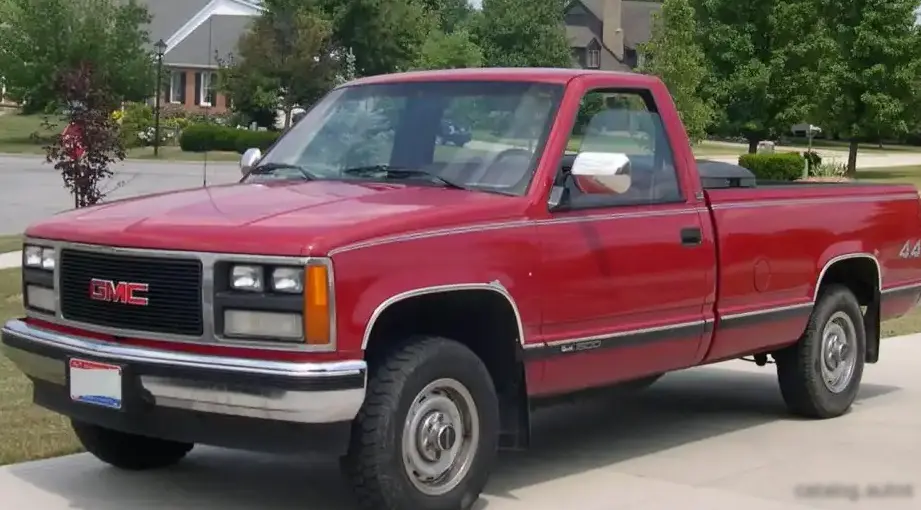
Technical Specifications
| Brand | GMC |
| Model | Sierra 1500 |
| Generation | Sierra 1500 I (GMT400) Regular cab LWB Wideside |
| Engine Type | 5.7 V8 (210 Hp) |
| Production Years | 1988 – 1992 |
| Powertrain Architecture | Internal Combustion engine |
| Body Type | Pick-up |
| Seats | 3 |
| Doors | 2 |
| Fuel Type | Petrol (Gasoline) |
| Power | 210 Hp @ 4000 rpm |
| Torque | 407 Nm @ 2800 rpm / 300.19 lb.-ft. @ 2800 rpm |
| Engine Layout | Front, Longitudinal |
| Number of Cylinders | 8 |
| Engine Configuration | V-engine |
| Cylinder Bore | 101.6 mm / 4 in. |
| Piston Stroke | 88.39 mm / 3.48 in. |
| Compression Ratio | 9.3:1 |
| Fuel Injection System | Multi-port manifold injection |
| Engine Aspiration | Naturally aspirated |
| Max. Weight | 2767 kg / 6100.19 lbs. |
| Fuel Tank Capacity | 129 l / 34.08 US gal | 28.38 UK gal |
| Length | 5547 mm / 218.39 in. |
| Width | 1951 mm / 76.81 in. |
| Height | 1788 mm / 70.39 in. |
| Wheelbase | 3340 mm / 131.5 in. |
| Front Overhang | 886 mm / 34.88 in. |
| Rear Overhang | 1321 mm / 52.01 in. |
| Drivetrain | Rear wheel drive |
| Number of Gears | 5 gears, manual transmission |
| Front Suspension | Independent coil spring |
| Rear Suspension | Rigid axle suspension, Leaf spring |
| Front Brakes | Disc |
| Rear Brakes | Drum |
| Tire Size | 225/75 R15 |
The GMC Sierra 1500, in its first generation (GMT400 platform) produced from 1988 to 1992, represented GMC’s entry into the increasingly popular full-size pickup truck market. This generation marked a significant departure from the previous square-bodied designs, adopting a more aerodynamic and modern aesthetic. The Regular Cab Long Wheelbase (LWB) Wideside configuration, equipped with the 5.7-liter V8 engine producing 210 horsepower, was a common sight on American roads and job sites during this period. It served as a workhorse for many, offering a balance of capability and affordability within the GMC lineup. This particular variant occupied a middle ground in the Sierra 1500 lineup, offering a step up in power from the base 4.3L V6, but remaining more accessible than the diesel or higher-output V8 options.
Powertrain & Engine Architecture
The heart of this Sierra 1500 variant was the 5.7-liter (350 cubic inch) small-block Chevrolet V8 engine. This engine, internally designated as the L05, was a staple of General Motors vehicles for decades. It featured a cast iron block and cylinder heads, a 9.3:1 compression ratio, and a multi-port fuel injection system. The multi-port injection, a relatively new technology at the time, improved fuel efficiency and throttle response compared to earlier carbureted designs. The engine’s valvetrain utilized a two-valve per cylinder configuration, operated by a hydraulic lifter camshaft. The 5.7L V8 was known for its robust construction and relatively simple design, making it a reliable powerplant. The standard transmission for this configuration was a 5-speed manual, although a 4-speed automatic transmission was also available as an option. The engine’s longitudinal mounting and rear-wheel-drive configuration were typical for American pickup trucks of the era. The 4L60 automatic, when equipped, was a four-speed unit known for its durability, though it could sometimes feel sluggish compared to the manual transmission, especially when towing or hauling heavy loads.
Driving Characteristics
The 210 horsepower and 300 lb-ft of torque provided by the 5.7L V8 offered adequate, but not exceptional, performance for the Sierra 1500. Acceleration was reasonable, but the truck’s substantial weight limited its overall speed. The 5-speed manual transmission allowed drivers to keep the engine in its optimal power band, providing better control and fuel economy than the optional automatic. However, the manual transmission was less common, with the majority of buyers opting for the convenience of the automatic. Compared to the available 6.2-liter diesel engine, the 5.7L V8 offered quicker acceleration but significantly lower fuel economy. The truck’s leaf spring rear suspension provided a firm ride, suitable for hauling heavy loads, but could be somewhat jarring when unloaded. Steering was relatively slow and lacked the precision of more modern systems. The gear ratios in the 5-speed manual were spaced to provide a balance between acceleration and highway cruising, while the automatic transmission’s shift points were calibrated for smooth operation and fuel efficiency, sometimes at the expense of responsiveness.
Equipment & Trim Levels
The base-level Sierra 1500 Regular Cab LWB Wideside with the 5.7L V8 was a fairly spartan vehicle, focused on functionality rather than luxury. Standard features typically included a basic vinyl bench seat, a simple dashboard with analog gauges, and manual windows and locks. Air conditioning and an AM/FM radio were often included, but could be optional depending on the specific package. The “Wideside” designation referred to the truck bed’s width, offering more cargo space than the narrower “Narrowside” bed. Optional extras included power windows and locks, a tilt steering wheel, upgraded audio systems, and various towing packages. The interior trim was generally durable and utilitarian, designed to withstand the rigors of daily use. This trim level was aimed at buyers who needed a capable truck for work or personal use, but weren’t willing to pay extra for luxury features. It represented a good value proposition for those seeking a reliable and affordable full-size pickup.
Chassis & Braking
The GMT400 chassis featured an independent coil spring front suspension, providing a reasonable level of ride comfort. The rear suspension utilized a traditional leaf spring setup, designed to handle heavy payloads. Front brakes were disc brakes, offering better stopping power than the rear drum brakes. The braking system was adequate for the truck’s weight, but lacked the sophistication of more modern anti-lock braking systems. The truck’s frame was a full-length ladder frame, providing a solid foundation for both on-road and off-road driving. Tire size was typically 225/75R15, offering a good balance of ride comfort and durability. The rear leaf springs were typically rated for a substantial payload capacity, allowing the truck to handle a significant amount of weight without compromising ride quality. The front coil springs provided a more comfortable ride over bumps and uneven surfaces.
Market Reception & Comparison
The GMC Sierra 1500 GMT400 was generally well-received by the American public. Critics praised its modern styling, improved ride quality, and available V8 engines. However, some noted that the interior was somewhat basic compared to competing models from Ford and Dodge. The 5.7L V8/5-speed manual combination was considered a good value for buyers who prioritized performance and fuel economy. Compared to the 6.2L diesel, the 5.7L V8 offered quicker acceleration but significantly lower fuel efficiency. The 5.7L V8 was also more affordable than the diesel, making it a popular choice for budget-conscious buyers. Against the Ford F-150 and Chevrolet C/K series, the Sierra offered a similar level of capability and features, often at a slightly higher price point, reflecting GMC’s positioning as a more premium brand within General Motors.
Legacy
The GMT400 generation Sierra 1500 laid the groundwork for GMC’s continued success in the full-size pickup truck market. The 5.7L V8 engine proved to be a durable and reliable powerplant, and many examples are still on the road today. While not as sought-after as some of the more powerful or rare trims, the 5.7L V8/manual transmission combination represents a solid and affordable entry point into the classic GMC pickup truck world. These trucks are often found in the used car market at relatively low prices, making them a popular choice for restoration projects or as dependable work trucks. The simplicity of the engine and drivetrain makes them relatively easy to maintain and repair, further contributing to their enduring appeal. Parts availability remains good, thanks to the engine’s widespread use in other GM vehicles of the era. Today, these trucks are appreciated by enthusiasts for their classic styling, robust construction, and straightforward mechanical design.

