
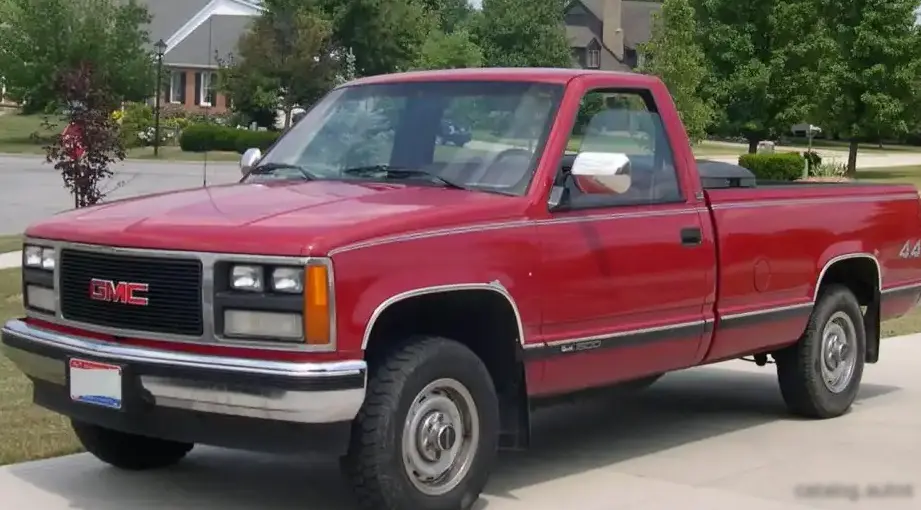
The GMC Sierra 1500, in its first generation (GMT400), represented GMC’s entry into the increasingly popular full-size pickup truck market. Produced from 1988 through 1990, this iteration of the Sierra offered a range of configurations, including a regular cab, long wheelbase (LWB), and the “Wideside” bed configuration. Among the engine options available, the 6.2-liter diesel V8, producing 135 horsepower and paired with a four-speed manual transmission, offered a unique blend of durability and fuel economy for the time. This particular variant occupied a niche position within the lineup, appealing to buyers prioritizing longevity and work capability over outright performance.
Technical Specifications
| Brand | GMC |
| Model | Sierra 1500 |
| Generation | Sierra 1500 I (GMT400) Regular cab LWB Wideside |
| Type (Engine) | 6.2 diesel V8 (135 Hp) 4WD |
| Start of production | 1989 |
| End of production | 1990 |
| Powertrain Architecture | Internal Combustion engine |
| Body type | Pick-up |
| Seats | 3 |
| Doors | 2 |
| Fuel Type | Diesel |
| Power | 135 Hp @ 3600 rpm |
| Torque | 325 Nm @ 1900 rpm / 239.71 lb.-ft. @ 1900 rpm |
| Engine layout | Front, Longitudinal |
| Number of cylinders | 8 |
| Engine configuration | V-engine |
| Cylinder Bore | 101.09 mm / 3.98 in. |
| Piston Stroke | 97.03 mm / 3.82 in. |
| Compression ratio | 21.3:1 |
| Fuel injection system | Precombustion chamber injection |
| Engine aspiration | Naturally aspirated engine |
| Engine oil capacity | 6.6 l / 6.97 US qt | 5.81 UK qt |
| Coolant | 23.5 l / 24.83 US qt | 20.68 UK qt |
| Fuel tank capacity | 129 l / 34.08 US gal | 28.38 UK gal |
| Length | 5547 mm / 218.39 in. |
| Width | 1951 mm / 76.81 in. |
| Height | 1788 mm / 70.39 in. |
| Wheelbase | 3340 mm / 131.5 in. |
| Front overhang | 886 mm / 34.88 in. |
| Rear overhang | 1321 mm / 52.01 in. |
| Drivetrain Architecture | The Internal combustion engine (ICE) drives the rear wheels permanently, and the front wheels are driven through an electrically or mechanically operated clutch if necessary. |
| Drive wheel | All wheel drive (4×4) |
| Number of gears and type of gearbox | 4 gears, manual transmission |
| Front suspension | Independent torsion bar, double wishbone |
| Rear suspension | Rigid axle suspension, Leaf spring |
| Front brakes | Disc |
| Rear brakes | Drum |
| Tires size | 225/75 R16 |
Powertrain & Engine Architecture
The heart of this Sierra 1500 variant was the 6.2-liter (379 cubic inch) diesel V8 engine. This engine, designated as a Detroit Diesel 6.2L, was known for its robust construction and longevity. It employed a precombustion chamber injection system, a common design for diesel engines of the era, which improved combustion efficiency and reduced engine noise compared to direct injection systems. The engine featured a cast iron block and cylinder heads, contributing to its durability. The 135 horsepower output was relatively modest for a full-size truck, but the engine produced a substantial 325 Nm (239.71 lb.-ft.) of torque at a low 1900 rpm. This torque delivery was crucial for towing and hauling applications. The four-speed manual transmission, while not offering the refinement of later automatics, provided a direct connection to the engine and allowed the driver to maximize the available torque. The transmission’s gear ratios were optimized for work, prioritizing low-end grunt over high-speed cruising.
Driving Characteristics
Behind the wheel, the 6.2L diesel Sierra 1500 offered a distinctly different driving experience compared to its gasoline-powered counterparts. Acceleration was not its strong suit; the 135 horsepower engine required careful planning when merging onto highways or climbing steep grades. However, the abundant low-end torque made it a capable hauler and tow vehicle. The manual transmission demanded more driver involvement than an automatic, but it allowed for precise control over gear selection, particularly useful when navigating challenging terrain or managing heavy loads. Compared to the available V6 and smaller V8 gasoline engines, the diesel offered significantly better fuel economy, especially under load. It also provided a more relaxed driving experience at highway speeds, thanks to the engine’s ability to maintain speed with minimal gear changes. Compared to later, more powerful diesel options, this 6.2L was considered somewhat underpowered, but its simplicity and reliability were highly valued.
Equipment & Trim Levels
The Sierra 1500 in this configuration typically represented a work-oriented trim level. Standard features were relatively basic, focusing on functionality rather than luxury. Expect a vinyl bench seat, a simple dashboard layout with minimal instrumentation, and manual windows and locks. The interior was designed for durability and ease of cleaning. Optional extras included an upgraded stereo system, air conditioning, and a tilt steering wheel. The Wideside bed offered a generous cargo capacity, and a bed liner was a popular option for protecting the bed from damage. The exterior trim was typically minimal, with black bumpers and side moldings being common.
Chassis & Braking
The GMT400 platform utilized a body-on-frame construction, providing a robust and durable chassis. The front suspension consisted of an independent torsion bar setup with double wishbone components, offering a reasonable ride quality for a truck of its era. The rear suspension employed a traditional leaf spring setup, which was well-suited for carrying heavy loads. Braking duties were handled by disc brakes at the front and drum brakes at the rear. While adequate for the truck’s weight and intended use, the braking system lacked the sophistication of later designs. The 4WD system was typically a part-time system, requiring the driver to manually engage four-wheel drive when needed.
Market Reception & Comparison
The 6.2L diesel Sierra 1500 received mixed reviews. Critics acknowledged its durability and fuel economy but often criticized its lack of power. It was generally seen as a good choice for buyers who prioritized longevity and work capability over performance. Compared to the gasoline-powered Sierra 1500 models, the diesel offered superior fuel economy, particularly when towing or hauling. However, the gasoline engines provided significantly more horsepower and acceleration. The diesel also commanded a higher initial price, which deterred some buyers. Against competing trucks from Ford and Dodge, the Sierra 1500 diesel offered a comparable level of performance and features.
Legacy
The 6.2L diesel engine gained a reputation for exceptional reliability and longevity. Many examples of these engines continue to operate today, often with hundreds of thousands of miles on the odometer. The simplicity of the engine design and the robust construction of its components contributed to its durability. In the used car market, these trucks are often sought after by enthusiasts and those looking for a dependable work truck. While not a high-performance machine, the 6.2L diesel Sierra 1500 represents a significant chapter in GMC’s truck history, embodying a commitment to durability and practicality.

