
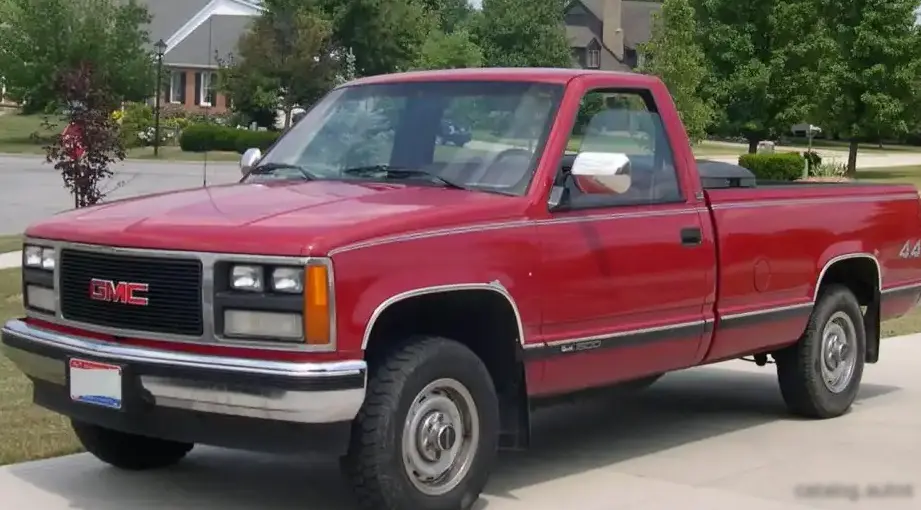
The GMC Sierra 1500, in its first generation (GMT400), represented GMC’s entry into the increasingly popular full-size pickup truck market. Produced from 1988 through 1992, this iteration of the Sierra aimed to provide a robust and capable work vehicle, competing directly with offerings from Ford and Chevrolet. The Regular Cab Long Wheelbase (LWB) Wideside configuration, paired with the 6.2-liter diesel V8 engine and automatic transmission, was a significant part of the lineup, targeting buyers needing a durable and efficient truck for hauling and towing. This specific combination offered a balance between diesel fuel economy and the capability expected of a full-size pickup.
Technical Specifications
| Brand | GMC |
| Model | Sierra 1500 |
| Generation | Sierra 1500 I (GMT400) Regular cab LWB Wideside |
| Type (Engine) | 6.2 diesel V8 (140 Hp) Automatic |
| Start of production | 1988 |
| End of production | 1992 |
| Powertrain Architecture | Internal Combustion engine |
| Body type | Pick-up |
| Seats | 3 |
| Doors | 2 |
| Fuel Type | Diesel |
| Power | 140 Hp @ 3600 rpm |
| Torque | 335 Nm @ 2000 rpm / 247.08 lb.-ft. @ 2000 rpm |
| Engine layout | Front, Longitudinal |
| Number of cylinders | 8 |
| Engine configuration | V-engine |
| Cylinder Bore | 101.09 mm / 3.98 in. |
| Piston Stroke | 97.03 mm / 3.82 in. |
| Compression ratio | 21.3:1 |
| Fuel injection system | Precombustion chamber injection |
| Engine aspiration | Naturally aspirated engine |
| Engine oil capacity | 6.6 l / 6.97 US qt | 5.81 UK qt |
| Coolant | 23.5 l / 24.83 US qt | 20.68 UK qt |
| Fuel tank capacity | 129 l / 34.08 US gal | 28.38 UK gal |
| Length | 5547 mm / 218.39 in. |
| Width | 1951 mm / 76.81 in. |
| Height | 1788 mm / 70.39 in. |
| Wheelbase | 3340 mm / 131.5 in. |
| Front overhang | 886 mm / 34.88 in. |
| Rear overhang | 1321 mm / 52.01 in. |
| Drivetrain Architecture | The Internal combustion engine (ICE) drives the rear wheels of the vehicle. |
| Drive wheel | Rear wheel drive |
| Number of gears and type of gearbox | 4 gears, automatic transmission |
| Front suspension | Independent coil spring |
| Rear suspension | Rigid axle suspension, Leaf spring |
| Front brakes | Disc |
| Rear brakes | Drum |
| Tires size | 225/75 R15 |
Powertrain & Engine Architecture
The heart of this Sierra 1500 variant was the 6.2-liter (379 cubic inch) diesel V8 engine. This engine, designated as a Detroit Diesel 6.2L, was known for its durability and relatively simple design. It employed precombustion chamber injection, a system where fuel is injected into a small pre-chamber before entering the main cylinder, aiding in cold-weather starting and combustion efficiency. The engine produced 140 horsepower at 3600 rpm and 247 lb-ft of torque at 2000 rpm. The torque figure was particularly important for a pickup truck, providing strong low-end pulling power. The engine’s robust construction and relatively low stress levels contributed to its longevity. The automatic transmission was a 4-speed unit, designed to handle the diesel engine’s torque output. While not known for rapid acceleration, the transmission provided smooth shifts and adequate performance for typical pickup truck duties.
Driving Characteristics
The 6.2L diesel and automatic transmission combination in the Sierra 1500 delivered a driving experience focused on utility rather than outright speed. Acceleration was modest, but the engine’s strong low-end torque made it well-suited for towing and hauling heavy loads. The automatic transmission, while smooth, lacked the responsiveness of a manual transmission. Gear ratios were optimized for fuel economy and towing capacity, rather than quick acceleration. Compared to gasoline-powered Sierra 1500s, the diesel offered significantly better fuel economy, especially under load. However, it was noticeably slower in acceleration and had a more pronounced engine noise. Compared to later, more powerful diesel options, this 6.2L engine was considered underpowered by some, but its simplicity and reliability were highly valued.
Equipment & Trim Levels
The Regular Cab LWB Wideside 6.2L diesel automatic typically represented a mid-range trim level within the Sierra 1500 lineup. Standard features generally included a basic vinyl bench seat, a simple dashboard layout with essential gauges, and manual windows and locks. Air conditioning was often an optional extra, as was a radio. The “Wideside” designation referred to the bed width, offering a practical cargo area for various hauling needs. Optional extras could include upgraded interior trim, power windows and locks, and a tilt steering wheel. The interior was designed for durability and ease of cleaning, reflecting the truck’s intended use as a work vehicle.
Chassis & Braking
The GMT400 Sierra 1500 utilized a body-on-frame construction, providing a robust and durable chassis. The front suspension featured independent coil springs, offering a relatively comfortable ride. The rear suspension employed a traditional rigid axle setup with leaf springs, designed to handle heavy loads. Braking duties were handled by disc brakes at the front and drum brakes at the rear. The braking system was adequate for the truck’s weight and intended use, but lacked the stopping power of more modern braking systems. The tires, typically 225/75 R15 size, were chosen for a balance of durability, ride comfort, and traction.
Market Reception & Comparison
The 6.2L diesel Sierra 1500 received mixed reviews. Critics praised its fuel economy and durability, but often criticized its lack of power compared to gasoline-powered competitors. The diesel engine was particularly appealing to buyers who frequently towed or hauled heavy loads, as it offered a significant fuel economy advantage. Compared to the gasoline-powered V6 and V8 options in the Sierra 1500 lineup, the diesel was more expensive to purchase but offered lower operating costs over the long term. The 6.2L diesel was also seen as a more reliable option than some of the early electronic fuel injection systems used in the gasoline engines.
Legacy
The 6.2L diesel engine in the GMT400 Sierra 1500 has developed a reputation for exceptional longevity. Many examples remain on the road today, a testament to the engine’s robust construction and relatively simple design. While parts availability can be a challenge, the engine is relatively easy to work on for experienced mechanics. In the used car market, these trucks are often sought after by those looking for a durable and reliable work vehicle. The 6.2L diesel Sierra 1500 represents a significant chapter in GMC’s pickup truck history, offering a blend of fuel efficiency, durability, and capability that continues to appeal to truck enthusiasts today. The simplicity of the engine and its mechanical fuel injection system make it a favorite among those who prefer older, less electronically-dependent vehicles.

