
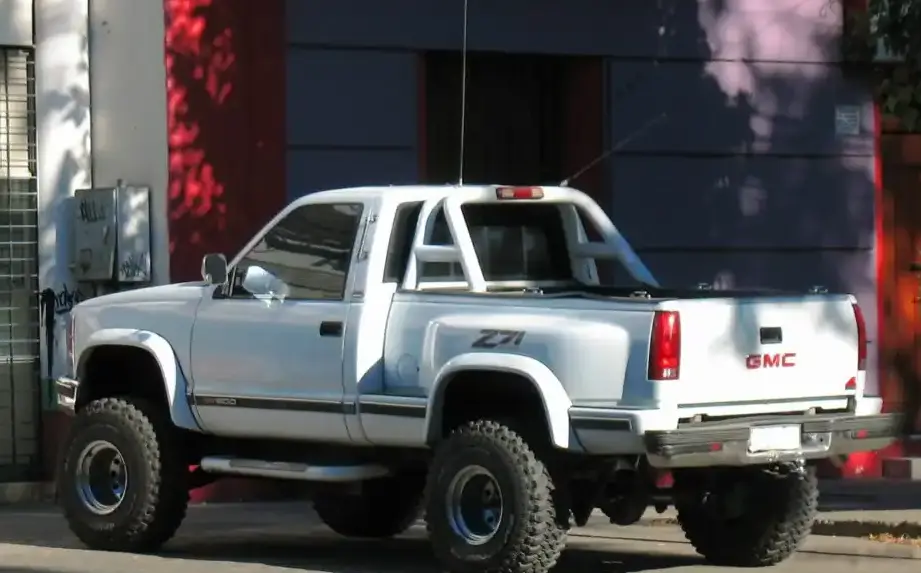
The GMC Sierra 1500, in its first generation (GMT400 platform) produced from 1988 to 1992, represented GMC’s entry into the increasingly popular full-size pickup truck market. This generation marked a significant departure from the previous square-bodied designs, adopting a more aerodynamic and modern aesthetic. The Regular Cab SWB (Short Wheelbase) Sportside configuration, equipped with the 5.7-liter V8 engine and automatic transmission, occupied a middle ground within the Sierra 1500 lineup, offering a balance of capability and affordability. It was aimed at buyers needing a robust work truck with the convenience of an automatic gearbox, without the expense of four-wheel drive or the larger long-bed options.
Technical Specifications
| Brand | GMC |
| Model | Sierra 1500 |
| Generation | Sierra 1500 I (GMT400) Regular cab SWB Sportside |
| Type (Engine) | 5.7 V8 (210 Hp) Automatic |
| Start of production | 1988 |
| End of production | 1992 |
| Powertrain Architecture | Internal Combustion engine |
| Body type | Pick-up |
| Seats | 3 |
| Doors | 2 |
| Fuel Type | Petrol (Gasoline) |
| Power | 210 Hp @ 4000 rpm |
| Torque | 407 Nm @ 2800 rpm / 300.19 lb.-ft. @ 2800 rpm |
| Engine layout | Front, Longitudinal |
| Number of cylinders | 8 |
| Engine configuration | V-engine |
| Cylinder Bore | 101.6 mm / 4 in |
| Piston Stroke | 88.39 mm / 3.48 in |
| Compression ratio | 9.3:1 |
| Fuel injection system | Multi-port manifold injection |
| Engine aspiration | Naturally aspirated engine |
| Max. weight | 2540 kg / 5599.74 lbs |
| Fuel tank capacity | 95 l / 25.1 US gal | 20.9 UK gal |
| Length | 5065 mm / 199.41 in |
| Width | 1958 mm / 77.09 in |
| Height | 1788 mm / 70.39 in |
| Wheelbase | 2985 mm / 117.52 in |
| Front overhang | 886 mm / 34.88 in |
| Rear overhang | 1194 mm / 47.01 in |
| Drivetrain Architecture | The Internal combustion engine (ICE) drives the rear wheels of the vehicle. |
| Drive wheel | Rear wheel drive |
| Number of gears and type of gearbox | 4 gears, automatic transmission |
| Front suspension | Independent coil spring |
| Rear suspension | Rigid axle suspension, Leaf spring |
| Front brakes | Disc |
| Rear brakes | Drum |
| Tires size | 225/75 R15 |
Powertrain & Engine Architecture
The heart of this Sierra 1500 variant was the 5.7-liter (350 cubic inch) small-block Chevrolet V8 engine. This engine, internally designated as the L05, was a staple of General Motors vehicles for decades. It featured a cast iron block and cylinder heads, a 9.3:1 compression ratio, and a multi-port fuel injection system. The multi-port injection, a relatively new technology at the time, improved fuel efficiency and throttle response compared to earlier carbureted designs. The engine produced 210 horsepower at 4000 rpm and 300 lb-ft of torque at 2800 rpm. The automatic transmission was a 4-speed TH700R4, known for its durability and relatively smooth shifting. This transmission was a significant upgrade over the older 3-speed automatics, offering better fuel economy and improved acceleration.
Driving Characteristics
The 5.7L V8 and 4-speed automatic combination provided adequate, though not exhilarating, performance. The short wheelbase and relatively light weight of the regular cab configuration helped to mitigate some of the engine’s limitations. Acceleration from 0 to 60 mph was estimated to be around 9-10 seconds. The automatic transmission’s gear ratios were optimized for towing and hauling, rather than outright speed. While the engine had sufficient torque for everyday driving and moderate towing, it lacked the responsiveness of the optional 5.7L four-barrel carburetor engine or the later fuel-injected versions. Compared to the available manual transmission, the automatic resulted in a slight decrease in fuel economy and a less engaging driving experience.
Equipment & Trim Levels
The Sportside trim level, as the name suggests, focused on a more aesthetically pleasing appearance. Standard features included a color-keyed grille and bumpers, full wheel covers, and a basic interior with cloth upholstery. The base interior was fairly spartan, but options like air conditioning, power windows and locks, and an upgraded stereo system were readily available. The Sierra 1500 offered a range of optional packages, allowing buyers to customize their trucks to suit their needs. The interior typically featured a bench seat configuration, accommodating three passengers. The dashboard layout was functional and straightforward, prioritizing ease of use over luxury.
Chassis & Braking
The GMT400 chassis featured an independent coil spring front suspension for improved ride quality and handling. The rear suspension utilized a traditional leaf spring setup, designed to handle heavy loads. Front brakes were power-assisted discs, while the rear brakes were drums. This configuration was typical for trucks of this era. The steering was a recirculating ball system, providing a solid, if somewhat imprecise, feel. The short wheelbase contributed to a tighter turning radius, making the truck easier to maneuver in urban environments. Stabilizer bars were not standard equipment on all models, and their presence varied depending on the specific configuration and options selected.
Market Reception & Comparison
The GMC Sierra 1500 GMT400 was generally well-received by critics and consumers alike. It offered a comfortable ride, a spacious cabin, and a capable powertrain. The 5.7L V8 with automatic transmission was a popular choice for buyers who prioritized convenience and ease of use. However, some reviewers noted that the engine lacked the power of larger displacement V8s offered by competitors. Fuel economy was also a concern, although it was comparable to other full-size trucks of the time. Compared to the 6.2L diesel engine option, the 5.7L V8 offered significantly more horsepower but less torque and lower fuel efficiency. The 4.3L V6 engine, while more fuel-efficient, provided considerably less power and was better suited for lighter-duty applications.
Legacy
The GMT400 generation Sierra 1500 laid the foundation for GMC’s continued success in the full-size pickup truck market. The 5.7L V8 engine, in particular, proved to be a durable and reliable powerplant, and many examples are still on the road today. While not known for being particularly fuel-efficient by modern standards, these trucks remain popular among collectors and enthusiasts. The combination of a robust V8 engine, a comfortable cabin, and a relatively affordable price point made the Sierra 1500 a compelling choice for buyers in the late 1980s and early 1990s. In the used car market, these trucks are often sought after for their simplicity, reliability, and classic styling. Maintenance is generally straightforward, and parts availability remains good, making them a relatively easy and affordable vehicle to own and operate.

