
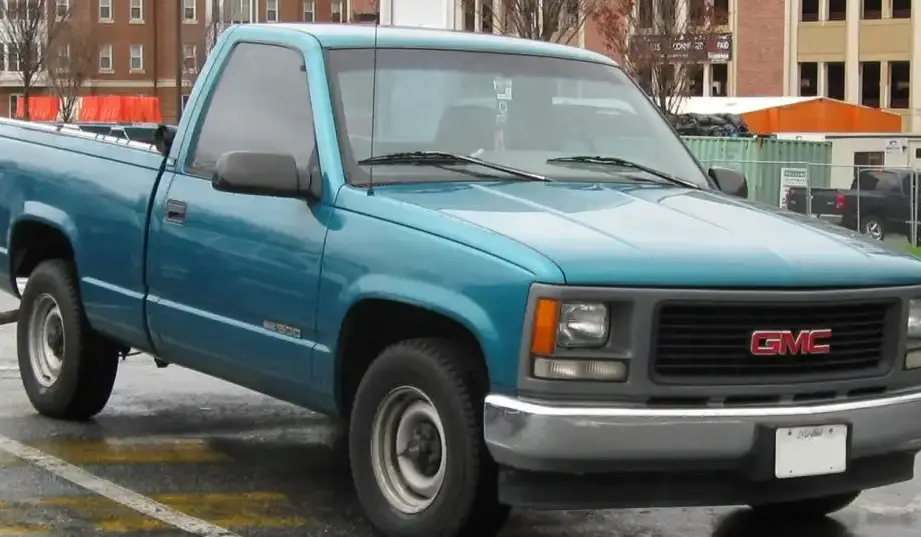
The GMC Sierra 1500, in its first generation (GMT400), was a full-size pickup truck produced from 1988 through 1992. This generation marked a significant redesign for GMC’s truck line, offering a more modern appearance and improved features compared to its predecessors. The Regular Cab Short Wheelbase (SWB) Wideside configuration, equipped with the 5.0-liter V8 engine producing 175 horsepower and paired with a four-wheel-drive system, represented a work-focused variant within the broader Sierra 1500 lineup. It was aimed at buyers needing a capable and durable truck for both everyday tasks and more demanding applications.
Technical Specifications
| Brand | GMC |
| Model | Sierra 1500 |
| Generation | Sierra 1500 I (GMT400) Regular cab SWB Wideside |
| Type (Engine) | 5.0 V8 (175 Hp) 4WD |
| Start of production | 1988 |
| End of production | 1992 |
| Powertrain Architecture | Internal Combustion engine |
| Body type | Pick-up |
| Seats | 3 |
| Doors | 2 |
| Fuel Type | Petrol (Gasoline) |
| Power | 175 Hp @ 4000 rpm |
| Torque | 366 Nm @ 2400 rpm / 269.95 lb.-ft. @ 2400 rpm |
| Engine layout | Front, Longitudinal |
| Number of cylinders | 8 |
| Engine configuration | V-engine |
| Cylinder Bore | 95 mm / 3.74 in. |
| Piston Stroke | 88.39 mm / 3.48 in. |
| Compression ratio | 9.3:1 |
| Fuel injection system | Single-point injection |
| Engine aspiration | Naturally aspirated engine |
| Max. weight | 2540 kg / 5599.74 lbs |
| Fuel tank capacity | 95 l / 25.1 US gal | 20.9 UK gal |
| Length | 5065 mm / 199.41 in. |
| Width | 1951 mm / 76.81 in. |
| Height | 1788 mm / 70.39 in. |
| Wheelbase | 2985 mm / 117.52 in. |
| Front overhang | 886 mm / 34.88 in. |
| Rear overhang | 1194 mm / 47.01 in. |
| Drivetrain Architecture | The Internal combustion engine (ICE) drives the rear wheels permanently, and the front wheels are driven through an electrically or mechanically operated clutch if necessary. |
| Drive wheel | All wheel drive (4×4) |
| Number of gears and type of gearbox | 5 gears, manual transmission |
| Front suspension | Independent torsion bar, double wishbone |
| Rear suspension | Rigid axle suspension, Leaf spring |
| Front brakes | Disc |
| Rear brakes | Drum |
| Tires size | 225/75 R16 |
Powertrain & Engine Architecture
The heart of this Sierra 1500 variant was the 5.0-liter (305 cubic inch) small-block Chevrolet V8 engine. Designated as the throttle body injection (TBI) system, it was a relatively simple fuel injection setup where one or two fuel injectors were located in the throttle body. This contrasted with multi-port fuel injection, which was becoming more common in other vehicles. The engine produced 175 horsepower at 4000 rpm and 366 Nm (269.95 lb-ft) of torque at 2400 rpm. The engine featured a 9.3:1 compression ratio and a traditional pushrod valvetrain. The five-speed manual transmission was the standard offering, providing a direct connection between the engine and the drivetrain. The 4WD system employed a transfer case allowing the driver to switch between two-wheel drive and four-wheel drive modes, enhancing traction in challenging conditions.
Driving Characteristics
The 175 hp 5.0L V8, while not the most powerful engine available in the GMT400 Sierra, provided adequate performance for most tasks. Acceleration was modest, but the engine’s torque characteristics made it well-suited for hauling and towing. The five-speed manual transmission allowed for good control over the engine’s powerband. Compared to the available 5.7L V8, this engine offered less outright power, but it was generally considered more fuel-efficient. The short wheelbase of the SWB model contributed to a relatively nimble feel, especially in off-road situations. However, the leaf spring rear suspension could result in a somewhat firm ride when unladen.
Equipment & Trim Levels
The Regular Cab SWB Wideside 5.0L 4WD Sierra 1500 typically represented the entry-level or a mid-range offering within the Sierra 1500 lineup. Standard equipment generally included a basic vinyl interior, a simple instrument cluster, and manual windows and locks. Options included upgraded interior trim, air conditioning, a tilt steering wheel, and a factory-installed stereo system. The “Wideside” designation referred to the width of the bed, offering a practical cargo area for various hauling needs. The trim level was often identified by minimal exterior badging, focusing on functionality over luxury.
Chassis & Braking
The GMT400 Sierra 1500 utilized a body-on-frame construction, providing a robust and durable platform. The front suspension featured an independent torsion bar setup with double wishbone components, offering a reasonable level of ride comfort and handling. The rear suspension employed a traditional leaf spring setup, which was well-suited for carrying heavy loads. Braking duties were handled by disc brakes at the front and drum brakes at the rear. The 4WD system added to the truck’s capability in adverse weather conditions and off-road environments. Tire size was typically 225/75 R16, providing a balance of on-road comfort and off-road traction.
Market Reception & Comparison
The 5.0L V8/manual transmission combination in the Sierra 1500 was generally well-received by buyers seeking a capable and affordable work truck. Critics noted its adequate power and reasonable fuel economy. Compared to the more powerful 5.7L V8, the 5.0L offered a lower purchase price and slightly better fuel efficiency, making it an attractive option for budget-conscious buyers. The manual transmission appealed to those who preferred more control over the vehicle. However, some reviewers found the engine to be somewhat underpowered for heavy-duty tasks. Against competitors like the Ford F-150 and Dodge Ram, the Sierra 1500 offered a competitive package in terms of features, durability, and price.
Legacy
The GMT400 Sierra 1500, particularly the 5.0L V8/manual transmission variant, has developed a reputation for reliability and durability. The 305 small-block V8 is known for its longevity and relative ease of maintenance. While not a high-performance machine, these trucks continue to be used as work vehicles and are popular among classic truck enthusiasts. Parts availability remains good, and the relatively simple mechanical design makes them accessible for DIY repairs. In the used car market, these Sierras are often sought after for their affordability and ruggedness, representing a solid and dependable choice for those needing a capable pickup truck.

