
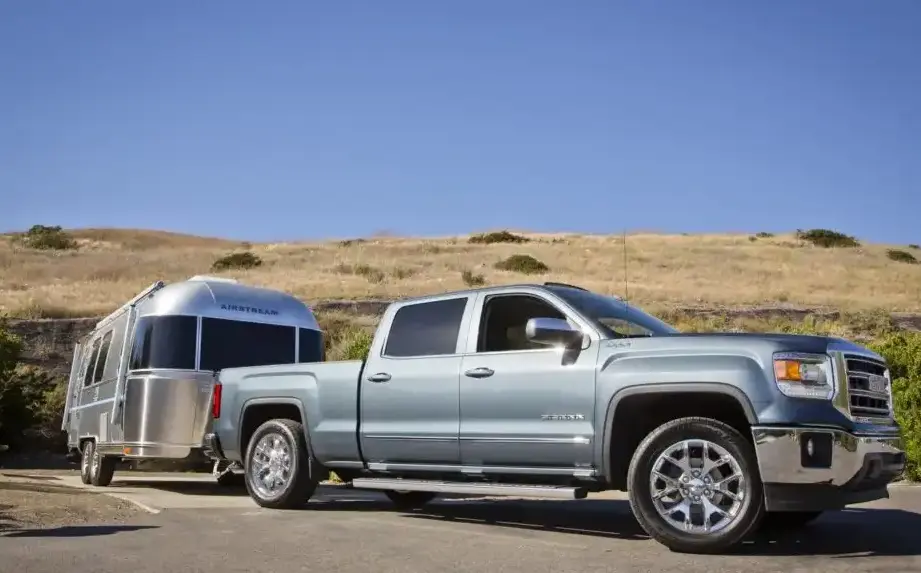
The GMC Sierra 1500 IV (GMTK2XX) Crew Cab with the Standard Box and 4.3 EcoTec3 V6 engine, produced from 2013 to 2015, represented a significant step forward in the full-size pickup truck segment. This configuration, offering 285 horsepower and 297 horsepower when running on E85 fuel, combined with a four-wheel-drive system and automatic transmission, aimed to provide a balance of capability, comfort, and efficiency for the American truck buyer. It occupied a mid-range position within the Sierra 1500 lineup, slotting below the more powerful 5.3L and 6.2L V8 options, but offering a more affordable entry point into the Crew Cab configuration.
Technical Specifications
| Brand | GMC |
| Model | Sierra 1500 |
| Generation | Sierra 1500 IV (GMTK2XX) Crew Cab Standard Box |
| Type (Engine) | 4.3 EcoTec3 V6 (285/297 Hp) 4WD Automatic FlexFuel |
| Start of production | 2013 |
| End of production | 2015 |
| Powertrain Architecture | Internal Combustion engine |
| Body type | Pick-up |
| Seats | 5 |
| Doors | 4 |
| Fuel consumption (urban) | 13.8 l/100 km (17 US mpg) |
| Fuel consumption (extra urban) | 10.7 l/100 km (22 US mpg) |
| Fuel Type | Petrol / Ethanol – E85 |
| Weight-to-power ratio | 8.3 kg/Hp |
| Weight-to-torque ratio | 5.7 kg/Nm |
| Power | 285 Hp @ 5300 rpm |
| Power (Ethanol – E85) | 297 Hp @ 5300 rpm |
| Torque | 413 Nm @ 3900 rpm (304.61 lb.-ft. @ 3900 rpm) |
| Torque (Ethanol – E85) | 447 Nm @ 3900 rpm |
| Maximum engine speed | 5800 rpm |
| Engine layout | Front, Longitudinal |
| Engine Model/Code | LV3 |
| Engine displacement | 4300 cm3 (262.4 cu. in.) |
| Number of cylinders | 6 |
| Engine configuration | V-engine |
| Cylinder Bore | 99.6 mm (3.92 in.) |
| Piston Stroke | 92 mm (3.62 in.) |
| Compression ratio | 11:1 |
| Number of valves per cylinder | 2 |
| Fuel injection system | Direct injection |
| Engine aspiration | Naturally aspirated engine |
| Valvetrain | OHV |
| Engine oil capacity | 5.7 l (6.02 US qt | 5.02 UK qt) |
| Coolant capacity | 14 l (14.79 US qt | 12.32 UK qt) |
| Kerb Weight | 2357 kg (5196.3 lbs.) |
| Max. weight | 3220 kg (7098.88 lbs.) |
| Max load | 863 kg (1902.59 lbs.) |
| Trunk (boot) space – minimum | 1728 l (61.02 cu. ft.) |
| Fuel tank capacity | 98 l (25.89 US gal | 21.56 UK gal) |
| Permitted trailer load with brakes (12%) | 1878 kg (4140.28 lbs.) |
| Length | 6071 mm (239.02 in.) |
| Width including mirrors | 2032 mm (80 in.) |
| Height | 1875 mm (73.82 in.) |
| Wheelbase | 3886 mm (152.99 in.) |
| Front track | 1745 mm (68.7 in.) |
| Rear (Back) track | 1716 mm (67.56 in.) |
| Ride height (ground clearance) | 227 mm (8.94 in.) |
| Minimum turning circle (turning diameter) | 14.8 m (48.56 ft.) |
| Approach angle | 17.1° |
| Departure angle | 23° |
| Ramp-over (brakeover) angle | 17.7° |
| Drivetrain Architecture | All wheel drive (4×4). ICE drives rear wheels, front wheels engaged via clutch. |
| Number of gears and type of gearbox | 6 gears, automatic transmission Hydra-Matic |
| Front suspension | Independent coil spring |
| Rear suspension | Rigid axle suspension, Leaf spring |
| Front brakes | Ventilated discs, 330×30 mm |
| Rear brakes | Ventilated discs, 345×20 mm |
| Assisting systems | ABS (Anti-lock braking system) |
| Steering type | Steering rack and pinion |
| Power steering | Electric Steering |
| Tires size | 245/70 R17; 265/70 R17 |
| Wheel rims size | 8J x 17 |
INTRODUCTION
The 2013-2015 GMC Sierra 1500 Crew Cab with the 4.3L EcoTec3 V6 engine and four-wheel drive represented GMC’s attempt to offer a more fuel-conscious option within its full-size truck lineup. Built on the GMTK2XX platform, shared with Chevrolet Silverado models, this Sierra aimed to appeal to buyers who didn’t require the outright power of the larger V8 engines but still desired the spaciousness of a Crew Cab and the capability of a four-wheel-drive system. The EcoTec3 engine family was a key component of GM’s strategy to improve fuel economy across its truck and SUV offerings, utilizing technologies like direct injection and cylinder deactivation.
Powertrain & Engine Architecture
The heart of this Sierra variant is the 4.3L (262 cubic inch) EcoTec3 V6 engine, designated as the LV3. This engine is a naturally aspirated, 90-degree V6 featuring aluminum cylinder heads and a cast iron block. It utilizes direct fuel injection, a technology that improves fuel efficiency and power output by injecting fuel directly into the combustion chamber. The engine also incorporates Active Fuel Management (AFM), or cylinder deactivation, which shuts down two cylinders under light load conditions to further enhance fuel economy. The valvetrain employs an overhead valve (OHV) configuration. The Hydra-Matic 6L80 six-speed automatic transmission is paired with the engine. This transmission is known for its durability and smooth shifting characteristics. The 4WD system is a traditional part-time system, allowing the driver to switch between two-wheel drive and four-wheel drive modes as needed.
Driving Characteristics
The 4.3L V6, producing 285 horsepower and 305 lb-ft of torque, provided adequate power for everyday driving and moderate towing. However, it wasn’t as responsive or powerful as the 5.3L or 6.2L V8 options. Acceleration was respectable, but hauling heavy loads or climbing steep hills required the transmission to downshift frequently. The six-speed automatic transmission was well-tuned, offering smooth gear changes and a relatively wide gear ratio spread. The 4WD system provided enhanced traction in slippery conditions, making it suitable for light off-road use and inclement weather. Compared to the manual transmission options available on other Sierra trims, the automatic offered greater convenience but slightly reduced fuel economy and a less engaging driving experience.
Equipment & Trim Levels
The 4.3L V6 Sierra 1500 Crew Cab typically came standard with features like air conditioning, power windows and locks, a basic audio system, and cloth upholstery. Higher trim levels, such as SLE and SLT, added features like leather upholstery, heated seats, a premium audio system, and a navigation system. Optional extras included a sunroof, a rear-seat entertainment system, and various towing packages. The interior design was functional and comfortable, with a focus on durability and ease of use. The Crew Cab configuration offered ample space for passengers in both the front and rear seats.
Chassis & Braking
The Sierra 1500 IV (GMTK2XX) utilized a fully boxed frame for enhanced rigidity and strength. The front suspension consisted of independent coil springs, while the rear suspension employed a traditional leaf spring setup. This configuration provided a comfortable ride quality and good load-carrying capacity. Brakes were ventilated discs on all four wheels, with ABS (Anti-lock Braking System) standard. The braking system provided adequate stopping power for most driving situations. Steering was rack-and-pinion with electric power steering, offering a responsive and precise feel.
Market Reception & Comparison
The 4.3L V6 Sierra 1500 received mixed reviews. Critics praised its improved fuel economy compared to the V8 models, but some found its performance lacking, especially when towing or hauling heavy loads. It was generally considered a good value for buyers who prioritized fuel efficiency and affordability over outright power. Compared to the 5.3L V8, the 4.3L offered significantly better fuel economy but less towing capacity and acceleration. The 4.3L also tended to hold its value slightly less than the V8 models on the used car market.
Legacy
The 4.3L EcoTec3 V6-powered Sierra 1500 remains a relatively common sight on the used car market. The engine has proven to be generally reliable, with few major issues reported. However, like all modern engines, it’s important to perform regular maintenance, including oil changes and tune-ups, to ensure long-term reliability. The AFM system has been known to experience issues in some cases, such as oil consumption and lifter failure, but these problems are not widespread. Overall, this Sierra variant offers a practical and affordable option for buyers seeking a full-size pickup truck with decent fuel economy and a comfortable ride.

