
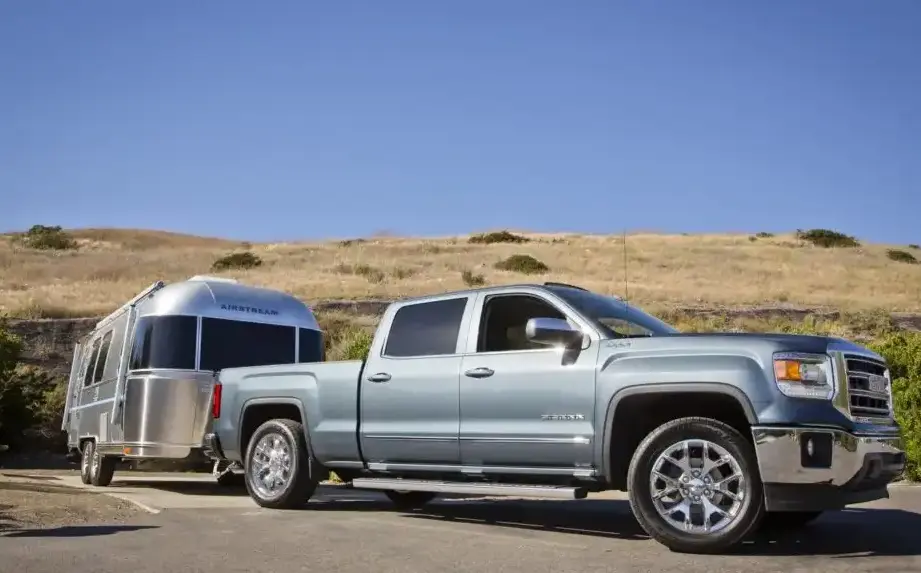
The GMC Sierra 1500 IV (GMTK2XX) Crew Cab with the 6.2 EcoTec3 V8 engine and four-wheel drive, produced from 2013 to 2014, represented a significant step forward in capability and refinement for GMC’s full-size pickup truck line. This variant occupied a premium position within the fourth-generation Sierra 1500 range, offering a substantial increase in power and towing capacity compared to the base V6 and smaller V8 options. It was designed to appeal to buyers needing a powerful, versatile truck for both work and personal use, and it competed directly with offerings from Ford, Chevrolet, and Ram. The GMTK2XX platform, shared with the Chevrolet Silverado, provided a solid foundation for this powerful configuration.
Technical Specifications
| Brand | GMC |
| Model | Sierra 1500 |
| Generation | Sierra 1500 IV (GMTK2XX) Crew Cab Standard Box |
| Type (Engine) | 6.2 EcoTec3 V8 (420 Hp) 4WD Automatic |
| Start of production | 2013 |
| End of production | 2014 |
| Powertrain Architecture | Internal Combustion engine |
| Body type | Pick-up |
| Seats | 5 |
| Doors | 4 |
| Fuel consumption (urban) | 16.8 l/100 km (14 US mpg, 16.8 UK mpg, 6 km/l) |
| Fuel consumption (extra urban) | 11.8 l/100 km (19.9 US mpg, 23.9 UK mpg, 8.5 km/l) |
| Fuel Type | Petrol (Gasoline) |
| Weight-to-power ratio | 5.9 kg/Hp, 170.6 Hp/tonne |
| Weight-to-torque ratio | 4 kg/Nm, 253 Nm/tonne |
| Power | 420 Hp @ 5600 rpm |
| Power per litre | 68.2 Hp/l |
| Torque | 623 Nm @ 4100 rpm (459.5 lb.-ft. @ 4100 rpm) |
| Maximum engine speed | 6000 rpm |
| Engine layout | Front, Longitudinal |
| Engine Model/Code | L86 |
| Engine displacement | 6162 cm3 (376.03 cu. in.) |
| Number of cylinders | 8 |
| Engine configuration | V-engine |
| Cylinder Bore | 103.25 mm (4.06 in.) |
| Piston Stroke | 92 mm (3.62 in.) |
| Compression ratio | 11.5:1 |
| Number of valves per cylinder | 2 |
| Fuel injection system | Direct injection |
| Engine aspiration | Naturally aspirated engine |
| Valvetrain | OHV |
| Engine oil capacity | 8 l (8.45 US qt | 7.04 UK qt) |
| Coolant capacity | 14.8 l (15.64 US qt | 13.02 UK qt) |
| Kerb Weight | 2462 kg (5427.78 lbs.) |
| Max. weight | 3266 kg (7200.3 lbs.) |
| Max load | 804 kg (1772.52 lbs.) |
| Trunk (boot) space – minimum | 1728 l (61.02 cu. ft.) |
| Fuel tank capacity | 98 l (25.89 US gal | 21.56 UK gal) |
| Permitted trailer load with brakes (12%) | 4263 kg (9398.31 lbs.) |
| Length | 6071 mm (239.02 in.) |
| Width including mirrors | 2032 mm (80 in.) |
| Height | 1875 mm (73.82 in.) |
| Wheelbase | 3886 mm (152.99 in.) |
| Front track | 1745 mm (68.7 in.) |
| Rear (Back) track | 1716 mm (67.56 in.) |
| Ride height (ground clearance) | 227 mm (8.94 in.) |
| Minimum turning circle (turning diameter) | 14.8 m (48.56 ft.) |
| Approach angle | 17.1° |
| Departure angle | 23° |
| Ramp-over (brakeover) angle | 17.7° |
| Drivetrain Architecture | The Internal combustion engine (ICE) drives the rear wheels permanently, and the front wheels are driven through an electrically or mechanically operated clutch if necessary. |
| Drive wheel | All wheel drive (4×4) |
| Number of gears and type of gearbox | 6 gears, automatic transmission Hydra-Matic |
| Front suspension | Independent coil spring |
| Rear suspension | Rigid axle suspension, Leaf spring |
| Front brakes | Ventilated discs, 330×30 mm |
| Rear brakes | Ventilated discs, 345×20 mm |
| Assisting systems | ABS (Anti-lock braking system) |
| Steering type | Steering rack and pinion |
| Power steering | Electric Steering |
| Tires size | 245/70R17; 265/70 R17 |
| Wheel rims size | 8J x 17 |
Powertrain & Engine Architecture
At the heart of this Sierra 1500 variant lies the 6.2-liter EcoTec3 V8 engine, designated as the L86. This engine represented a significant overhaul of GM’s small-block V8 architecture. Key features included direct fuel injection, active fuel management (cylinder deactivation), and variable valve timing. The direct injection system allowed for precise fuel delivery, enhancing both power and efficiency. Active Fuel Management enabled the engine to operate on four cylinders during light-load conditions, further improving fuel economy. The OHV valvetrain, while traditional, was optimized for low-end torque. The engine produced 420 horsepower at 5600 rpm and 459.5 lb-ft of torque at 4100 rpm. This power was channeled through a six-speed Hydra-Matic automatic transmission, known for its smooth shifting and durability. The transmission was specifically tuned to complement the engine’s torque curve, providing responsive acceleration and confident towing capability.
Driving Characteristics
The 6.2L V8 and six-speed automatic combination delivered a markedly different driving experience compared to the lower-trim Sierra 1500s. Acceleration was brisk, and the truck felt confident even when fully loaded. The automatic transmission’s gear ratios were well-matched to the engine’s powerband, providing ample torque for towing and hauling. While not as fuel-efficient as the smaller engine options, the 6.2L offered a compelling balance of power and usability. Compared to a manual transmission equipped Sierra, the automatic prioritized ease of use and convenience, making it ideal for daily driving and long-distance trips. The four-wheel-drive system provided enhanced traction in various conditions, making it a capable performer both on and off-road.
Equipment & Trim Levels
The Crew Cab configuration, combined with the 6.2L engine, typically came with a well-equipped interior. Standard features included cloth upholstery, air conditioning, power windows and locks, a basic audio system, and a rearview camera. Higher trim levels, such as the SLT and Denali, added premium features like leather upholstery, heated and ventilated front seats, a navigation system, a premium audio system, and advanced safety features. Optional extras included a sunroof, upgraded wheels, and various appearance packages.
Chassis & Braking
The GMTK2XX platform featured a fully boxed frame, providing a solid and rigid foundation for the truck. The front suspension utilized an independent coil spring design, while the rear suspension employed a traditional leaf spring setup. This combination offered a comfortable ride quality while maintaining robust load-carrying capacity. The braking system consisted of ventilated discs at all four corners, providing ample stopping power. An Anti-lock Braking System (ABS) was standard equipment. The rear brakes were slightly smaller in diameter than the front brakes, reflecting the weight distribution of the truck.
Market Reception & Comparison
The 6.2L Sierra 1500 received generally positive reviews from automotive critics. It was praised for its powerful engine, smooth transmission, and comfortable ride. However, its fuel economy was often cited as a drawback compared to the smaller engine options. In comparison to the 5.3L V8, the 6.2L offered a significant performance boost, but at a higher price point. The 6.2L also provided a more competitive alternative to the Ford EcoBoost V6 and the Ram Hemi V8 engines. Reliability was generally good, although some owners reported minor issues with the active fuel management system.
Legacy
The L86 6.2L EcoTec3 V8 proved to be a durable and reliable engine. While not without its minor quirks, it has generally held up well over time. In the used car market, Sierra 1500s equipped with this engine and transmission command a premium price due to their performance and capability. The GMTK2XX platform also proved to be robust, contributing to the long-term value of these trucks. The combination of power, comfort, and capability made the 6.2L Sierra 1500 a popular choice for buyers seeking a well-rounded full-size pickup truck.

