
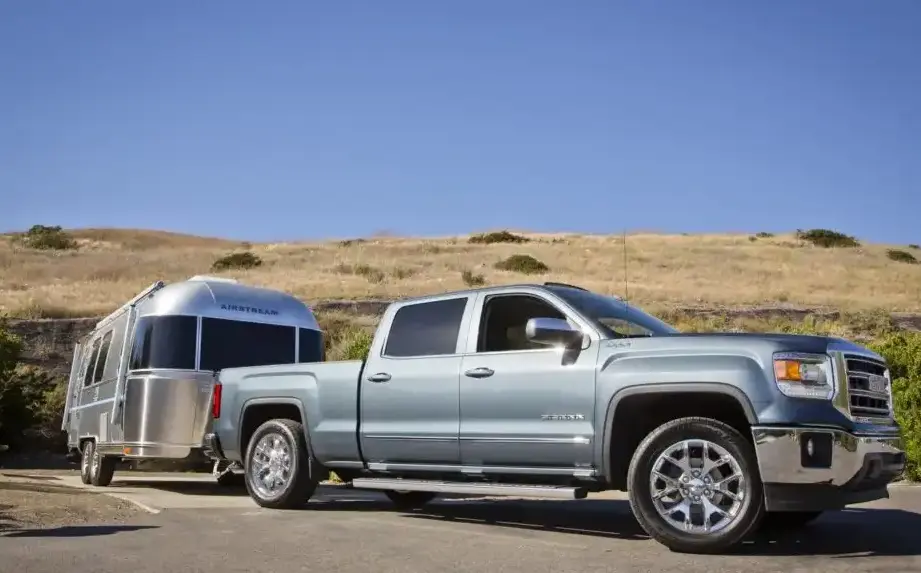
The GMC Sierra 1500 IV (GMTK2XX) Crew Cab with the 6.2 EcoTec3 V8 engine and automatic transmission represents a significant iteration in GMC’s full-size pickup truck lineage. Produced from 2013 to 2014, this variant occupied a premium position within the fourth-generation Sierra 1500 lineup, offering a blend of substantial power, towing capacity, and interior comfort. It was a key player in the highly competitive North American full-size truck market, appealing to buyers needing a capable workhorse with everyday usability. This configuration was positioned above the base V6 and 5.3L V8 models, targeting customers who prioritized performance and heavier-duty tasks.
Technical Specifications
| Brand | GMC |
| Model | Sierra 1500 |
| Generation | Sierra 1500 IV (GMTK2XX) Crew Cab Standard Box |
| Type (Engine) | 6.2 EcoTec3 V8 (420 Hp) Automatic |
| Start of production | 2013 |
| End of production | 2014 |
| Powertrain Architecture | Internal Combustion engine |
| Body type | Pick-up |
| Seats | 5 |
| Doors | 4 |
| Fuel consumption (urban) | 15.7 l/100 km (15 US mpg, 18 UK mpg, 6.4 km/l) |
| Fuel consumption (extra urban) | 11.2 l/100 km (21 US mpg, 25.2 UK mpg, 8.9 km/l) |
| Fuel Type | Petrol (Gasoline) |
| Weight-to-power ratio | 5.6 kg/Hp, 177.5 Hp/tonne |
| Weight-to-torque ratio | 3.8 kg/Nm, 263.3 Nm/tonne |
| Power | 420 Hp @ 5600 rpm |
| Power per litre | 68.2 Hp/l |
| Torque | 623 Nm @ 4100 rpm (459.5 lb.-ft. @ 4100 rpm) |
| Maximum engine speed | 6000 rpm |
| Engine layout | Front, Longitudinal |
| Engine Model/Code | L86 |
| Engine displacement | 6162 cm3 (376.03 cu. in.) |
| Number of cylinders | 8 |
| Engine configuration | V-engine |
| Cylinder Bore | 103.25 mm (4.06 in.) |
| Piston Stroke | 92 mm (3.62 in.) |
| Compression ratio | 11.5:1 |
| Number of valves per cylinder | 2 |
| Fuel injection system | Direct injection |
| Engine aspiration | Naturally aspirated engine |
| Valvetrain | OHV |
| Engine oil capacity | 8 l (8.45 US qt | 7.04 UK qt) |
| Coolant | 14.8 l (15.64 US qt | 13.02 UK qt) |
| Kerb Weight | 2366 kg (5216.14 lbs.) |
| Max. weight | 3175 kg (6999.68 lbs.) |
| Max load | 809 kg (1783.54 lbs.) |
| Trunk (boot) space – minimum | 1728 l (61.02 cu. ft.) |
| Fuel tank capacity | 98 l (25.89 US gal | 21.56 UK gal) |
| Permitted trailer load with brakes (12%) | 4354 kg (9598.93 lbs.) |
| Length | 6071 mm (239.02 in.) |
| Width including mirrors | 2032 mm (80 in.) |
| Height | 1873 mm (73.74 in.) |
| Wheelbase | 3886 mm (152.99 in.) |
| Front track | 1747 mm (68.78 in.) |
| Rear (Back) track | 1716 mm (67.56 in.) |
| Ride height (ground clearance) | 216 mm (8.5 in.) |
| Minimum turning circle (turning diameter) | 14.8 m (48.56 ft.) |
| Approach angle | 16.4° |
| Departure angle | 23.3° |
| Ramp-over (brakeover) angle | 17.5° |
| Drivetrain Architecture | The Internal combustion engine (ICE) drives the rear wheels of the vehicle. |
| Drive wheel | Rear wheel drive |
| Number of gears and type of gearbox | 6 gears, automatic transmission Hydra-Matic |
| Front suspension | Independent coil spring |
| Rear suspension | Rigid axle suspension, Leaf spring |
| Front brakes | Ventilated discs, 330×30 mm |
| Rear brakes | Ventilated discs, 345×20 mm |
| Assisting systems | ABS (Anti-lock braking system) |
| Steering type | Steering rack and pinion |
| Power steering | Electric Steering |
| Tires size | 245/70R17; 265/70 R17 |
| Wheel rims size | 8J x 17 |
Powertrain & Engine Architecture
At the heart of this Sierra 1500 variant lies the 6.2-liter L86 EcoTec3 V8 engine. This engine represented a significant advancement in GM’s small-block V8 technology, featuring direct injection, active fuel management (cylinder deactivation), and variable valve timing. The direct injection system allowed for precise fuel delivery, enhancing both power and efficiency. The L86 produced 420 horsepower at 5600 rpm and 459.5 lb-ft of torque at 4100 rpm. This power was delivered through a six-speed Hydra-Matic automatic transmission, known for its smooth shifting and durability. The transmission was calibrated to provide a balance between performance and fuel economy, with gear ratios optimized for both towing and everyday driving. The engine’s longitudinal mounting and rear-wheel-drive configuration were standard for full-size American pickup trucks.
Driving Characteristics
The 6.2L V8 and six-speed automatic combination provided a noticeably more responsive driving experience compared to the lower-displacement engine options. Acceleration was brisk, and the truck felt confident when merging onto highways or passing other vehicles. While not a sports truck, the ample torque allowed for effortless towing and hauling. The automatic transmission generally shifted smoothly, although some drivers noted a slight hesitation during downshifts. The gear ratios were well-suited for maintaining comfortable cruising speeds on the highway. Compared to the 5.3L V8, the 6.2L offered a significant power boost, but at the expense of slightly lower fuel economy. The manual transmission options, when available on other trims, offered more driver control, but the automatic was favored by many buyers for its convenience.
Equipment & Trim Levels
The Crew Cab configuration, combined with the 6.2L engine, typically came with a well-equipped interior. Standard features included cloth upholstery, air conditioning, power windows and locks, a basic audio system, and a rearview camera. Higher trim levels, such as the SLT and Denali, added features like leather upholstery, heated and ventilated front seats, a premium audio system, navigation, and advanced safety technologies. Optional extras included a sunroof, upgraded wheels, and various appearance packages. The interior design focused on functionality and durability, with ample storage space and comfortable seating for five passengers.
Chassis & Braking
The Sierra 1500 IV (GMTK2XX) utilized a fully boxed frame for enhanced rigidity and strength. The front suspension featured independent coil springs, while the rear suspension employed a traditional leaf spring setup. This configuration provided a comfortable ride quality while maintaining a respectable payload capacity. The braking system consisted of ventilated discs on all four wheels, with ABS as standard. The front brakes measured 330×30 mm, while the rear brakes were slightly smaller at 345×20 mm. The steering system was a rack-and-pinion setup with electric power steering, providing responsive and precise handling.
Market Reception & Comparison
The 6.2L Sierra 1500 received generally positive reviews from automotive critics. It was praised for its powerful engine, comfortable ride, and spacious interior. However, some reviewers noted that the fuel economy was not class-leading. Compared to the Ford F-150 and Ram 1500, the Sierra 1500 offered a competitive package, with a focus on capability and refinement. The 6.2L engine provided a clear advantage in terms of horsepower and torque, making it a popular choice for buyers who frequently towed or hauled heavy loads. The 5.3L V8 offered better fuel economy, while the base V6 was more affordable but lacked the performance of the larger engines.
Legacy
The L86 6.2L EcoTec3 V8 has proven to be a relatively reliable engine, with few widespread issues reported. The Hydra-Matic six-speed automatic transmission is also known for its durability. In the used car market, these Sierra 1500s hold their value reasonably well, particularly those in good condition with low mileage. The combination of power, capability, and comfort makes them a desirable option for buyers seeking a capable full-size pickup truck. While newer Sierra models offer more advanced technology and features, the 2013-2014 6.2L variant remains a solid and dependable choice.

