
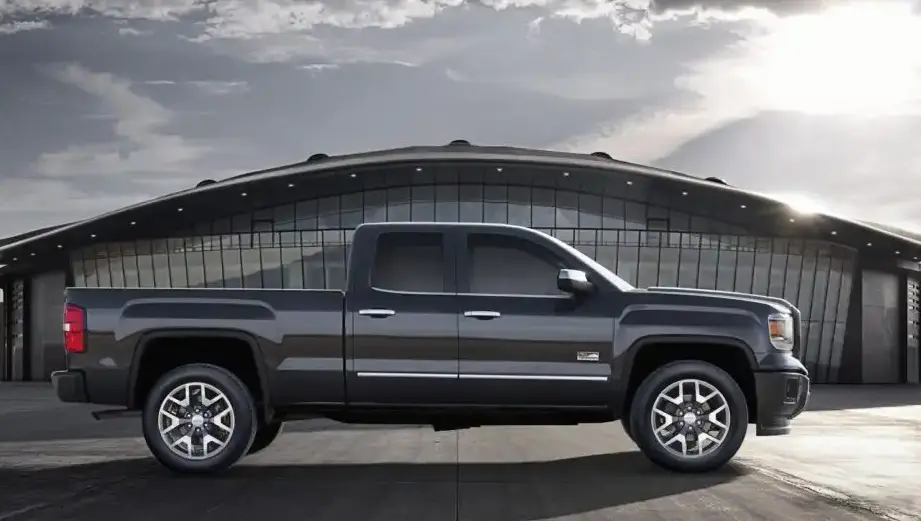
The GMC Sierra 1500 IV (GMTK2XX) Double Cab, equipped with the 5.3 EcoTec3 V8 engine producing 355 horsepower and 380 horsepower on E85 fuel, paired with a 4WD automatic transmission and FlexFuel capability, represents a significant iteration in GMC’s full-size pickup truck lineage. Produced from 2013 through 2015, this variant occupied a sweet spot in the Sierra 1500 lineup, offering a balance of capability, comfort, and fuel efficiency for buyers needing a versatile truck. It was part of the fourth generation of the Sierra 1500, designated GMTK2XX, which brought substantial improvements in design, technology, and overall refinement compared to its predecessors.
Technical Specifications
| Brand | GMC |
| Model | Sierra 1500 |
| Generation | Sierra 1500 IV (GMTK2XX) Double Cab |
| Type (Engine) | 5.3 EcoTec3 V8 (355/380 Hp) 4WD Automatic FlexFuel |
| Start of production | 2013 |
| End of production | 2015 |
| Powertrain Architecture | Internal Combustion engine |
| Body type | Pick-up |
| Seats | 5 |
| Doors | 4 |
| Fuel consumption (urban) | 14.7 l/100 km (16 US mpg, 19.2 UK mpg, 6.8 km/l) |
| Fuel consumption (extra urban) | 10.7 l/100 km (22 US mpg, 26.4 UK mpg, 9.3 km/l) |
| Fuel Type | Petrol / Ethanol – E85 |
| Weight-to-power ratio | 6.6 kg/Hp, 150.5 Hp/tonne |
| Weight-to-torque ratio | 4.5 kg/Nm, 220 Nm/tonne |
| Power | 355 Hp @ 5600 rpm |
| Power per litre | 66.6 Hp/l |
| Power (Ethanol – E85) | 380 Hp @ 5600 rpm |
| Power per litre (Ethanol – E85) | 71.3 Hp/l |
| Torque | 519 Nm @ 4100 rpm (382.79 lb.-ft. @ 4100 rpm) |
| Torque (Ethanol – E85) | 564 Nm @ 4100 rpm |
| Maximum engine speed | 5800 rpm |
| Engine layout | Front, Longitudinal |
| Engine Model/Code | L83 |
| Engine displacement | 5328 cm3 (325.13 cu. in.) |
| Number of cylinders | 8 |
| Engine configuration | V-engine |
| Cylinder Bore | 96 mm (3.78 in.) |
| Piston Stroke | 92 mm (3.62 in.) |
| Compression ratio | 11:1 |
| Number of valves per cylinder | 2 |
| Fuel injection system | Direct injection |
| Engine aspiration | Naturally aspirated engine |
| Valvetrain | OHV |
| Engine oil capacity | 8 l (8.45 US qt | 7.04 UK qt) |
| Coolant | 14.8 l (15.64 US qt | 13.02 UK qt) |
| Kerb Weight | 2359 kg (5200.7 lbs.) |
| Max. weight | 3266 kg (7200.3 lbs.) |
| Max load | 907 kg (1999.59 lbs.) |
| Trunk (boot) space – minimum | 1728 l (61.02 cu. ft.) |
| Fuel tank capacity | 98 l (25.89 US gal | 21.56 UK gal) |
| Permitted trailer load with brakes (12%) | 4354 kg (9598.93 lbs.) |
| Length | 5829 mm (229.49 in.) |
| Width including mirrors | 2032 mm (80 in.) |
| Height | 1877 mm (73.9 in.) |
| Wheelbase | 3645 mm (143.5 in.) |
| Front track | 1750 mm (68.9 in.) |
| Rear (Back) track | 1716 mm (67.56 in.) |
| Ride height (ground clearance) | 225 mm (8.86 in.) |
| Minimum turning circle (turning diameter) | 14.3 m (46.92 ft.) |
| Approach angle | 17° |
| Departure angle | 23.1° |
| Ramp-over (brakeover) angle | 19.1° |
| Drivetrain Architecture | The Internal combustion engine (ICE) drives the rear wheels permanently, and the front wheels are driven through an electrically or mechanically operated clutch if necessary. |
| Drive wheel | All wheel drive (4×4) |
| Number of gears and type of gearbox | 6 gears, automatic transmission Hydra-Matic |
| Front suspension | Independent coil spring |
| Rear suspension | Rigid axle suspension, Leaf spring |
| Front brakes | Ventilated discs, 330×30 mm |
| Rear brakes | Ventilated discs, 345×20 mm |
| Assisting systems | ABS (Anti-lock braking system) |
| Steering type | Steering rack and pinion |
| Power steering | Electric Steering |
| Tires size | 245/70 R17; 265/70 R17 |
| Wheel rims size | 8J x 17 |
Powertrain & Engine Architecture
At the heart of this Sierra 1500 Double Cab lies the 5.3-liter L83 EcoTec3 V8 engine. This engine is a member of GM’s small-block V8 family, but incorporates several advanced technologies. Key features include direct fuel injection, variable valve timing, and cylinder deactivation (Active Fuel Management). Direct injection improves combustion efficiency and power output, while variable valve timing optimizes engine performance across the rev range. Cylinder deactivation allows the engine to operate on four cylinders during light-load conditions, improving fuel economy. The L83 produces 355 horsepower and 380 horsepower when running on E85 fuel. The engine is longitudinally mounted and paired with a six-speed Hydra-Matic automatic transmission. This transmission was known for its smooth shifting and durability. The FlexFuel capability allowed the truck to run on gasoline, E85, or any blend of the two, providing drivers with fuel choice and potentially reducing emissions.
Driving Characteristics
The 5.3L V8 with the six-speed automatic provided a comfortable and capable driving experience. While not as quick as the available 6.2L V8, the 5.3L offered ample power for everyday driving and towing. The automatic transmission was well-tuned, providing smooth gear changes and responsive acceleration. The 4WD system offered good traction in various conditions, making it suitable for both on-road and off-road use. The gear ratios were optimized for both towing and fuel efficiency. Compared to manual transmission equipped Sierras, the automatic offered greater convenience, especially in city driving. However, some drivers preferred the more direct control of a manual transmission. The weight of the Double Cab configuration, combined with the 4WD system, did impact acceleration and fuel economy compared to lighter, two-wheel-drive models.
Equipment & Trim Levels
The Sierra 1500 Double Cab with the 5.3L V8 was typically offered in SLE, SLT, and Denali trim levels. The SLE trim served as the entry-level option, featuring standard amenities such as air conditioning, power windows and locks, a basic audio system, and cloth upholstery. The SLT trim added features like leather upholstery, heated front seats, a premium audio system, and additional chrome exterior trim. The Denali trim represented the pinnacle of luxury, offering exclusive features such as unique exterior styling, a more refined interior, and advanced technology features. Optional extras included a navigation system, a sunroof, and a rear-seat entertainment system.
Chassis & Braking
The GMTK2XX platform featured a fully boxed frame, providing a solid foundation for the truck. The front suspension utilized an independent coil spring design, while the rear suspension employed a traditional leaf spring setup. This combination offered a good balance of ride comfort and load-carrying capacity. The braking system consisted of ventilated discs at all four corners, providing ample stopping power. An Anti-lock Braking System (ABS) was standard. The Double Cab configuration’s longer wheelbase contributed to a more stable and comfortable ride compared to the standard cab models. The rear axle ratio varied depending on the specific configuration and towing package.
Market Reception & Comparison
The GMC Sierra 1500 with the 5.3L V8 and automatic transmission was well-received by critics and consumers alike. It was praised for its comfortable ride, spacious interior, and capable powertrain. Fuel economy was considered average for a full-size pickup truck, but the FlexFuel capability offered a potential cost savings. Compared to the Ford F-150 and Ram 1500, the Sierra 1500 was often seen as a more refined and upscale option. The 5.3L V8 offered a good balance of power and efficiency, making it a popular choice for buyers who didn’t need the extra power of the 6.2L V8. However, some critics noted that the interior materials weren’t quite as luxurious as those found in some competing trucks.
Legacy
The L83 5.3L EcoTec3 V8 has proven to be a relatively reliable engine, with many examples still on the road today. Common issues include oil leaks and occasional Active Fuel Management problems, but these are generally not major concerns. The six-speed Hydra-Matic automatic transmission is also known for its durability. In the used car market, the 2013-2015 GMC Sierra 1500 Double Cab with the 5.3L V8 remains a popular choice for buyers seeking a capable and comfortable full-size pickup truck. Its blend of features, performance, and reliability make it a compelling option in its price range. The GMTK2XX platform laid the groundwork for future generations of GMC Sierra trucks, continuing the brand’s tradition of building durable and capable vehicles.

