
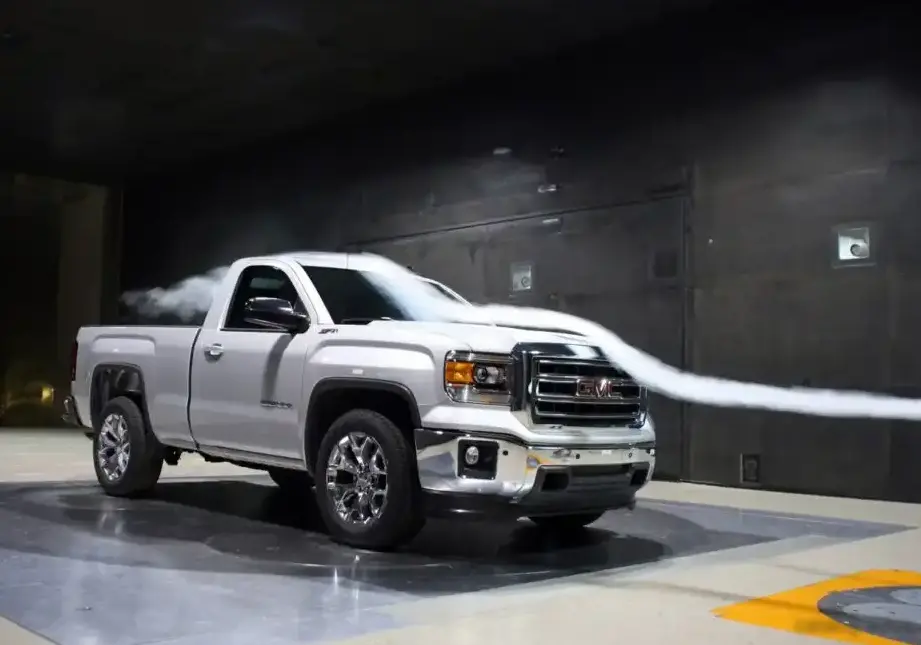
The GMC Sierra 1500 IV (GMTK2XX) Regular Cab Standard Box, equipped with the 4.3 EcoTec3 V6 engine and automatic transmission, was a mainstay of GMC’s full-size pickup truck lineup from 2013 to 2015. This configuration represented a value-oriented offering within the fourth generation Sierra (GMTK2XX), designed to appeal to buyers prioritizing capability and affordability over outright performance or luxury. It served as a workhorse for individuals and businesses needing a reliable and versatile pickup for everyday tasks and light-duty hauling. The Regular Cab configuration, combined with the Standard Box, positioned this variant as a practical choice for those not requiring the extended space of a crew cab or the longer bed of a long box model.
Technical Specifications
| Brand | GMC |
| Model | Sierra 1500 |
| Generation | Sierra 1500 IV (GMTK2XX) Regular Cab Standard Box |
| Type (Engine) | 4.3 EcoTec3 V6 (285/297 Hp) Automatic FlexFuel |
| Start of production | 2013 |
| End of production | 2015 |
| Powertrain Architecture | Internal Combustion engine |
| Body type | Pick-up |
| Seats | 3 |
| Doors | 2 |
| Fuel consumption (urban) | 13.1 l/100 km (18 US mpg) |
| Fuel consumption (extra urban) | 9.8 l/100 km (24 US mpg) |
| Fuel Type | Petrol / Ethanol – E85 |
| Weight-to-power ratio | 7 kg/Hp |
| Weight-to-torque ratio | 4.8 kg/Nm |
| Power | 285 Hp @ 5300 rpm |
| Power per litre | 66.3 Hp/l |
| Power (Ethanol – E85) | 297 Hp @ 5300 rpm |
| Power per litre (Ethanol – E85) | 69.1 Hp/l |
| Torque | 413 Nm @ 3900 rpm (304.61 lb.-ft. @ 3900 rpm) |
| Torque (Ethanol – E85) | 447 Nm @ 3900 rpm |
| Maximum engine speed | 5800 rpm |
| Engine layout | Front, Longitudinal |
| Engine Model/Code | LV3 |
| Engine displacement | 4300 cm3 (262.4 cu. in.) |
| Number of cylinders | 6 |
| Engine configuration | V-engine |
| Cylinder Bore | 99.6 mm (3.92 in.) |
| Piston Stroke | 92 mm (3.62 in.) |
| Compression ratio | 11:1 |
| Number of valves per cylinder | 2 |
| Fuel injection system | Direct injection |
| Engine aspiration | Naturally aspirated engine |
| Valvetrain | OHV |
| Engine oil capacity | 5.7 l (6.02 US qt | 5.02 UK qt) |
| Coolant | 14 l (14.79 US qt | 12.32 UK qt) |
| Kerb Weight | 1990 kg (4387.2 lbs.) |
| Max. weight | 2948 kg (6499.23 lbs.) |
| Max load | 958 kg (2112.03 lbs.) |
| Trunk (boot) space – minimum | 1728 l (61.02 cu. ft.) |
| Fuel tank capacity | 98 l (25.89 US gal | 21.56 UK gal) |
| Permitted trailer load with brakes (12%) | 2903 kg (6400.02 lbs.) |
| Length | 5221 mm (205.55 in.) |
| Width including mirrors | 2032 mm (80 in.) |
| Height | 1879 mm (73.98 in.) |
| Wheelbase | 3023 mm (119.02 in.) |
| Front track | 1747 mm (68.78 in.) |
| Rear (Back) track | 1716 mm (67.56 in.) |
| Ride height (ground clearance) | 209 mm (8.23 in.) |
| Minimum turning circle (turning diameter) | 12.2 m (40.03 ft.) |
| Approach angle | 14.5° |
| Departure angle | 25.0° |
| Ramp-over (brakeover) angle | 24.4° |
| Drivetrain Architecture | Rear wheel drive |
| Drive wheel | Rear wheel drive |
| Number of gears and type of gearbox | 6 gears, automatic transmission Hydra-Matic |
| Front suspension | Independent coil spring |
| Rear suspension | Rigid axle suspension, Leaf spring |
| Front brakes | Ventilated discs, 330×30 mm |
| Rear brakes | Ventilated discs, 345×20 mm |
| Assisting systems | ABS (Anti-lock braking system) |
| Steering type | Steering rack and pinion |
| Power steering | Electric Steering |
| Tires size | 245/70 R17; 265/70 R17 |
| Wheel rims size | 8J x 17 |
Powertrain & Engine Architecture
The heart of this Sierra 1500 variant was the 4.3L (262 cubic inch) EcoTec3 V6 engine, designated as the LV3. This engine represented a significant step forward in GM’s small-block V6 technology. It featured direct injection, variable valve timing, and cylinder deactivation, allowing it to balance power and fuel efficiency. The cylinder deactivation system, Active Fuel Management, could shut down two cylinders under light load conditions, improving gas mileage. The engine utilized an overhead valve (OHV) valvetrain, a design choice that prioritized compactness and cost-effectiveness. The 6-speed Hydra-Matic automatic transmission was the sole transmission option for this configuration. This transmission was known for its smooth shifting and durability, providing adequate performance for typical truck duties. The engine was also FlexFuel capable, meaning it could run on gasoline or a blend of up to 85% ethanol (E85).
Driving Characteristics
The 4.3L V6 with the 6-speed automatic delivered adequate, but not exhilarating, performance. With 285 horsepower and 305 lb-ft of torque, it was sufficient for everyday driving and light hauling. Acceleration was modest, and passing maneuvers required planning. Compared to the available 5.3L V8, the 4.3L felt noticeably less powerful. However, the automatic transmission was well-matched to the engine’s characteristics, providing smooth and predictable shifts. The gear ratios were optimized for towing and hauling, but this came at the expense of quick acceleration. The E85 capability offered a slight power boost (297 hp), but fuel economy suffered when running on the ethanol blend. Overall, the driving experience was geared towards practicality and efficiency rather than sporty performance.
Equipment & Trim Levels
The 4.3L Regular Cab Sierra 1500 typically served as the entry-level trim. Standard features generally included air conditioning, power windows and locks, a basic audio system, and vinyl upholstery. Higher trim levels, such as SLE and SLT, added features like cloth or leather upholstery, upgraded audio systems, alloy wheels, and additional convenience features. Optional extras included a trailer hitch, upgraded towing packages, and various appearance packages. The interior was functional and durable, prioritizing practicality over luxury. The dashboard layout was straightforward and easy to use, with clearly labeled controls.
Chassis & Braking
The Sierra 1500 IV utilized a body-on-frame construction, providing a robust and durable platform. The front suspension featured independent coil springs, while the rear suspension employed a traditional leaf spring setup. This configuration was designed to handle heavy loads and provide a comfortable ride. Brakes consisted of ventilated discs at all four wheels, providing adequate stopping power. An Anti-lock Braking System (ABS) was standard. The rear axle ratio was typically geared towards towing and hauling, further emphasizing the truck’s work-oriented nature.
Market Reception & Comparison
The 4.3L Sierra 1500 Regular Cab was generally well-received as a value-oriented pickup truck. Critics praised its affordability and fuel efficiency, particularly compared to the larger V8 engines. However, some reviewers noted its lack of power and refinement. Compared to the 5.3L V8 models, the 4.3L offered significantly lower performance but also a lower price point. Fuel economy was a key selling point, with the 4.3L achieving better MPG figures than its V8 counterparts. Reliability was generally good, with the EcoTec3 engine proving to be a durable and dependable powerplant.
Legacy
The 4.3L EcoTec3 V6-powered Sierra 1500 remains a relatively common sight on the used car market. Its affordability and reputation for reliability make it an attractive option for buyers seeking a capable and dependable pickup truck. While not as desirable as the V8 models, the 4.3L offers a compelling value proposition for those prioritizing practicality and fuel efficiency. The engine itself has proven to be durable, with many examples exceeding 150,000 miles with proper maintenance. The GMTK2XX platform, as a whole, is considered to be a solid and well-engineered truck, contributing to the continued appeal of this Sierra 1500 variant.

