
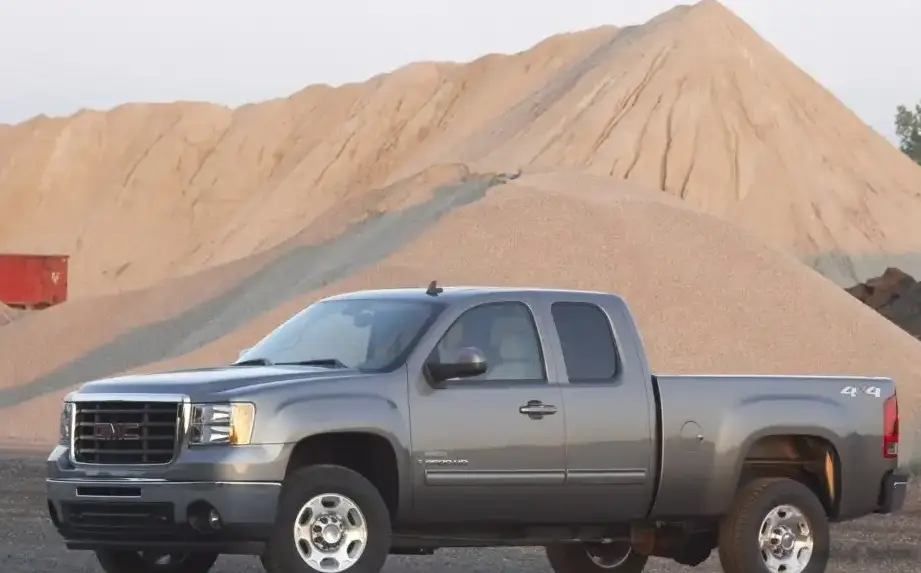
The GMC Sierra 2500HD III, specifically the Extended Cab Standard Box configuration powered by the 6.6-liter Duramax TD V8 engine producing 365 horsepower and paired with a 4WD automatic transmission, represents a significant iteration in GMC’s heavy-duty truck lineage. Produced from 2007 to 2010 (GMT900 platform), this variant aimed to deliver a balance of robust towing capability, diesel efficiency, and everyday usability for the American truck buyer. It occupied a sweet spot in the Sierra 2500HD lineup, offering more power and capacity than the gasoline-powered options, but without the outright expense of the fully-loaded trims.
Technical Specifications
| Brand | GMC |
| Model | Sierra 2500HD |
| Generation | Sierra 2500HD III (GMT900) Extended Cab Standard Box |
| Type (Engine) | 6.6 Duramax TD V8 (365 Hp) 4WD Automatic |
| Start of production | 2007 |
| End of production | 2010 |
| Powertrain Architecture | Internal Combustion engine |
| Body type | Pick-up |
| Seats | 5 |
| Doors | 2 |
| Fuel Type | Diesel |
| Weight-to-power ratio | 8.2 kg/Hp, 122.6 Hp/tonne |
| Weight-to-torque ratio | 3.3 kg/Nm, 300.5 Nm/tonne |
| Power | 365 Hp @ 3200 rpm |
| Power per litre | 55.3 Hp/l |
| Torque | 895 Nm @ 1600 rpm (660.12 lb.-ft. @ 1600 rpm) |
| Maximum engine speed | 3450 rpm |
| Engine layout | Front, Longitudinal |
| Engine Model/Code | Duramax LMM |
| Engine displacement | 6599 cm3 (402.7 cu. in.) |
| Number of cylinders | 8 |
| Engine configuration | V-engine |
| Cylinder Bore | 103 mm (4.06 in.) |
| Piston Stroke | 99 mm (3.9 in.) |
| Compression ratio | 16.8:1 |
| Number of valves per cylinder | 4 |
| Fuel injection system | Diesel Commonrail |
| Engine aspiration | Turbocharger, Intercooler |
| Valvetrain | OHV |
| Engine oil capacity | 9.5 l (10.04 US qt | 8.36 UK qt) |
| Coolant | 24 l (25.36 US qt | 21.12 UK qt) |
| Kerb Weight | 2978 kg (6565.37 lbs.) |
| Max. weight | 4173 kg (9199.89 lbs.) |
| Max load | 1195 kg (2634.52 lbs.) |
| Trunk (boot) space – maximum | 1718 l (60.67 cu. ft.) |
| Fuel tank capacity | 98 l (25.89 US gal | 21.56 UK gal) |
| Permitted trailer load with brakes (12%) | 5897 kg (13000.66 lbs.) |
| Length | 5850 mm (230.31 in.) |
| Width including mirrors | 2032 mm (80 in.) |
| Height | 1951 mm (76.81 in.) |
| Wheelbase | 3645 mm (143.5 in.) |
| Front track | 1744 mm (68.66 in.) |
| Rear (Back) track | 1676 mm (65.98 in.) |
| Ride height (ground clearance) | 243 mm (9.57 in.) |
| Minimum turning circle (turning diameter) | 14.5 m (47.57 ft.) |
| Drivetrain Architecture | All wheel drive (4×4). ICE drives rear wheels, front wheels engaged via clutch. |
| Number of gears and type of gearbox | 6 gears, automatic transmission Allison |
| Front suspension | Independent torsion bar, double wishbone |
| Rear suspension | Rigid axle suspension, Leaf spring |
| Front brakes | Ventilated discs, 325×38 mm |
| Rear brakes | Ventilated discs, 325×30 mm |
| Assisting systems | ABS (Anti-lock braking system) |
| Steering type | Cone worm with recirculation balls |
| Tires size | 245/75 R16; 265/75 R17 |
| Wheel rims size | 6.5J x 16; 7.5J x 17 |
Powertrain & Engine Architecture
At the heart of this Sierra 2500HD variant lies the Duramax LMM 6.6-liter V8 turbodiesel engine. This engine represented a refinement of the previous LBZ Duramax, incorporating a more robust crankshaft, redesigned pistons, and an improved cooling system. The LMM utilized a common-rail fuel injection system, delivering fuel at extremely high pressures for optimized combustion and reduced emissions. The engine featured an overhead valve (OHV) valvetrain, a design choice favored for its durability and low-end torque characteristics. A variable geometry turbocharger and intercooler further enhanced performance and efficiency. The Allison 1000 six-speed automatic transmission was specifically designed to handle the substantial torque output of the Duramax engine, providing smooth and reliable shifting even under heavy loads. The transmission featured a lock-up torque converter for improved fuel economy at highway speeds.
Driving Characteristics
The 365 horsepower and 895 lb-ft of torque delivered by the LMM Duramax, coupled with the Allison automatic, provided a compelling driving experience. While not as overtly powerful as some of the gasoline-powered alternatives, the diesel engine’s torque curve allowed for effortless towing and hauling. The automatic transmission, while smooth, wasn’t particularly quick to downshift, meaning drivers often needed to anticipate passing maneuvers. Compared to the manual transmission equipped versions, the automatic offered greater convenience, especially in stop-and-go traffic, but at the expense of some driver engagement and potentially slightly reduced fuel economy. The gear ratios were optimized for towing, prioritizing low-end grunt over outright acceleration.
Equipment & Trim Levels
The Extended Cab Standard Box 2500HD with the Duramax engine typically came with a fairly comprehensive list of standard features. These included air conditioning, power windows and locks, a basic audio system, and vinyl upholstery. The Extended Cab configuration provided additional rear seating, though legroom was limited. Optional extras included leather upholstery, a premium audio system, navigation, and various towing packages. Trim levels varied, but generally offered increasing levels of luxury and convenience features. This configuration often sat in the mid-range of the 2500HD lineup, offering a good balance of capability and affordability.
Chassis & Braking
The Sierra 2500HD’s chassis was built for heavy-duty work. It featured a fully boxed frame for increased rigidity and durability. The front suspension utilized an independent torsion bar setup with double wishbones, while the rear suspension employed a traditional leaf spring design. This combination provided a comfortable ride, even when the truck was heavily loaded. Braking duties were handled by ventilated disc brakes on all four wheels, with ABS as standard equipment. The rear brakes were slightly smaller in diameter than the front brakes, reflecting the weight distribution of the truck.
Market Reception & Comparison
The Duramax-powered Sierra 2500HD was generally well-received by critics and consumers alike. It was praised for its impressive towing capacity, fuel efficiency (for a heavy-duty truck), and overall reliability. Compared to the gasoline-powered versions, the diesel offered significantly more torque and better fuel economy, making it the preferred choice for those who frequently towed or hauled heavy loads. However, the diesel engine carried a higher initial cost and potentially higher maintenance expenses. Against competitors like the Ford Super Duty and Ram 2500, the Sierra 2500HD held its own, offering a competitive combination of features, performance, and value.
Legacy
The GMT900 generation Sierra 2500HD, and particularly the 6.6L Duramax variants, have proven to be remarkably durable vehicles. The LMM Duramax engine, while not without its quirks (such as potential injector issues), is generally considered a reliable powerplant when properly maintained. Today, these trucks remain popular on the used car market, particularly among those seeking a capable and affordable work truck. Their robust construction and proven powertrain make them a solid choice for towing, hauling, and general-purpose use. The Allison transmission continues to be highly regarded for its durability and performance, contributing to the long-term value of these vehicles.

