
The GMC Sierra 2500HD III, specifically the facelifted version produced from 2011 to 2014, represented a significant evolution in GMC’s heavy-duty truck lineup. This iteration, built on the GMT900 platform, catered to buyers needing substantial towing and hauling capabilities. The Extended Cab Standard Box configuration, paired with the 6.6-liter Duramax turbodiesel V8 engine and a six-speed Allison automatic transmission, was a popular choice for those requiring a balance of work capability and everyday usability. This particular combination positioned itself as a mid-to-upper range offering within the Sierra 2500HD lineup, appealing to both commercial users and private owners engaged in demanding tasks.
Technical Specifications
| Brand | GMC |
| Model | Sierra 2500HD |
| Generation | Sierra 2500HD III (GMT900, facelift 2011) Extended Cab Standard Box |
| Type (Engine) | 6.6 Duramax TD V8 (397 Hp) Automatic |
| Start of production | 2011 |
| End of production | 2014 |
| Powertrain Architecture | Internal Combustion engine |
| Body type | Pick-up |
| Seats | 5 |
| Doors | 2 |
| Fuel Type | Diesel |
| Weight-to-power ratio | 7.8 kg/Hp, 127.9 Hp/tonne |
| Weight-to-torque ratio | 3 kg/Nm, 334 Nm/tonne |
| Power | 397 Hp @ 3000 rpm |
| Power per litre | 60.2 Hp/l |
| Torque | 1037 Nm @ 1600 rpm (764.85 lb.-ft. @ 1600 rpm) |
| Maximum engine speed | 3000 rpm |
| Engine layout | Front, Longitudinal |
| Engine Model/Code | Duramax LML |
| Engine displacement | 6599 cm3 (402.7 cu. in.) |
| Number of cylinders | 8 |
| Engine configuration | V-engine |
| Cylinder Bore | 103 mm (4.06 in.) |
| Piston Stroke | 99 mm (3.9 in.) |
| Compression ratio | 16:1 |
| Number of valves per cylinder | 4 |
| Fuel injection system | Diesel Commonrail |
| Engine aspiration | Turbocharger, Intercooler |
| Valvetrain | OHV |
| Engine oil capacity | 9.5 l (10.04 US qt | 8.36 UK qt) |
| Coolant | 24 l (25.36 US qt | 21.12 UK qt) |
| Kerb Weight | 3105 kg (6845.35 lbs.) |
| Max. weight | 4536 kg (10000.17 lbs.) |
| Max load | 1431 kg (3154.81 lbs.) |
| Trunk (boot) space – maximum | 1718 l (60.67 cu. ft.) |
| Fuel tank capacity | 136 l (35.93 US gal | 29.92 UK gal) |
| Permitted trailer load with brakes (12%) | 5897 kg (13000.66 lbs.) |
| Length | 5857 mm (230.59 in.) |
| Width including mirrors | 2032 mm (80 in.) |
| Height | 1979 mm (77.91 in.) |
| Wheelbase | 3663 mm (144.21 in.) |
| Front track | 1748 mm (68.82 in.) |
| Rear (Back) track | 1709 mm (67.28 in.) |
| Ride height (ground clearance) | 218 mm (8.58 in.) |
| Minimum turning circle (turning diameter) | 14.6 m (47.9 ft.) |
| Drivetrain Architecture | Rear wheel drive |
| Number of gears and type of gearbox | 6 gears, automatic transmission Allison |
| Front suspension | Independent torsion bar, double wishbone |
| Rear suspension | Rigid axle suspension, Leaf spring |
| Front brakes | Ventilated discs, 350×40 mm |
| Rear brakes | Ventilated discs, 360×34 mm |
| Assisting systems | ABS (Anti-lock braking system) |
| Steering type | Cone worm with recirculation balls |
| Tires size | 245/75 R17; 265/70 R17; 265/70 R18; 265/60 R20 |
| Wheel rims size | 7.5J x 17; 8J x 18; 8.5J x 20 |
Powertrain & Engine Architecture
The heart of this Sierra 2500HD variant is the 6.6-liter Duramax LML turbodiesel V8 engine. This engine represented a significant upgrade over previous Duramax iterations, incorporating a redesigned combustion chamber, improved fuel injectors, and a more efficient turbocharger. The LML utilized a diesel commonrail fuel injection system, delivering highly pressurized fuel directly into the cylinders for optimized combustion. The overhead valve (OHV) valvetrain, while traditional, was robust and well-suited to the demands of heavy-duty operation. The engine produced 397 horsepower at 3000 rpm and a substantial 765 lb-ft of torque at 1600 rpm. This torque output was crucial for towing and hauling heavy loads. The Allison 1000 six-speed automatic transmission was specifically designed to handle the Duramax engine’s power and torque. It featured a lock-up torque converter for improved fuel efficiency and a robust construction for durability. The transmission’s gear ratios were optimized for both towing and highway cruising.
Driving Characteristics
The 2500HD with the 6.6L Duramax and Allison automatic offered a driving experience focused on capability rather than outright speed. While the 397 hp was adequate, the engine’s strength lay in its immense low-end torque. Acceleration was brisk when unloaded, but the truck truly shined when towing. The Allison transmission shifted smoothly and predictably, providing ample power for merging onto highways and climbing steep grades, even with a substantial load. Compared to the available gasoline engines or even the 6.6L Duramax paired with a manual transmission, this automatic configuration prioritized ease of use and convenience. The manual transmission offered slightly better fuel economy and a more direct connection to the engine, while the automatic provided a more relaxed and comfortable driving experience, particularly in stop-and-go traffic.
Equipment & Trim Levels
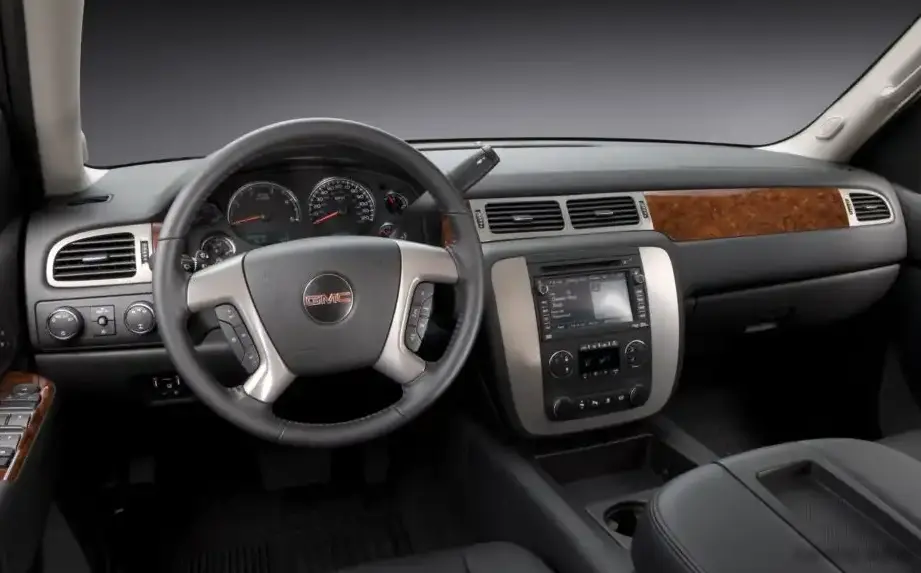
The Extended Cab Standard Box configuration typically came with a reasonable level of standard equipment. This included air conditioning, power windows and locks, a basic audio system, and vinyl upholstery. Higher trim levels, such as the SLT and Denali, added features like leather upholstery, heated seats, a premium audio system, navigation, and various chrome exterior accents. Optional extras for this variant included a trailer brake controller, a locking rear differential, and various towing packages. The interior layout was functional and durable, designed to withstand the rigors of heavy-duty use. The extended cab provided additional storage space behind the front seats, useful for tools or personal belongings.
Chassis & Braking
The Sierra 2500HD’s chassis was built for strength and durability. It featured a fully boxed frame and a heavy-duty suspension system. The front suspension utilized an independent torsion bar setup with double wishbones, while the rear suspension employed a traditional leaf spring design. This combination provided a comfortable ride, even when carrying heavy loads. Braking duties were handled by ventilated disc brakes on all four wheels, providing ample stopping power. An Anti-lock Braking System (ABS) was standard. The rear axle ratios varied depending on the specific configuration, with options available to optimize for towing or fuel economy.
Market Reception & Comparison
The 2011-2014 GMC Sierra 2500HD with the 6.6L Duramax and Allison automatic was generally well-received by critics and consumers alike. It was praised for its powerful engine, smooth transmission, and impressive towing capacity. Fuel economy, while not a primary concern for heavy-duty truck buyers, was considered acceptable for a vehicle of this size and capability. Compared to the gasoline-powered Sierra 2500HD models, the Duramax diesel offered significantly better fuel economy and towing performance. The Duramax/Allison combination was also considered more reliable than some of the competing diesel offerings from Ford and Ram. However, the diesel engine and its associated emissions control systems were more complex and potentially more expensive to maintain than the gasoline engines.
Legacy
The Duramax LML engine and Allison transmission pairing proved to be exceptionally durable and reliable. These trucks continue to be popular on the used market, commanding relatively high prices due to their proven track record. While early LML engines had some issues with exhaust gas recirculation (EGR) coolers, these were largely addressed through updates and revisions. Properly maintained examples of this Sierra 2500HD variant can easily exceed 200,000 miles, making them a long-lasting and capable workhorse. The combination of power, durability, and towing capacity has cemented its place as a highly regarded heavy-duty truck in the American market.

