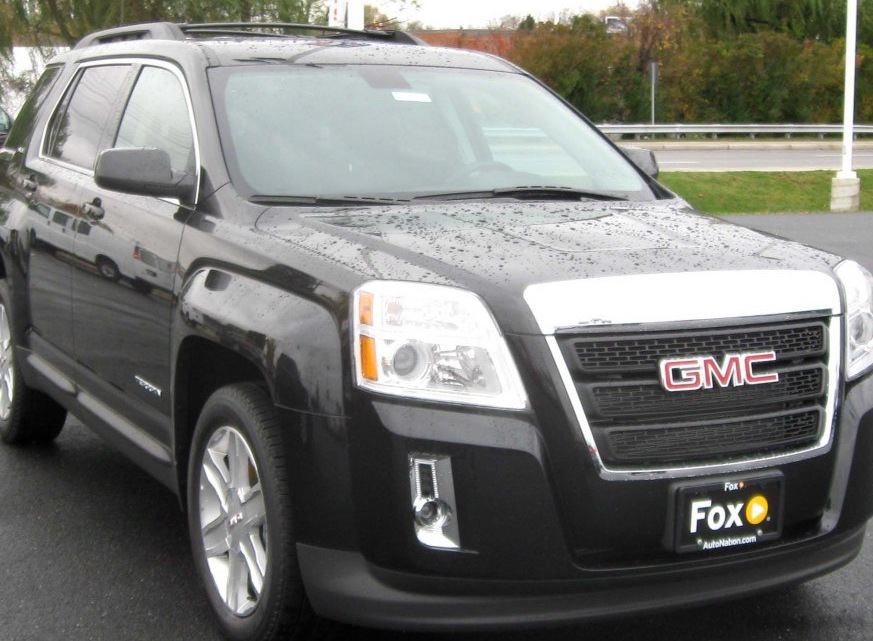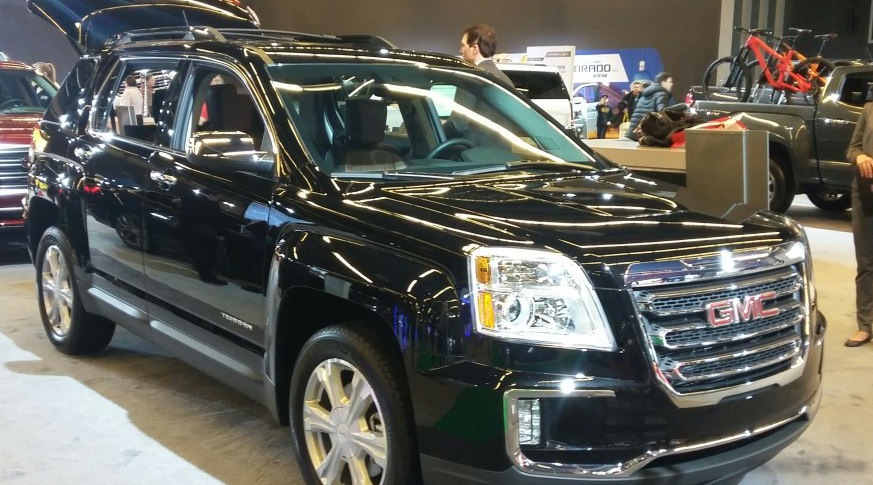
The GMC Terrain I (facelift, 2016) 2.4-liter variant, producing 182 horsepower, represented a key offering in GMC’s compact SUV lineup during its 2016-2017 model years. This iteration of the Terrain, part of the first generation (introduced in 2010 and facelifted in 2016), aimed to provide a balance of fuel efficiency, practicality, and comfort for North American families. Positioned as a mid-range trim, it slotted between the base 1.5L turbocharged engine and potential upgrades like all-wheel drive, offering a compelling value proposition within the competitive crossover segment.
Technical Specifications
| Brand | GMC |
| Model | Terrain |
| Generation | Terrain I (facelift 2016) |
| Type (Engine) | 2.4 (182 Hp) Automatic |
| Start of production | 2016 |
| End of production | 2017 |
| Powertrain Architecture | Internal Combustion engine |
| Body type | SUV |
| Seats | 5 |
| Doors | 5 |
| Fuel consumption (urban) | 10.7 l/100 km (22 US mpg) |
| Fuel consumption (extra urban) | 7.4 l/100 km (31.8 US mpg) |
| Fuel Type | Petrol (Gasoline) |
| Weight-to-power ratio | 9.6 kg/Hp |
| Weight-to-torque ratio | 7.5 kg/Nm |
| Power | 182 Hp @ 6700 rpm |
| Power per litre | 76.3 Hp/l |
| Torque | 232 Nm @ 4900 rpm (171.11 lb.-ft. @ 4900 rpm) |
| Engine layout | Front, Transverse |
| Engine Model/Code | LEA |
| Engine displacement | 2384 cm3 (145.48 cu. in.) |
| Number of cylinders | 4 |
| Engine configuration | Inline |
| Cylinder Bore | 88 mm (3.46 in.) |
| Piston Stroke | 98 mm (3.86 in.) |
| Compression ratio | 11.2:1 |
| Number of valves per cylinder | 4 |
| Fuel injection system | Direct injection |
| Engine aspiration | Naturally aspirated engine |
| Valvetrain | VVT |
| Engine oil capacity | 4.7 l (4.97 US qt | 4.14 UK qt) |
| Coolant capacity | 7.8 l (8.24 US qt | 6.86 UK qt) |
| Kerb Weight | 1748 kg (3853.68 lbs.) |
| Trunk (boot) space – minimum | 895 l (31.61 cu. ft.) |
| Trunk (boot) space – maximum | 1810 l (63.92 cu. ft.) |
| Fuel tank capacity | 68 l (17.96 US gal | 14.96 UK gal) |
| Length | 4771 mm (187.83 in.) |
| Width | 1849 mm (72.8 in.) |
| Height | 1684 mm (66.3 in.) |
| Wheelbase | 2858 mm (112.52 in.) |
| Front track | 1598 mm (62.91 in.) |
| Rear track | 1577 mm (62.09 in.) |
| Ride height (ground clearance) | 175 mm (6.89 in.) |
| Drivetrain Architecture | Front wheel drive |
| Number of gears | 6 |
| Gearbox type | Automatic transmission |
| Front suspension | Independent coil spring |
| Rear suspension | Independent coil spring |
| Front brakes | Ventilated discs |
| Rear brakes | Ventilated discs |
| Tire size | 235/60 R17; 235/55 R18; 235/55 R19 |
| Wheel rims size | 17; 18; 19 |
Powertrain & Engine Architecture
The 2016-2017 GMC Terrain 2.4-liter engine, designated LEA, is a naturally aspirated, four-cylinder inline engine. It utilizes direct fuel injection, a technology that improves fuel efficiency and power output by injecting fuel directly into the combustion chamber. The engine also features Variable Valve Timing (VVT), which optimizes valve timing based on engine speed and load, further enhancing performance and efficiency. The 2.4L LEA engine was part of GM’s family of engines and was also found in other vehicles like the Chevrolet Equinox and Buick Encore. Paired with this engine was a six-speed automatic transmission, chosen for its smooth shifting and contribution to overall fuel economy. This transmission was a common choice for GM vehicles of this era, offering a balance between responsiveness and efficiency.
Driving Characteristics
The 182-horsepower, 2.4-liter engine with the six-speed automatic provided adequate, though not exhilarating, performance for everyday driving. Acceleration was sufficient for merging onto highways and passing slower traffic, but it wasn’t particularly quick. The automatic transmission was tuned for comfort and fuel economy, resulting in relatively smooth gear changes. Compared to the available 1.5L turbo, the 2.4L offered a more linear power delivery, lacking the turbo’s initial surge but providing more consistent power throughout the rev range. Against higher-output versions (if offered in other markets), this configuration prioritized fuel efficiency and affordability over outright performance. The front-wheel-drive configuration contributed to a slightly more comfortable ride compared to all-wheel-drive models, but reduced traction in inclement weather.
Equipment & Trim Levels
The 2.4-liter Terrain typically came standard with features like air conditioning, a rearview camera, a 7-inch touchscreen infotainment system with Apple CarPlay and Android Auto compatibility, and a six-speaker audio system. Higher trim levels, such as the SLE and SLT, added features like leather upholstery, heated front seats, a power driver’s seat, and a larger touchscreen display. Optional extras included a sunroof, a navigation system, and a premium Bose audio system. Interior upholstery generally consisted of cloth on the base trims, with leather becoming available on higher-spec models. The dashboard layout was functional and straightforward, prioritizing ease of use over stylistic flair.
Chassis & Braking
The GMC Terrain utilized an independent coil spring suspension on both the front and rear axles, providing a reasonably comfortable ride. The front suspension featured MacPherson struts, while the rear employed a multi-link design. Braking duties were handled by ventilated discs on all four wheels, providing adequate stopping power for the vehicle’s weight class. Anti-lock Braking System (ABS) was standard. Stabilizer bars were included to reduce body roll during cornering, though the Terrain was primarily designed for comfortable cruising rather than sporty handling. The steering system was an electric power-assisted rack and pinion setup, offering light and easy steering feel.
Market Reception & Comparison
Critics generally viewed the 2.4-liter Terrain as a competent and practical SUV, but not a standout performer. The engine was considered adequate for most drivers, but some reviewers noted its lack of refinement compared to competitors. Fuel economy was respectable, but not class-leading. Compared to the 1.5L turbo, the 2.4L offered a more predictable power delivery, which some drivers preferred. Reliability was generally good, with few major issues reported. However, some owners noted minor issues with the infotainment system and occasional oil consumption. The Terrain competed with vehicles like the Honda CR-V, Toyota RAV4, and Ford Escape, all of which offered similar features and performance.
Legacy
The 2016-2017 GMC Terrain 2.4-liter variant remains a relatively common sight on the used car market. The LEA engine has proven to be reasonably durable, with proper maintenance. While not known for exceptional longevity, it generally provides reliable service for many years. The six-speed automatic transmission is also considered fairly robust. The Terrain’s affordability and practicality continue to make it an attractive option for budget-conscious buyers seeking a compact SUV. However, potential buyers should be aware of the potential for minor infotainment issues and monitor oil consumption. Overall, this variant represents a solid, if unspectacular, choice in the used SUV market.