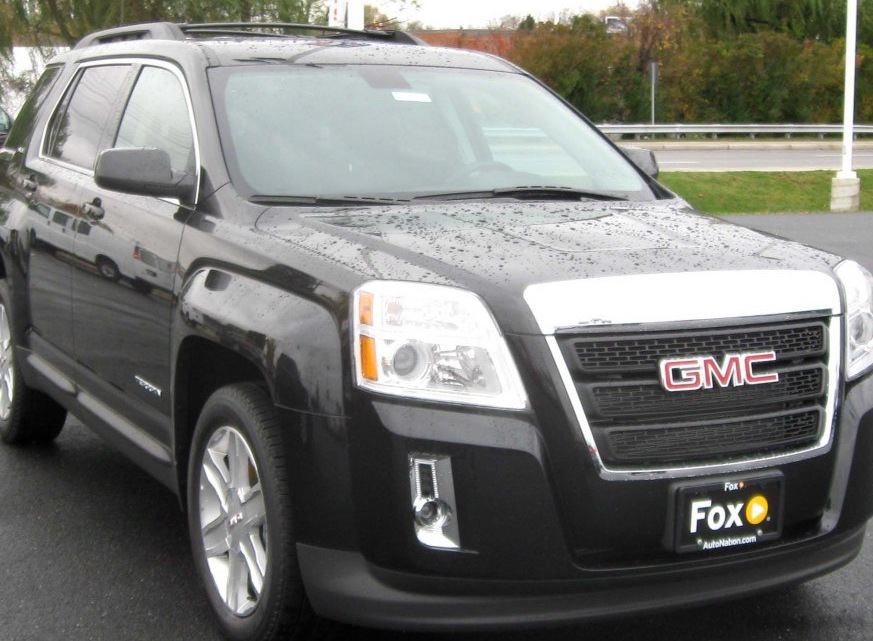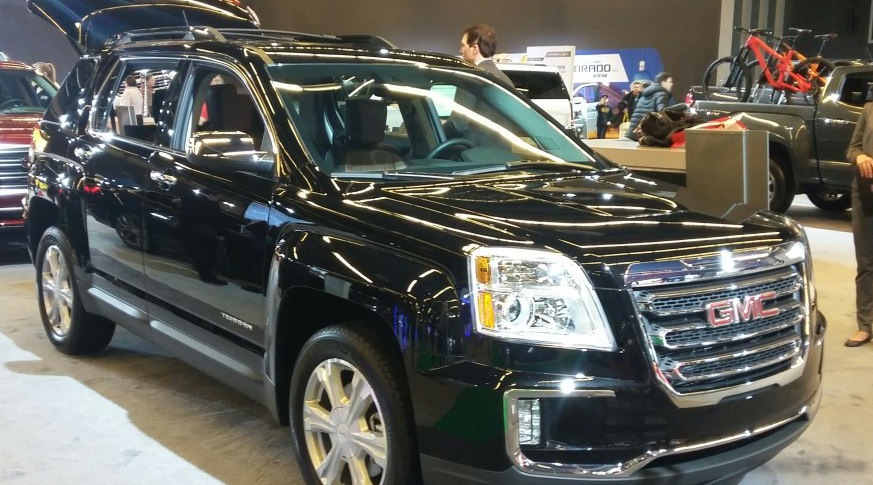
The GMC Terrain I (facelift, 2016) 2.4L AWD Automatic represents a mid-cycle refresh of the first-generation Terrain, produced from 2016 to 2017. Positioned as a mainstream compact SUV, the Terrain aimed to compete with vehicles like the Honda CR-V and Toyota RAV4, offering a blend of practicality, comfort, and available all-wheel drive. This particular variant, equipped with the 2.4-liter four-cylinder engine and a six-speed automatic transmission, served as a popular choice for buyers seeking a balance between fuel efficiency and adequate performance. It occupied a middle ground in the Terrain lineup, slotting between the base 1.5L turbo model and the more powerful 3.6L V6.
Technical Specifications
| Brand | GMC |
| Model | Terrain |
| Generation | Terrain I (facelift 2016) |
| Type (Engine) | 2.4 (182 Hp) AWD Automatic |
| Start of production | 2016 |
| End of production | 2017 |
| Powertrain Architecture | Internal Combustion engine |
| Body type | SUV |
| Seats | 5 |
| Doors | 5 |
| Fuel consumption (urban) | 11.8 l/100 km (19.9 US mpg) |
| Fuel consumption (extra urban) | 8.1 l/100 km (29 US mpg) |
| Fuel Type | Petrol (Gasoline) |
| Weight-to-power ratio | 10 kg/Hp |
| Weight-to-torque ratio | 7.9 kg/Nm |
| Power | 182 Hp @ 6700 rpm |
| Power per litre | 76.3 Hp/l |
| Torque | 232 Nm @ 4900 rpm (171.11 lb.-ft. @ 4900 rpm) |
| Engine layout | Front, Transverse |
| Engine Model/Code | LEA |
| Engine displacement | 2384 cm3 (145.48 cu. in.) |
| Number of cylinders | 4 |
| Engine configuration | Inline |
| Cylinder Bore | 88 mm (3.46 in.) |
| Piston Stroke | 98 mm (3.86 in.) |
| Compression ratio | 11.2:1 |
| Number of valves per cylinder | 4 |
| Fuel injection system | Direct injection |
| Engine aspiration | Naturally aspirated engine |
| Valvetrain | VVT |
| Engine oil capacity | 4.7 l (4.97 US qt | 4.14 UK qt) |
| Coolant | 7.8 l (8.24 US qt | 6.86 UK qt) |
| Kerb Weight | 1823 kg (4019.03 lbs.) |
| Trunk (boot) space – minimum | 895 l (31.61 cu. ft.) |
| Trunk (boot) space – maximum | 1810 l (63.92 cu. ft.) |
| Fuel tank capacity | 68 l (17.96 US gal | 14.96 UK gal) |
| Length | 4771 mm (187.83 in.) |
| Width | 1849 mm (72.8 in.) |
| Height | 1684 mm (66.3 in.) |
| Wheelbase | 2858 mm (112.52 in.) |
| Front track | 1598 mm (62.91 in.) |
| Rear (Back) track | 1577 mm (62.09 in.) |
| Ride height (ground clearance) | 175 mm (6.89 in.) |
| Drive wheel | All wheel drive (4×4) |
| Number of gears and type of gearbox | 6 gears, automatic transmission |
| Front suspension | Independent coil spring |
| Rear suspension | Independent coil spring |
| Front brakes | Ventilated discs |
| Rear brakes | Ventilated discs |
| Assisting systems | ABS (Anti-lock braking system) |
| Steering type | Steering rack and pinion |
| Power steering | Electric Steering |
| Tires size | 235/60 R17; 235/55 R18; 235/55 R19 |
| Wheel rims size | 17; 18; 19 |
Powertrain & Engine Architecture
The 2016-2017 GMC Terrain 2.4L AWD utilized the LEA engine code, a 2.4-liter inline-four cylinder engine. This engine featured direct fuel injection, a technology that improves fuel efficiency and power output by injecting fuel directly into the combustion chamber. Variable Valve Timing (VVT) was also employed to optimize engine performance across a wider range of engine speeds. The engine produced 182 horsepower at 6700 rpm and 232 Nm (171 lb-ft) of torque at 4900 rpm. The six-speed automatic transmission was chosen for its balance of responsiveness and fuel economy. It featured a relatively conventional torque converter design, optimized for smooth shifts and comfortable cruising. The all-wheel-drive system was an on-demand system, primarily operating in front-wheel drive to maximize fuel efficiency, and automatically engaging the rear wheels when traction was lost.
Driving Characteristics
The 2.4L engine and six-speed automatic combination in the Terrain provided adequate, but not particularly exhilarating, performance. Acceleration from 0 to 60 mph typically took around 8.5-9.5 seconds. The automatic transmission was tuned for comfort, with smooth shifts and a willingness to downshift when needed. Compared to the optional 3.6L V6, the 2.4L felt noticeably less powerful, especially when fully loaded or climbing hills. However, the 2.4L offered significantly better fuel economy. The gear ratios were optimized for highway cruising, providing a relaxed driving experience at higher speeds. The all-wheel-drive system provided enhanced stability and traction in inclement weather conditions, making it a popular choice in regions with snow or rain.
Equipment & Trim Levels
The 2.4L AWD Terrain typically came standard with features such as air conditioning, power windows and locks, a rearview camera, and a basic infotainment system with a 7-inch touchscreen. Higher trim levels, such as the SLE and SLT, added features like leather upholstery, heated front seats, a premium audio system, and advanced safety technologies like blind-spot monitoring and rear cross-traffic alert. Optional extras included a panoramic sunroof, navigation system, and a rear-seat entertainment system. Interior upholstery was typically cloth on the base models, with leather available on higher trims. Dashboard configurations were relatively straightforward, prioritizing ease of use and functionality.
Chassis & Braking
The Terrain utilized an independent coil spring suspension on both the front and rear axles, providing a comfortable ride quality. The front suspension featured MacPherson struts, while the rear suspension employed a multi-link design. The 2.4L models typically came equipped with ventilated disc brakes on all four wheels, providing adequate stopping power. Anti-lock Braking System (ABS) was standard. Stabilizer bars were fitted to both the front and rear axles to reduce body roll during cornering. The Terrain’s chassis was designed to provide a balance between ride comfort and handling stability.
Market Reception & Comparison
Critics generally viewed the 2.4L Terrain as a competent, but unremarkable, offering in the compact SUV segment. The engine was praised for its fuel efficiency, but criticized for its lack of power. The automatic transmission received mixed reviews, with some testers finding it smooth and responsive, while others found it hesitant at times. Compared to the 1.5L turbo, the 2.4L offered more power, but at the expense of fuel economy. The 3.6L V6 provided significantly more performance, but came with a higher price tag and lower fuel efficiency. Reliability reports for the 2.4L engine were generally positive, with few major issues reported.
Legacy
The 2016-2017 GMC Terrain 2.4L AWD Automatic remains a relatively common sight on the used car market. The LEA engine has proven to be reasonably reliable, although regular maintenance, including oil changes and timing chain inspections, is crucial. The Terrain’s comfortable ride, spacious interior, and available all-wheel drive continue to appeal to buyers seeking a practical and affordable compact SUV. While it may not offer the most exciting driving experience, the 2.4L Terrain provides a solid and dependable transportation option.