Technical Specifications
| Brand | GMC |
| Model | Terrain |
| Generation | Terrain II |
| Type (Engine) | 1.5 (170 Hp) Start/Stop Automatic |
| Start of production | 2017 |
| End of production | 2021 |
| Powertrain Architecture | Internal Combustion engine |
| Body type | SUV |
| Seats | 5 |
| Doors | 5 |
| Fuel Type | Petrol (Gasoline) |
| Power | 170 Hp @ 5600 rpm |
| Power per litre | 114.1 Hp/l |
| Torque | 275 Nm @ 2000-4000 rpm / 202.83 lb.-ft. @ 2000-4000 rpm |
| Engine layout | Front, Transverse |
| Engine Model/Code | LYX |
| Engine displacement | 1490 cm3 / 90.93 cu. in. |
| Number of cylinders | 4 |
| Engine configuration | Inline |
| Number of valves per cylinder | 4 |
| Fuel injection system | Direct injection |
| Engine aspiration | Turbocharger, Intercooler |
| Valvetrain | DOHC-VVT |
| Engine oil capacity | 4 l / 4.23 US qt | 3.52 UK qt |
| Coolant | 6.6 l / 6.97 US qt | 5.81 UK qt |
| Trunk (boot) space – minimum | 838 l / 29.59 cu. ft. |
| Trunk (boot) space – maximum | 2294 l / 81.01 cu. ft. |
| Fuel tank capacity | 56 l / 14.79 US gal | 12.32 UK gal |
| Permitted trailer load with brakes (12%) | 680 kg / 1499.14 lbs. |
| Length | 4630 mm / 182.28 in. |
| Width | 1839 mm / 72.4 in. |
| Height | 1661 mm / 65.39 in. |
| Wheelbase | 2725 mm / 107.28 in. |
| Front track | 1582 mm / 62.28 in. |
| Rear (Back) track | 1588 mm / 62.52 in. |
| Drivetrain Architecture | The Internal combustion engine (ICE) drives the front wheels of the vehicle. |
| Drive wheel | Front wheel drive |
| Number of gears and type of gearbox | 9 gears, automatic transmission |
| Front suspension | Independent type McPherson |
| Rear suspension | Independent multi-link suspension |
| Front brakes | Ventilated discs |
| Rear brakes | Disc |
| Assisting systems | ABS (Anti-lock braking system) |
| Steering type | Steering rack and pinion |
| Power steering | Electric Steering |
| Tires size | 235/60 R17; 235/55 R18; 235/55 R19 |
| Wheel rims size | 17; 18; 19 |
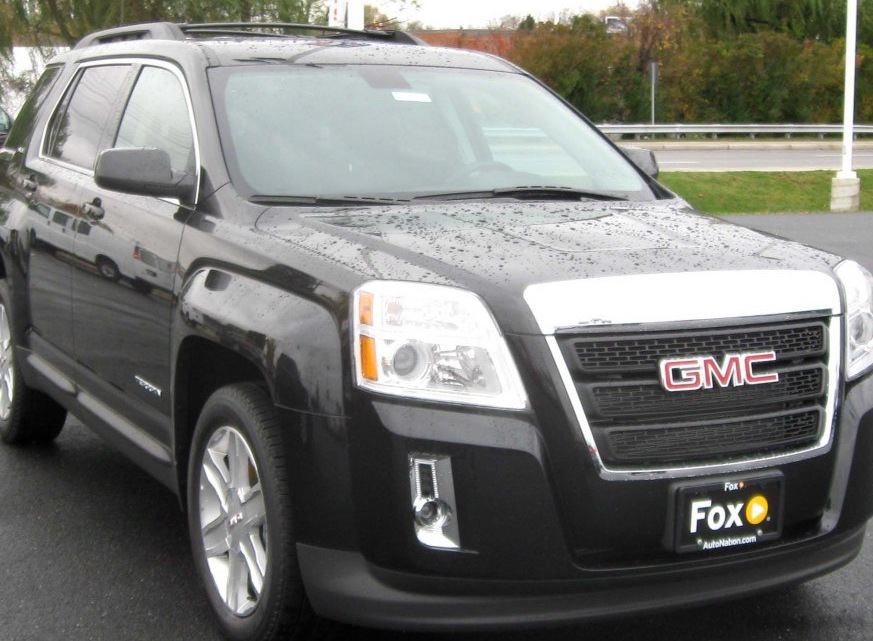
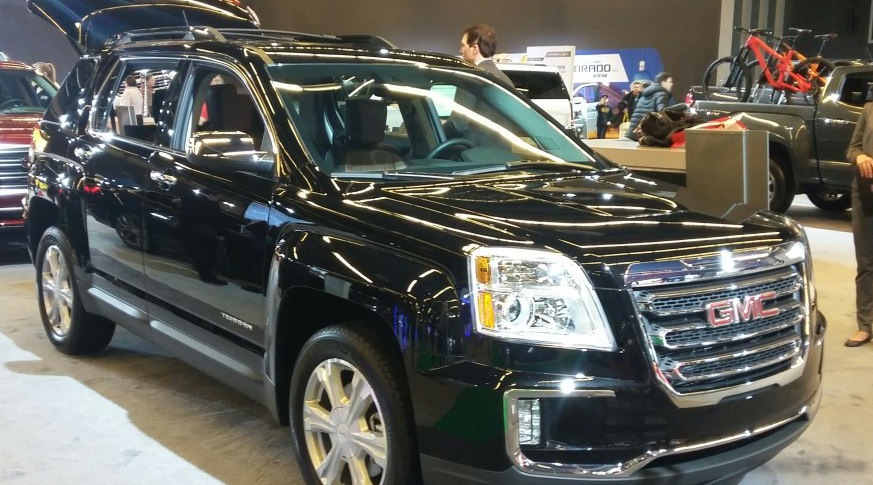
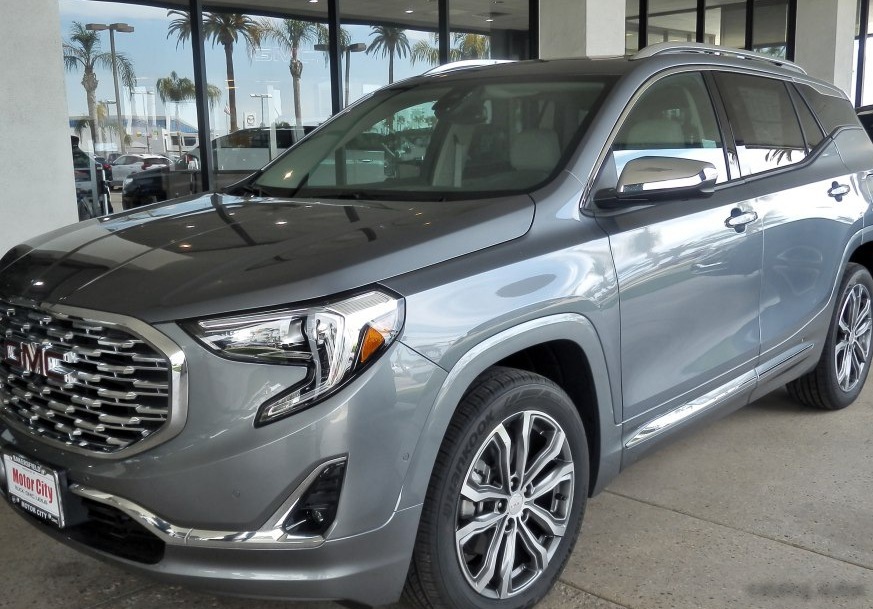
The GMC Terrain II, specifically the 1.5-liter (170 hp) Start/Stop Automatic variant, represents a significant entry in the compact crossover SUV market for General Motors. Produced from 2017 to 2021, this version of the Terrain aimed to balance fuel efficiency with everyday usability, targeting families and individuals seeking a practical and comfortable vehicle. It falls within the second generation of the Terrain (internally designated as the GMC Terrain II), which was a major redesign from the original model, sharing its platform with the Chevrolet Equinox. This particular trim level served as a core offering within the Terrain lineup, positioned as a step up from the base model but below the more powerful engine options.
Powertrain & Engine Architecture
The heart of this Terrain variant is the 1.5-liter LYX inline-four cylinder engine. This engine utilizes direct injection and a single turbocharger with an intercooler to boost power and efficiency. The direct injection system precisely meters fuel into the combustion chamber, improving combustion efficiency and reducing emissions. The DOHC-VVT (Double Overhead Camshaft with Variable Valve Timing) further optimizes engine performance across the rev range. The Start/Stop system, a standard feature, automatically shuts off the engine when the vehicle is stationary (at a red light, for example) to conserve fuel. This engine is paired with a sophisticated 9-speed automatic transmission. This transmission offers a wide range of gear ratios, contributing to both fuel economy and responsive acceleration. The transmission is electronically controlled, adapting shift points based on driving conditions and driver input.
Driving Characteristics
The 170 horsepower and 275 Nm (202.83 lb-ft) of torque provided by the 1.5L engine and 9-speed automatic deliver adequate performance for daily driving. Acceleration is not particularly brisk, with 0-60 mph times estimated around 8.5-9.5 seconds. However, the engine feels reasonably responsive in typical driving situations, such as merging onto highways or passing other vehicles. The 9-speed transmission generally shifts smoothly, although some drivers have reported occasional hesitation or hunting for the right gear. Compared to the available 2.0-liter turbocharged engine in higher trims, this 1.5L version offers a more relaxed and fuel-efficient driving experience, sacrificing some outright performance. The front-wheel-drive configuration contributes to better fuel economy but limits traction in adverse weather conditions.
Equipment & Trim Levels
The 1.5L Terrain typically came standard with features like a 7-inch touchscreen infotainment system with Apple CarPlay and Android Auto compatibility, a rearview camera, keyless entry, and automatic climate control. Higher trim levels, such as the SLT and Denali, added features like leather upholstery, heated seats, a larger touchscreen display, a premium audio system, and advanced safety technologies like blind-spot monitoring and rear cross-traffic alert. Available options included a panoramic sunroof, navigation system, and adaptive cruise control. Interior upholstery generally consisted of cloth in the base trims, with leather options available on higher trims. The dashboard layout was relatively straightforward and user-friendly, prioritizing functionality over luxury.
Chassis & Braking
The GMC Terrain II utilizes a unibody construction for improved rigidity and reduced weight. The front suspension features independent McPherson struts, while the rear suspension employs an independent multi-link setup. This suspension configuration provides a comfortable ride quality, absorbing bumps and irregularities in the road surface effectively. The Terrain II is equipped with ventilated front disc brakes and solid rear disc brakes. ABS (Anti-lock Braking System) is standard, enhancing braking performance and stability. Steering is provided by an electric power steering system, offering light and precise steering feel.
Market Reception & Comparison
The 1.5L Terrain received mixed reviews from automotive critics. While praised for its fuel efficiency (estimated around 26 mpg city / 32 mpg highway), some reviewers found the engine to be underpowered, particularly when fully loaded with passengers and cargo. Compared to competitors like the Honda CR-V and Toyota RAV4, the Terrain offered a more affordable price point but lacked the same level of refinement and performance. The 1.5L engine generally proved to be reliable, with few widespread mechanical issues reported. However, some owners have experienced minor issues with the infotainment system and the Start/Stop system.
Legacy
The GMC Terrain II 1.5L Start/Stop Automatic remains a relatively common sight on the used car market. Its affordability, fuel efficiency, and practical interior make it an appealing option for budget-conscious buyers. While not known for its exhilarating performance, the powertrain has proven to be reasonably durable, provided it has been properly maintained. Regular oil changes and adherence to the manufacturer’s recommended maintenance schedule are crucial for ensuring long-term reliability. As a whole, this variant of the Terrain represents a solid, if unspectacular, entry in the competitive compact crossover SUV segment.