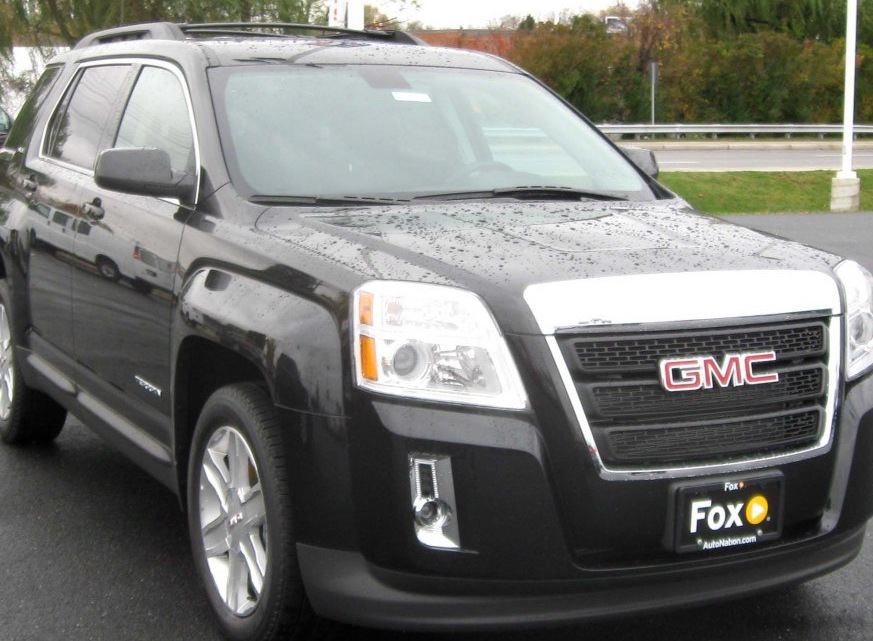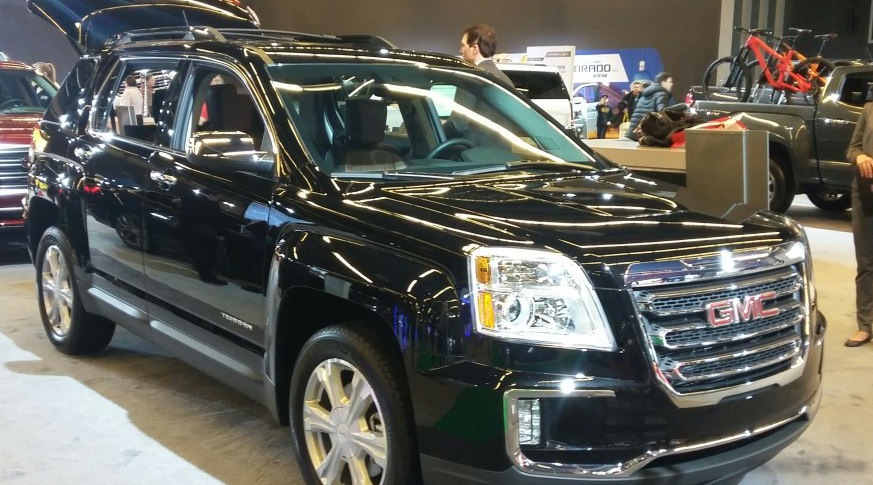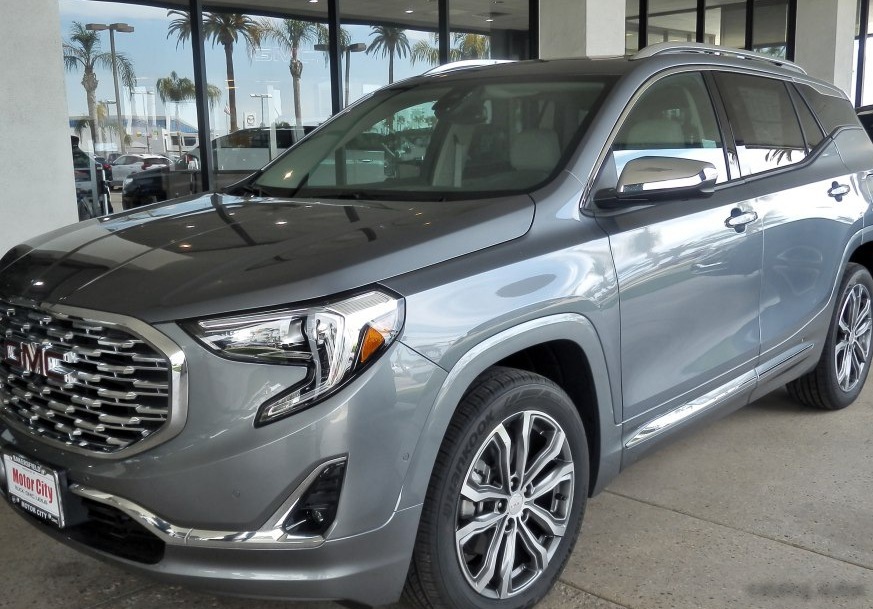
The GMC Terrain II, specifically the 2.0-liter (252 hp) Start/Stop Automatic variant, represents a significant step in GMC’s compact SUV offerings. Produced from 2017 to 2020, this version of the Terrain II (internally designated as the GMC 212A) was positioned as a mid-range to upper-mid-range trim, offering a balance of performance, fuel efficiency, and features within the broader Terrain II lineup. It was a key model for GMC in the North American market, competing with vehicles like the Honda CR-V, Toyota RAV4, and Ford Escape.
Technical Specifications
| Brand | GMC |
| Model | Terrain |
| Generation | Terrain II |
| Type (Engine) | 2.0 (252 Hp) Start/Stop Automatic |
| Start of production | 2017 |
| End of production | 2020 |
| Powertrain Architecture | Internal Combustion engine |
| Body type | SUV |
| Seats | 5 |
| Doors | 5 |
| Fuel Type | Petrol (Gasoline) |
| Power | 252 Hp @ 5500 rpm |
| Power per litre | 126.1 Hp/l |
| Torque | 353 Nm @ 2500-4500 rpm / 260.36 lb.-ft. @ 2500-4500 rpm |
| Engine layout | Front, Transverse |
| Engine Model/Code | LTG |
| Engine displacement | 1998 cm3 / 121.93 cu. in. |
| Number of cylinders | 4 |
| Engine configuration | Inline |
| Number of valves per cylinder | 4 |
| Fuel injection system | Direct injection |
| Engine aspiration | Turbocharger, Intercooler |
| Valvetrain | DOHC-VVT |
| Engine oil capacity | 4.7 l / 4.97 US qt | 4.14 UK qt |
| Coolant | 7.8 l / 8.24 US qt | 6.86 UK qt |
| Trunk (boot) space – minimum | 838 l / 29.59 cu. ft. |
| Trunk (boot) space – maximum | 2294 l / 81.01 cu. ft. |
| Fuel tank capacity | 56 l / 14.79 US gal | 12.32 UK gal |
| Permitted trailer load with brakes (12%) | 1588 kg / 3500.94 lbs. |
| Length | 4630 mm / 182.28 in. |
| Width | 1839 mm / 72.4 in. |
| Height | 1661 mm / 65.39 in. |
| Wheelbase | 2725 mm / 107.28 in. |
| Front track | 1582 mm / 62.28 in. |
| Rear (Back) track | 1588 mm / 62.52 in. |
| Drivetrain Architecture | The Internal combustion engine (ICE) drives the front wheels of the vehicle. |
| Drive wheel | Front wheel drive |
| Number of gears and type of gearbox | 9 gears, automatic transmission |
| Front suspension | Independent type McPherson |
| Rear suspension | Independent multi-link suspension |
| Front brakes | Ventilated discs |
| Rear brakes | Disc |
| Assisting systems | ABS (Anti-lock braking system) |
| Steering type | Steering rack and pinion |
| Power steering | Electric Steering |
| Tires size | 235/60 R17; 235/55 R18; 235/55 R19 |
| Wheel rims size | 17; 18; 19 |
Powertrain & Engine Architecture
The heart of the Terrain II 2.0L is the LTG engine, a 1.5-liter turbocharged inline-four cylinder gasoline engine. This engine utilizes direct injection and a sophisticated dual overhead camshaft (DOHC) valvetrain with variable valve timing (VVT) to optimize performance and efficiency. The turbocharger, coupled with an intercooler, provides a significant boost in power output. The Start/Stop system, standard on this variant, automatically shuts off the engine when the vehicle is stationary (e.g., at a red light) to conserve fuel. The engine is paired with a smooth-shifting 9-speed automatic transmission, designed to maximize fuel economy and provide responsive acceleration. This transmission features electronically controlled shifting and adaptive learning capabilities.
Driving Characteristics
The 252 horsepower and 260 lb-ft of torque delivered by the 2.0L engine provide the Terrain II with respectable acceleration and passing power. While not a sports SUV, it offers a noticeably more engaging driving experience compared to the base 1.5L engine. The 9-speed automatic transmission is generally well-tuned, offering smooth gear changes. However, some drivers have reported occasional hesitation or hunting for the right gear, particularly at lower speeds. The front-wheel-drive configuration provides adequate traction in most conditions, but all-wheel drive was available as an option for those needing enhanced grip. The suspension is tuned for comfort, providing a relatively smooth ride over uneven surfaces.
Equipment & Trim Levels
The 2.0L Terrain II typically came equipped with a generous array of standard features. These included a 7-inch touchscreen infotainment system with Apple CarPlay and Android Auto compatibility, a rearview camera, keyless entry, and automatic climate control. Higher trim levels, such as the SLT and Denali, added features like leather upholstery, heated front seats, a larger touchscreen display, a premium audio system, and advanced safety technologies like blind-spot monitoring and rear cross-traffic alert. Optional extras included a panoramic sunroof, navigation system, and adaptive cruise control.
Chassis & Braking
The Terrain II utilizes a unibody construction for improved rigidity and reduced weight. The front suspension features independent McPherson struts, while the rear suspension employs an independent multi-link design. This setup provides a good balance of ride comfort and handling. Braking duties are handled by ventilated discs at the front and solid discs at the rear. The standard anti-lock braking system (ABS) enhances safety by preventing wheel lockup during hard braking. Electric power steering provides light and precise steering feel.
Market Reception & Comparison
The GMC Terrain II 2.0L received generally positive reviews from automotive critics. It was praised for its powerful engine, comfortable ride, and spacious interior. However, some reviewers noted the occasionally hesitant transmission and the somewhat bland interior design. Compared to the base 1.5L engine, the 2.0L offered a significant performance upgrade, making it a more appealing choice for drivers who prioritize acceleration and towing capacity. Fuel economy was comparable to other vehicles in its class, averaging around 21 mpg city and 26 mpg highway. The 2.0L variant typically commanded a higher price than the 1.5L model.
Legacy
The LTG engine, used in the Terrain II 2.0L, has proven to be a relatively reliable powertrain. While some owners have reported minor issues with the turbocharger or fuel injectors, these are not widespread problems. The 9-speed automatic transmission has also received mixed reviews regarding long-term durability, with some reports of premature failure. On the used car market, the Terrain II 2.0L holds its value reasonably well, particularly models with lower mileage and well-maintained service records. It remains a popular choice for buyers seeking a comfortable, capable, and relatively fuel-efficient compact SUV.