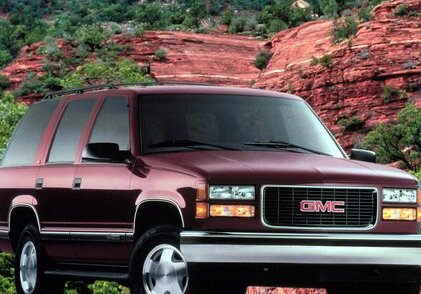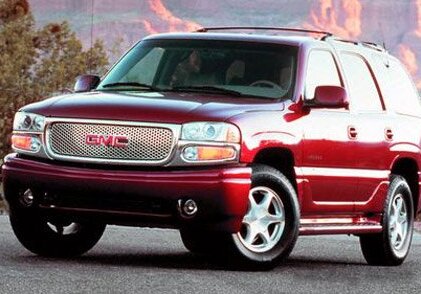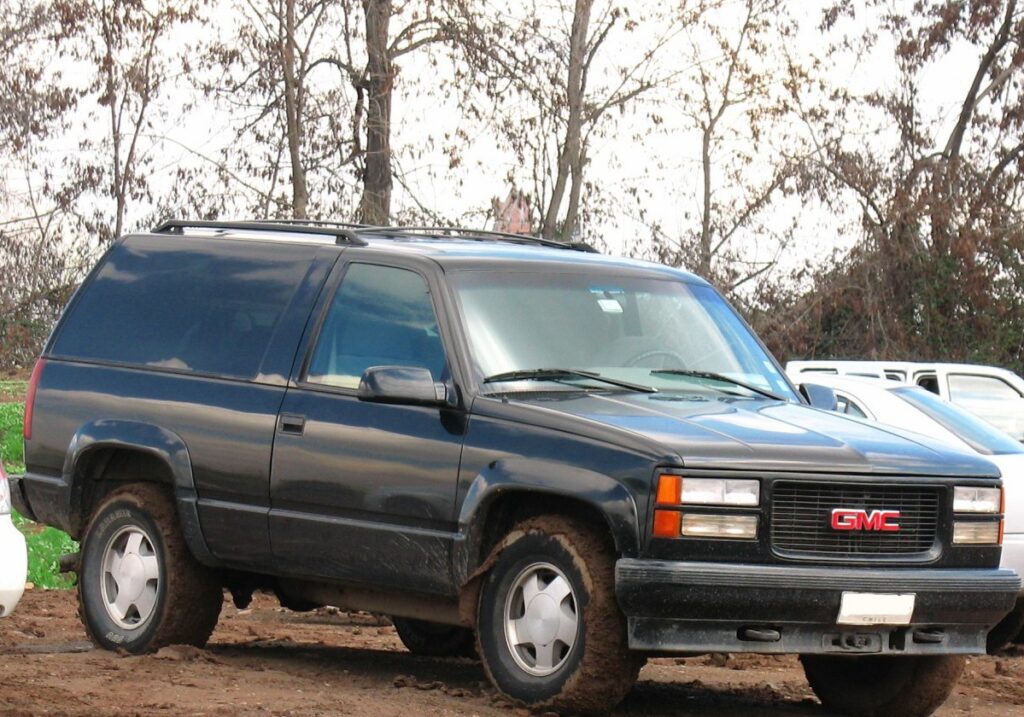
The GMC Yukon I (GMT400, 3-door) with the 5.7-liter V8 engine, producing 210 horsepower, represents a significant entry in the early days of the full-size SUV boom in the United States. Produced from 1992 to 1999, this variant occupied a unique space within the Yukon lineup, offering a blend of truck-based durability and passenger-carrying capability in a relatively compact, three-door configuration. It was part of the first generation of the Yukon, sharing its platform with the Chevrolet Tahoe and Cadillac Escalade, all based on the GMT400 chassis. This particular engine and body style catered to buyers seeking a versatile vehicle for both work and personal use, prioritizing utility over outright luxury.
Technical Specifications
| Brand | GMC |
| Model | Yukon |
| Generation | Yukon I (GMT400, 3-door) |
| Type (Engine) | 5.7 V8 (210 Hp) |
| Start of production | 1992 |
| End of production | 1999 |
| Powertrain Architecture | Internal Combustion engine |
| Body type | SUV |
| Seats | 5 |
| Doors | 3 |
| Fuel Type | Petrol (Gasoline) |
| Power | 210 Hp @ 4000 rpm |
| Power per litre | 36.6 Hp/l |
| Torque | 407 Nm @ 2800 rpm |
| Torque (lb-ft) | 300.19 lb.-ft. @ 2800 rpm |
| Engine layout | Front, Longitudinal |
| Engine displacement | 5735 cm3 |
| Engine displacement (cu. in.) | 349.97 cu. in. |
| Number of cylinders | 8 |
| Engine configuration | V-engine |
| Cylinder Bore | 101.6 mm (4 in.) |
| Piston Stroke | 88.39 mm (3.48 in.) |
| Compression ratio | 9.1:1 |
| Fuel injection system | Multi-port manifold injection |
| Engine aspiration | Naturally aspirated engine |
| Engine oil capacity | 4.8 l (5.07 US qt | 4.22 UK qt) |
| Coolant capacity | 16.5 l (17.44 US qt | 14.52 UK qt) |
| Max. weight | 2835 kg (6250.11 lbs.) |
| Fuel tank capacity | 114 l (30.12 US gal | 25.08 UK gal) |
| Length | 4775 mm (187.99 in.) |
| Width | 1958 mm (77.09 in.) |
| Height | 1839 mm (72.4 in.) |
| Wheelbase | 2832 mm (111.5 in.) |
| Front overhang | 899 mm (35.39 in.) |
| Rear overhang | 1044 mm (41.1 in.) |
| Drivetrain Architecture | The Internal combustion engine (ICE) drives the rear wheels of the vehicle. |
| Drive wheel | Rear wheel drive |
| Number of gears and type of gearbox | 5 gears, manual transmission |
| Front suspension | Independent torsion bar, double wishbone |
| Rear suspension | Leaf spring |
| Front brakes | Disc |
| Rear brakes | Drum |
| Assisting systems | ABS (Anti-lock braking system) |
| Tires size | 265/75 R16 |
| Wheel rims size | 7J x 16 |
Powertrain & Engine Architecture
The heart of this Yukon variant is the 5.7-liter (349.97 cubic inch) small-block Chevrolet V8 engine. This engine, internally designated as the L05, is a member of the Chevrolet small-block family, renowned for its durability and relatively simple design. It features a cast iron block and cylinder heads, with two valves per cylinder. Fuel delivery is managed by a multi-port fuel injection system, providing improved efficiency and throttle response compared to earlier carbureted designs. The 9.1:1 compression ratio contributes to a balance between power and fuel economy. The engine’s longitudinal mounting within the chassis and rear-wheel drive configuration were standard for trucks and SUVs of this era. The five-speed manual transmission was a relatively uncommon option for the Yukon, with the majority being equipped with an automatic.
Driving Characteristics
The 210 horsepower and 300 lb-ft of torque provided by the 5.7L V8, coupled with the five-speed manual transmission, offered a reasonably spirited driving experience for its time. While not a performance-oriented vehicle, the Yukon I could accelerate adequately and handle moderate towing duties. The manual transmission allowed for greater driver control and potentially improved fuel economy compared to the automatic. However, the Yukon’s substantial weight and truck-based chassis meant that handling was not as refined as that of more modern, car-based SUVs. The leaf spring rear suspension, while robust, contributed to a firmer ride quality, particularly when unladen. The gear ratios in the five-speed manual were geared towards providing usable torque for everyday driving and towing, rather than maximizing top-end speed.
Equipment & Trim Levels
The 1992-1999 GMC Yukon I (GMT400, 3-door) 5.7 V8 typically came with a base level of equipment focused on functionality. Standard features generally included cloth upholstery, air conditioning, an AM/FM radio, and basic instrumentation. Power steering and power brakes were also common. The three-door configuration meant that access to the rear seats could be somewhat limited. Optional extras included upgraded sound systems, cruise control, and a limited-slip differential. The trim level of this Yukon was generally considered entry-level within the Yukon range, positioned below the more luxurious four-door models and those equipped with the larger 6.5L diesel engine.
Chassis & Braking
The GMT400 platform utilized a body-on-frame construction, providing a robust and durable chassis. The front suspension employed an independent torsion bar and double wishbone setup, offering a degree of ride comfort and handling capability. The rear suspension, however, relied on a traditional leaf spring design, prioritizing load-carrying capacity over ride refinement. Braking duties were handled by disc brakes at the front and drum brakes at the rear. Anti-lock braking system (ABS) was available as an option, enhancing safety by preventing wheel lockup during hard braking. The 265/75 R16 tires provided adequate grip for both on-road and light off-road use.
Market Reception & Comparison
The GMC Yukon I (GMT400, 3-door) 5.7 V8 was generally well-received by buyers seeking a versatile and capable SUV. Critics praised its durability, spacious interior (for a three-door), and strong V8 engine. However, the three-door configuration limited its practicality for families, and the ride quality was not as refined as that of some competitors. Compared to the Tahoe and Escalade, the Yukon offered a slightly more rugged and utilitarian image. The 5.7L V8 provided a good balance of power and fuel economy, but the larger 6.5L diesel engine offered superior towing capacity. The manual transmission variant was relatively rare, with most buyers opting for the convenience of an automatic.
Legacy
The GMC Yukon I (GMT400, 3-door) 5.7 V8 has become a popular choice among collectors and enthusiasts of classic SUVs. The 5.7L V8 engine is known for its reliability and relatively simple maintenance requirements. Parts availability remains good, making it a relatively affordable vehicle to own and maintain. While not as sought-after as some of the more luxurious or high-performance variants, the 5.7L manual transmission Yukon represents a unique and capable piece of automotive history, embodying the spirit of the early SUV boom in the United States. Today, well-maintained examples command a reasonable price in the used car market, appealing to those seeking a durable and versatile vehicle with a classic American aesthetic.