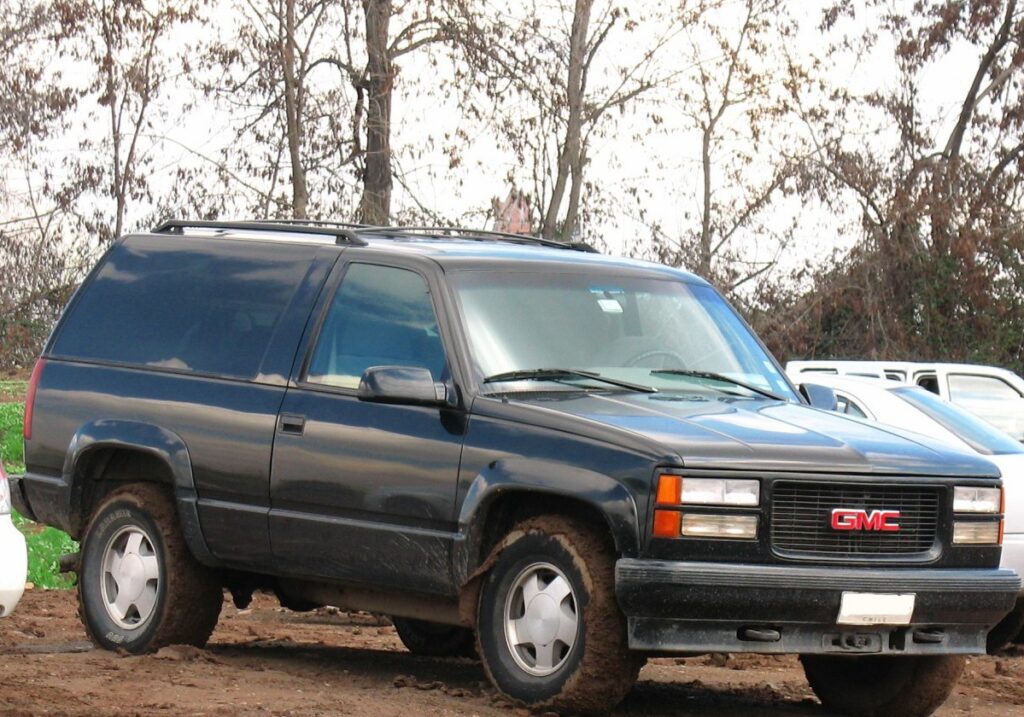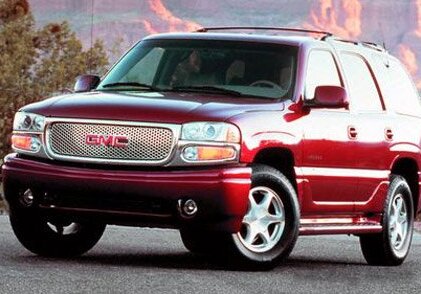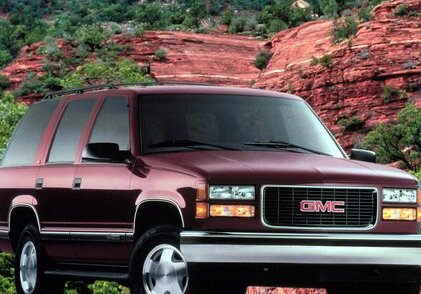
The GMC Yukon I, specifically the 7.4-liter V8 variant with an automatic transmission, represents a significant entry in the full-size SUV market of the mid-1990s. Produced between 1995 and 1999, this iteration of the Yukon (based on the GMT400 platform) offered a substantial increase in power and capability compared to earlier models. It served as GMC’s answer to the Chevrolet Tahoe and Cadillac Escalade, providing a more upscale alternative within the General Motors portfolio. This particular configuration – the 7.4L V8 paired with a four-speed automatic – positioned itself as a robust, towing-focused option within the Yukon lineup.
Technical Specifications
| Brand | GMC |
| Model | Yukon |
| Generation | Yukon I (GMT400, 5-door) |
| Type (Engine) | 7.4 i V8 (290 Hp) Automatic |
| Start of production | 1995 |
| End of production | 1999 |
| Powertrain Architecture | Internal Combustion engine |
| Body type | SUV |
| Seats | 5 |
| Doors | 5 |
| Fuel Type | Petrol (Gasoline) |
| Power | 290 Hp @ 4200 rpm |
| Power per litre | 38.9 Hp/l |
| Torque | 556 Nm @ 3200 rpm / 410.08 lb.-ft. @ 3200 rpm |
| Engine layout | Front, Longitudinal |
| Engine displacement | 7446 cm3 / 454.38 cu. in. |
| Number of cylinders | 8 |
| Engine configuration | V-engine |
| Cylinder Bore | 108 mm / 4.25 in. |
| Piston Stroke | 101.6 mm / 4 in. |
| Compression ratio | 9:1 |
| Number of valves per cylinder | 2 |
| Fuel injection system | Single-point injection |
| Engine aspiration | Naturally aspirated engine |
| Engine oil capacity | 6.5 l / 6.87 US qt | 5.72 UK qt |
| Coolant | 23.5 l / 24.83 US qt | 20.68 UK qt |
| Trunk (boot) space – maximum | 3347 l / 118.2 cu. ft. |
| Fuel tank capacity | 114 l / 30.12 US gal | 25.08 UK gal |
| Length | 5070 mm / 199.61 in. |
| Width | 1951 mm / 76.81 in. |
| Height | 1848 mm / 72.76 in. |
| Wheelbase | 2985 mm / 117.52 in. |
| Front track | 1590 mm / 62.6 in. |
| Rear (Back) track | 1615 mm / 63.58 in. |
| Drivetrain Architecture | The Internal combustion engine (ICE) drives the rear wheels of the vehicle. |
| Drive wheel | Rear wheel drive |
| Number of gears and type of gearbox | 4 gears, automatic transmission |
| Front brakes | Disc |
| Rear brakes | Drum |
Powertrain & Engine Architecture
The heart of this Yukon variant is the 7.4-liter (454 cubic inch) small-block Chevrolet V8 engine, designated as the L29. This engine, a staple of GM trucks and SUVs for decades, is a cast iron block, overhead valve design. The L29 utilizes a single-point fuel injection system (throttle body injection), which, while less sophisticated than multi-port fuel injection, was considered adequate for the truck’s intended purpose. The engine produces 290 horsepower at 4200 rpm and a substantial 410 lb-ft of torque at 3200 rpm. The 4L60E four-speed automatic transmission was the standard pairing for this engine. This transmission is electronically controlled, offering smoother shifts and improved efficiency compared to earlier iterations. The transmission’s gear ratios were optimized for towing and hauling, prioritizing low-end grunt over outright acceleration.
Driving Characteristics
The 7.4L Yukon delivers a driving experience focused on capability rather than sportiness. The substantial torque output allows for effortless towing of trailers, boats, and other heavy loads. Acceleration is adequate, but not particularly brisk. The automatic transmission, while smooth, can feel somewhat sluggish in certain situations, especially when downshifting. Compared to the 6.5L V8 or the later Vortec engines, the 7.4L offers a more raw and visceral feel, with a noticeable rumble from the exhaust. The 4L60E transmission, while reliable, isn’t known for its aggressive shift points, contributing to a more relaxed driving style. The Yukon’s large size and body-on-frame construction also contribute to a less nimble feel compared to more modern, unibody SUVs.
Equipment & Trim Levels
The 7.4L Yukon typically came equipped with a fairly comprehensive list of standard features for the time, including air conditioning, power windows and locks, and an AM/FM stereo. Higher trim levels, such as the SLT, added features like leather upholstery, upgraded sound systems, and woodgrain interior trim. Optional extras included a sunroof, rear air conditioning, and a towing package. The interior design was functional and durable, prioritizing practicality over luxury. The dashboard layout was straightforward, with easy-to-read gauges and logically placed controls.
Chassis & Braking
The GMT400 platform utilizes a traditional body-on-frame construction, providing a robust and durable chassis. The suspension consists of independent front suspension with coil springs and a solid rear axle with leaf springs. This setup is designed to handle heavy loads and provide a comfortable ride, albeit at the expense of precise handling. Braking duties are handled by disc brakes in the front and drum brakes in the rear. While adequate for normal driving conditions, the braking system can feel somewhat overwhelmed when towing heavy loads. Stabilizer bars were included to reduce body roll, but the Yukon’s high center of gravity still contributes to noticeable lean in corners.
Market Reception & Comparison
The 7.4L Yukon was generally well-received by critics and consumers alike. It was praised for its powerful engine, spacious interior, and impressive towing capacity. However, its fuel economy was a common criticism, as the large V8 engine consumed a significant amount of gasoline. Compared to the 6.5L V8 Yukon, the 7.4L offered a noticeable increase in power and torque, making it a better choice for those who frequently towed heavy loads. Compared to the later Vortec engines, the 7.4L lacked the refinement and fuel efficiency of those more modern designs. The 7.4L Yukon appealed to buyers who prioritized capability and durability over fuel economy and sporty handling.
Legacy
The 7.4L Yukon I holds a place in automotive history as a representative of the classic American full-size SUV. The L29 engine, while not the most technologically advanced, is known for its durability and relatively simple maintenance requirements. Today, these Yukons are sought after by collectors and enthusiasts who appreciate their ruggedness and classic styling. While fuel economy remains a concern, the 7.4L Yukon continues to be a capable and reliable vehicle, particularly for those who need to tow or haul heavy loads. Parts availability is generally good, thanks to the engine’s widespread use in other GM vehicles. However, potential buyers should be aware of potential issues such as oil leaks and corrosion, particularly in areas with harsh winters.