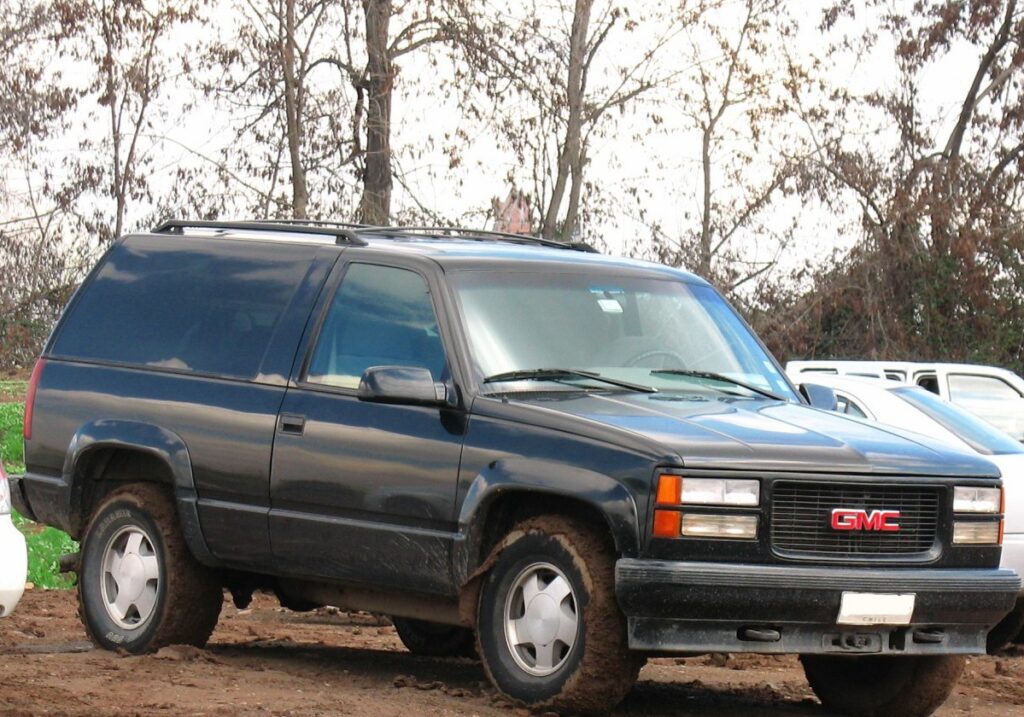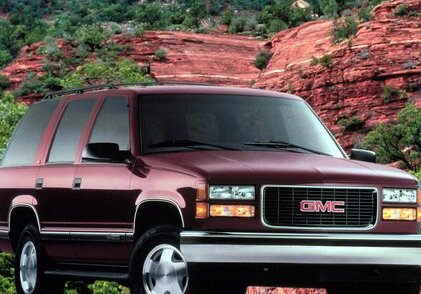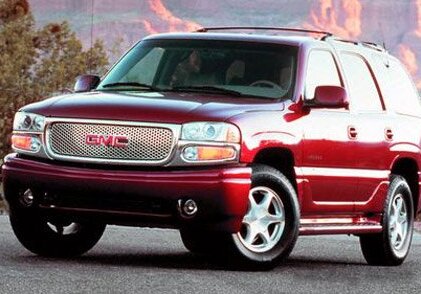
The GMC Yukon II, specifically the variant equipped with the 4.8-liter V8 engine and a four-speed automatic transmission, represented a key offering in GMC’s full-size SUV lineup from 2000 to 2006. Part of the GMT800 platform generation, this Yukon II served as a slightly more affordable and accessible alternative to the larger, more luxurious Yukon XL and Denali models. Positioned as a mid-range trim, it aimed to provide a balance of capability, space, and value for families and those needing a robust towing vehicle. This configuration was particularly popular in the United States, where full-size SUVs were, and continue to be, a significant segment of the automotive market.
Technical Specifications
| Brand | GMC |
| Model | Yukon |
| Generation | Yukon II (GMT800) |
| Type (Engine) | 4.8 V8 (275 Hp) Automatic |
| Start of production | 2000 |
| End of production | 2006 |
| Powertrain Architecture | Internal Combustion engine |
| Body type | SUV |
| Seats | 9 |
| Doors | 5 |
| Fuel consumption (urban) | 15.7 l/100 km (15 US mpg, 18 UK mpg) |
| Fuel consumption (extra urban) | 12.4 l/100 km (19 US mpg, 22.8 UK mpg) |
| Fuel Type | Petrol (Gasoline) |
| Weight-to-power ratio | 8.2 kg/Hp, 122.2 Hp/tonne |
| Weight-to-torque ratio | 5.7 kg/Nm, 174.7 Nm/tonne |
| Power | 275 Hp @ 5200 rpm |
| Power per litre | 57.2 Hp/l |
| Torque | 393 Nm @ 4000 rpm (289.86 lb.-ft. @ 4000 rpm) |
| Engine layout | Front, Longitudinal |
| Engine displacement | 4807 cm3 (293.34 cu. in.) |
| Number of cylinders | 8 |
| Engine configuration | V-engine |
| Cylinder Bore | 96 mm (3.78 in.) |
| Piston Stroke | 83 mm (3.27 in.) |
| Compression ratio | 9.5:1 |
| Number of valves per cylinder | 2 |
| Fuel injection system | Multi-port manifold injection |
| Engine aspiration | Naturally aspirated engine |
| Engine oil capacity | 5.7 l (6.02 US qt | 5.02 UK qt) |
| Coolant capacity | 15.8 l (16.7 US qt | 13.9 UK qt) |
| Kerb Weight | 2250 kg (4960.4 lbs.) |
| Max. weight | 2948 kg (6499.23 lbs.) |
| Max load | 698 kg (1538.83 lbs.) |
| Trunk (boot) space – minimum | 453 l (16 cu. ft.) |
| Trunk (boot) space – maximum | 2962 l (104.6 cu. ft.) |
| Fuel tank capacity | 98 l (25.89 US gal | 21.56 UK gal) |
| Length | 5052 mm (198.9 in.) |
| Width | 2004 mm (78.9 in.) |
| Height | 1948 mm (76.69 in.) |
| Wheelbase | 2946 mm (115.98 in.) |
| Front track | 1651 mm (65 in.) |
| Rear track | 1676 mm (65.98 in.) |
| Drivetrain Architecture | Rear wheel drive |
| Number of gears | 4 |
| Gearbox type | Automatic transmission |
| Front suspension | Independent coil spring, Torsion |
| Rear suspension | Independent multi-link suspension, Coil spring |
| Front brakes | Ventilated discs |
| Rear brakes | Disc |
| Assisting systems | ABS (Anti-lock braking system) |
| Power steering | Hydraulic Steering |
| Tires size | 245/75 R16 |
| Wheel rims size | 7J x 16 |
Powertrain & Engine Architecture
The heart of this Yukon II variant was the 4.8L (293 cubic inch) Vortec 4800 V8 engine. This engine, part of GM’s Vortec family, was a robust and relatively simple design. It featured a cast iron block with aluminum cylinder heads, a 9.5:1 compression ratio, and a two-valve-per-cylinder configuration. Fuel delivery was handled by a multi-port fuel injection system, providing adequate performance for everyday driving and towing. The engine produced 275 horsepower at 5200 rpm and 393 lb-ft of torque at 4000 rpm. The torque output was particularly important for a vehicle of this size and intended use. The engine was longitudinally mounted in the chassis, driving the rear wheels. Paired with the 4L60E four-speed automatic transmission, the powertrain offered smooth shifts and acceptable acceleration, though it wasn’t designed for sporty performance. The 4L60E was a common and generally reliable transmission, known for its durability when properly maintained.
Driving Characteristics
The 4.8L V8 and 4L60E automatic combination in the Yukon II delivered a driving experience focused on comfort and capability rather than outright speed. Acceleration was adequate for merging onto highways and passing other vehicles, but it wasn’t particularly brisk. The four-speed automatic, while smooth, lacked the efficiency and responsiveness of more modern transmissions with additional gears. The gear ratios were optimized for towing and hauling, prioritizing low-end torque over high-speed performance. Compared to the available 5.3L V8 or the diesel options, the 4.8L felt less powerful, especially when fully loaded or towing a trailer. However, the 4.8L offered a noticeable improvement in fuel economy compared to the larger engines, making it a more practical choice for those who didn’t require maximum towing capacity.
Equipment & Trim Levels
The Yukon II with the 4.8L V8 typically came standard with features like air conditioning, power windows and locks, an AM/FM stereo, and cloth upholstery. Optional extras included leather seats, a premium sound system, a sunroof, and rear-seat entertainment systems. The interior was generally functional and durable, designed to withstand the demands of family use. Trim levels varied slightly depending on the year, but generally offered increasing levels of luxury and convenience features as you moved up the range. The base Yukon II offered a no-frills approach, while higher trims added more comfort and aesthetic enhancements.
Chassis & Braking
The GMT800 platform utilized a body-on-frame construction, providing a robust and durable chassis. The Yukon II featured independent coil spring suspension in the front and an independent multi-link suspension with coil springs in the rear. This setup offered a reasonably comfortable ride, although it wasn’t as refined as some of the newer unibody SUVs. Braking duties were handled by ventilated discs up front and discs in the rear, with ABS as standard equipment. The braking system was adequate for the vehicle’s weight, but it wasn’t particularly powerful. Hydraulic power steering provided easy maneuverability, although it lacked the precision of more modern steering systems.
Market Reception & Comparison
The GMC Yukon II 4.8L Automatic was generally well-received by consumers looking for a capable and affordable full-size SUV. Critics praised its spacious interior, comfortable ride, and strong towing capacity. However, some reviewers noted its relatively lackluster acceleration and fuel economy compared to some of its competitors. Compared to the Chevrolet Tahoe, which shared the same platform, the Yukon II offered a slightly more upscale interior and exterior styling. Against the Ford Expedition and Dodge Durango, the Yukon II held its own in terms of capability and value. The 4.8L engine offered a good balance between power and fuel efficiency, making it a popular choice for those who didn’t need the extra power of the 5.3L V8.
Legacy
The GMT800 Yukon II, particularly the 4.8L V8 Automatic variant, has proven to be a relatively reliable vehicle over the long term. The 4.8L engine is known for its durability, and the 4L60E transmission, while sometimes prone to issues if neglected, can last for many years with proper maintenance. Today, these vehicles can be found on the used car market at relatively affordable prices. They remain popular choices for those needing a large, capable SUV for towing, hauling, or family transportation. However, potential buyers should be aware of the vehicle’s age and potential maintenance needs, such as suspension components and cooling system parts. Despite its age, the Yukon II 4.8L remains a testament to the enduring appeal of the traditional American full-size SUV.