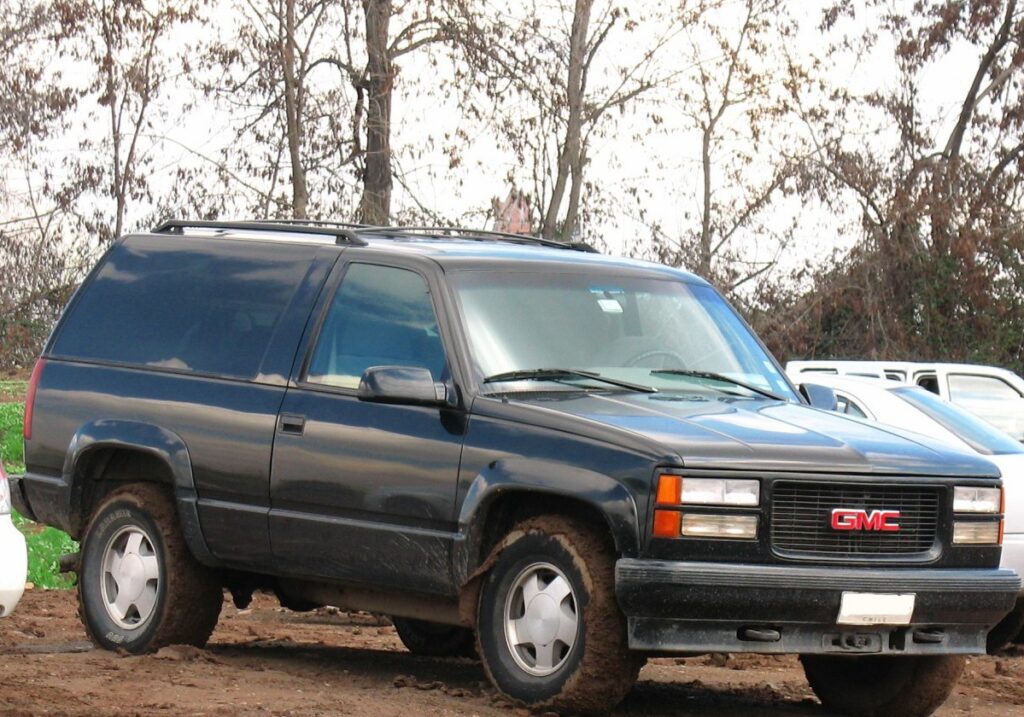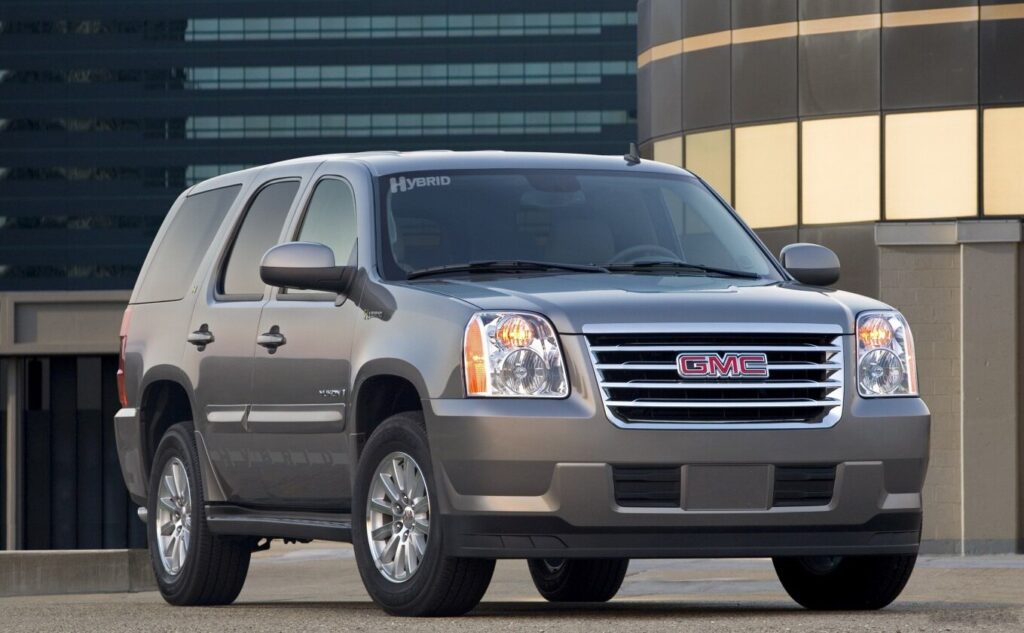
The GMC Yukon III, produced between 2007 and 2009, represented the third generation of the full-size Yukon SUV. Built on the GMT900 platform, it shared its underpinnings with the Chevrolet Tahoe and Cadillac Escalade. The 4.8i V8 16V (295 Hp) Automatic variant occupied a middle ground in the Yukon lineup, offering a balance between capability and affordability. It served as a popular choice for families and those needing substantial towing capacity without the higher price tag of the more powerful 6.2L engine option. This configuration aimed to provide a comfortable and capable SUV experience for a broader range of buyers.
Technical Specifications
| Brand | GMC |
| Model | Yukon |
| Generation | Yukon III (GMT900) |
| Type (Engine) | 4.8 i V8 16V (295 Hp) Automatic |
| Start of production | 2007 |
| End of production | 2009 |
| Powertrain Architecture | Internal Combustion engine |
| Body type | SUV |
| Seats | 9 |
| Doors | 5 |
| Fuel consumption (urban) | 16.8 l/100 km (14 US mpg, 16.8 UK mpg) |
| Fuel consumption (extra urban) | 12.4 l/100 km (19 US mpg, 22.8 UK mpg) |
| Fuel Type | Petrol (Gasoline) |
| Weight-to-power ratio | 8.2 kg/Hp, 121.4 Hp/tonne |
| Weight-to-torque ratio | 5.9 kg/Nm, 170.4 Nm/tonne |
| Power | 295 Hp @ 5600 rpm |
| Power per litre | 61.4 Hp/l |
| Torque | 414 Nm @ 4800 rpm (305.35 lb.-ft. @ 4800 rpm) |
| Maximum engine speed | 6000 rpm |
| Engine layout | Front, Longitudinal |
| Engine Model/Code | LY2 |
| Engine displacement | 4807 cm3 (293.34 cu. in.) |
| Number of cylinders | 8 |
| Engine configuration | V-engine |
| Cylinder Bore | 96 mm (3.78 in.) |
| Piston Stroke | 83 mm (3.27 in.) |
| Compression ratio | 9.1:1 |
| Number of valves per cylinder | 2 |
| Fuel injection system | Multi-port manifold injection |
| Engine aspiration | Naturally aspirated engine |
| Valvetrain | OHV |
| Engine oil capacity | 5.7 l (6.02 US qt | 5.02 UK qt) |
| Coolant | 16.9 l (17.86 US qt | 14.87 UK qt) |
| Kerb Weight | 2430 kg (5357.23 lbs.) |
| Max. weight | 3220 kg (7098.88 lbs.) |
| Max load | 790 kg (1741.65 lbs.) |
| Trunk (boot) space – minimum | 478 l (16.88 cu. ft.) |
| Trunk (boot) space – maximum | 3084 l (108.91 cu. ft.) |
| Fuel tank capacity | 98 l (25.89 US gal | 21.56 UK gal) |
| Permitted trailer load with brakes (12%) | 2041 kg (4499.63 lbs.) |
| Length | 5130 mm (201.97 in.) |
| Width | 2007 mm (79.02 in.) |
| Height | 1954 mm (76.93 in.) |
| Wheelbase | 2946 mm (115.98 in.) |
| Front track | 1732 mm (68.19 in.) |
| Rear (Back) track | 1702 mm (67.01 in.) |
| Ride height (ground clearance) | 227 mm (8.94 in.) |
| Minimum turning circle (turning diameter) | 11.9 m (39.04 ft.) |
| Approach angle | 17.16° |
| Departure angle | 21.9° |
| Drivetrain Architecture | Rear wheel drive |
| Number of gears and type of gearbox | 4 gears, automatic transmission |
| Front suspension | Independent, type McPherson with coil spring and anti-roll bar |
| Rear suspension | Independent multi-link suspension, Coil spring |
| Front brakes | Disc, 330×30 mm |
| Rear brakes | Disc, 345×20 mm |
| Assisting systems | ABS (Anti-lock braking system) |
| Steering type | Steering rack and pinion |
| Tires size | 265/70 R17 |
| Wheel rims size | 7.5J x 17 |
INTRODUCTION
The GMC Yukon III, specifically the 4.8i V8 16V (295 Hp) Automatic model produced from 2007 to 2009, was a key component of GMC’s full-size SUV offerings. Built on the GMT900 platform, it shared a common structure with the Chevrolet Tahoe and Cadillac Escalade, but differentiated itself through unique styling and trim. This Yukon variant aimed to provide a more accessible entry point into the full-size SUV segment, appealing to buyers who didn’t require the higher performance or luxury features of the more expensive trims. It was positioned as a practical and capable vehicle for families and those needing substantial cargo and towing capacity.
Powertrain & Engine Architecture
At the heart of this Yukon variant lies the LY2 engine, a 4.8-liter (293 cubic inches) V8. This engine is a member of GM’s Vortec family, known for its robust construction and relatively simple design. The LY2 features a cast iron block and aluminum cylinder heads, incorporating a 9.1:1 compression ratio. Fuel delivery is managed by a multi-port fuel injection system, providing adequate fuel atomization for efficient combustion. The overhead valve (OHV) valvetrain, while not as technologically advanced as overhead cam designs, contributes to the engine’s durability and ease of maintenance. The 4L80-E four-speed automatic transmission was the sole transmission option for this configuration. This transmission is a heavy-duty unit designed to handle the Yukon’s substantial weight and towing capabilities. It features electronic control for smooth shifting and optimized performance. The gear ratios were tuned for a balance of acceleration and fuel economy, prioritizing usability over outright speed.
Driving Characteristics
The 4.8L V8 paired with the 4L80-E automatic transmission delivers a driving experience focused on comfortable cruising and capable towing. Acceleration is adequate, but not particularly brisk, with 0-60 mph times estimated around 8-9 seconds. The automatic transmission’s shift points are calibrated for smooth transitions, prioritizing comfort over aggressive downshifts. Compared to the 6.2L V8 Yukon, this variant feels noticeably less powerful, especially when fully loaded or towing. However, the 4.8L engine provides sufficient torque for everyday driving and moderate towing needs. The four-speed transmission, while reliable, lacks the efficiency and responsiveness of more modern transmissions with more gears. The Yukon’s substantial weight is always apparent, resulting in a somewhat ponderous feel in corners. However, the suspension provides a comfortable ride, absorbing bumps and imperfections in the road effectively.
Equipment & Trim Levels
The 4.8L Yukon typically came standard with features like air conditioning, power windows and locks, a CD player, and cloth upholstery. Higher trim levels, such as the SLT, added features like leather upholstery, heated seats, a premium sound system, and tri-zone climate control. Optional extras included a navigation system, rear-seat entertainment system, and a sunroof. The interior design was functional and spacious, prioritizing practicality over luxury. The Yukon’s large size provided ample room for passengers and cargo, making it a popular choice for families. The standard seating configuration accommodated up to nine passengers, while folding the rear seats significantly increased cargo capacity.
Chassis & Braking
The GMT900 Yukon utilizes a body-on-frame construction, providing a robust and durable platform. The front suspension features an independent McPherson strut design with coil springs and an anti-roll bar, while the rear suspension employs an independent multi-link setup with coil springs. This suspension configuration provides a comfortable ride and reasonable handling characteristics. Braking duties are handled by disc brakes on all four wheels, with ABS (Anti-lock Braking System) as standard equipment. The front brakes measure 330x30mm, while the rear brakes are 345x20mm. The braking system is adequate for the Yukon’s weight, but requires a firm pedal input to achieve strong stopping power.
Market Reception & Comparison
The 4.8L Yukon was generally well-received by critics as a capable and affordable full-size SUV. It was praised for its spacious interior, comfortable ride, and strong towing capacity. However, some reviewers noted its relatively slow acceleration and less-than-stellar fuel economy. Compared to the 6.2L Yukon, the 4.8L variant offered a significant price advantage, making it a more accessible option for budget-conscious buyers. In terms of fuel economy, the 4.8L Yukon achieved around 14 mpg in the city and 19 mpg on the highway, which was typical for a full-size SUV of that era. Reliability was generally good, with the LY2 engine proving to be a durable and long-lasting powerplant.
Legacy
The GMC Yukon III 4.8L V8 Automatic has established a reputation as a reliable and capable SUV in the used car market. The LY2 engine is known for its longevity, and the 4L80-E transmission is a robust unit that can withstand years of use. While fuel economy is not a strong point, the Yukon’s overall practicality and durability make it a popular choice for those seeking a full-size SUV at an affordable price. Common maintenance items include oil changes, transmission fluid flushes, and brake pad replacements. Overall, the 4.8L Yukon remains a viable option for buyers seeking a spacious, capable, and relatively affordable SUV.