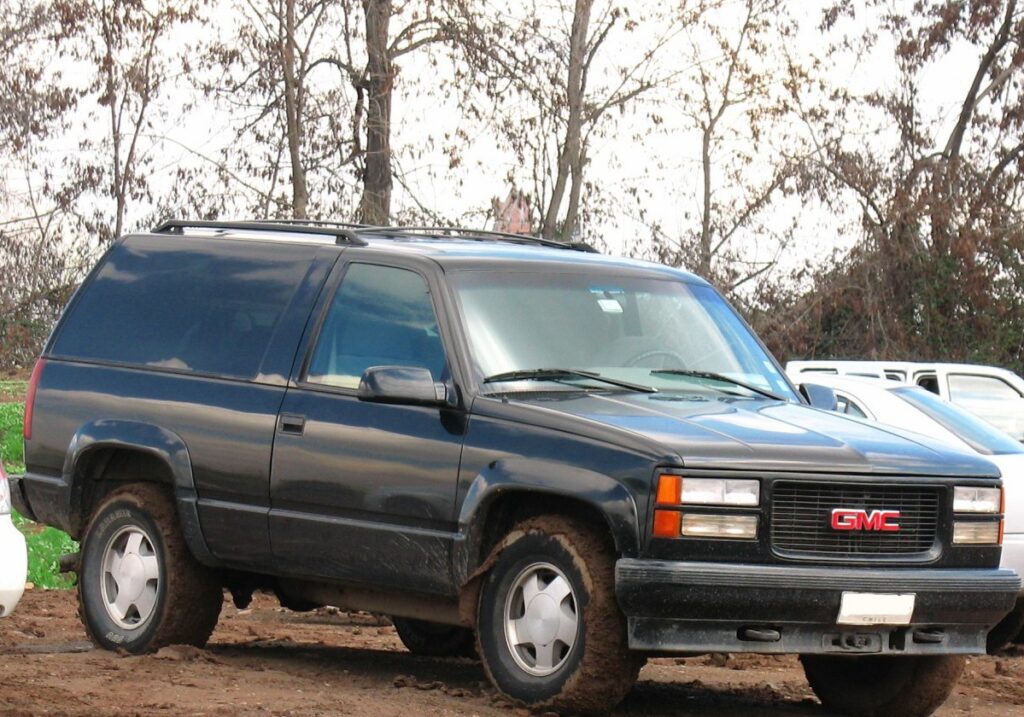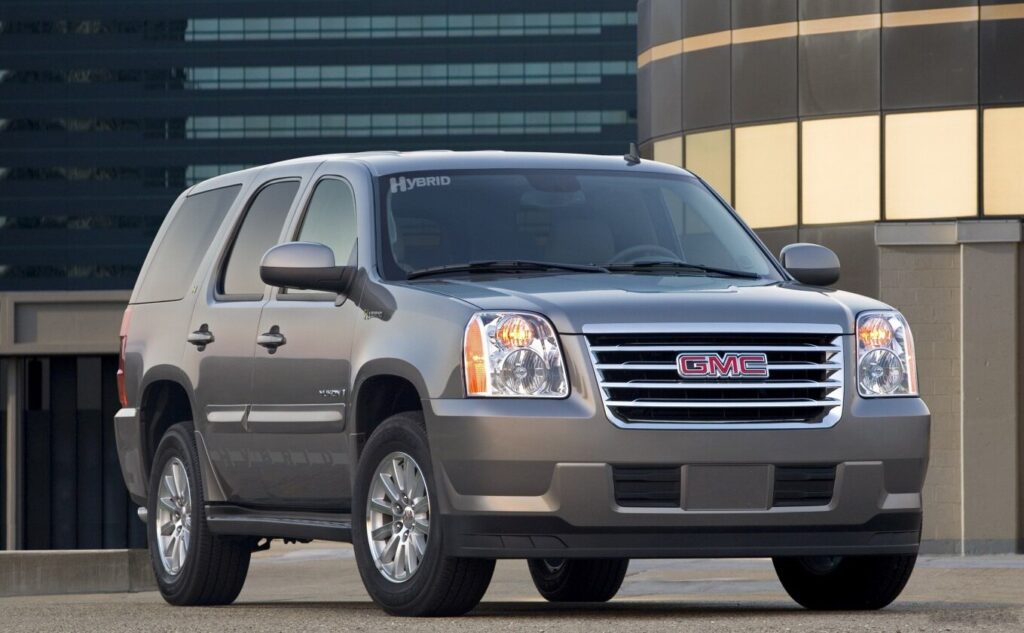
The GMC Yukon III, produced between 2010 and 2014, represented the third generation of GMC’s full-size SUV. Built on the GMT900 platform, it shared its underpinnings with the Chevrolet Tahoe and Cadillac Escalade. The Yukon aimed to provide a blend of spaciousness, towing capability, and comfort, catering to families and those needing a versatile vehicle for both daily driving and recreational pursuits. Within the Yukon III lineup, the 5.3L V8 engine paired with a six-speed automatic transmission was a popular configuration, positioned as a mid-range offering that balanced performance and fuel efficiency. This variant was a step up from the base 5.3L with two-wheel drive, but below the more powerful 6.2L engine option.
Technical Specifications
| Brand | GMC |
| Model | Yukon |
| Generation | Yukon III (GMT900) |
| Type (Engine) | 5.3L i V8 16V (320/326 Hp) FlexFuel Automatic |
| Start of production | 2010 |
| End of production | 2014 |
| Powertrain Architecture | Internal Combustion engine |
| Body type | SUV |
| Seats | 9 |
| Doors | 5 |
| Fuel consumption (economy) – urban | 15.7 l/100 km (15 US mpg, 18 UK mpg) |
| Fuel consumption (economy) – urban (Ethanol – E85) | 23.5 l/100 km |
| Fuel consumption (economy) – extra urban | 11.2 l/100 km (21 US mpg, 25.2 UK mpg) |
| Fuel consumption (economy) – extra urban (Ethanol – E85) | 15.7 l/100 km |
| Fuel Type | Petrol / Ethanol – E85 |
| Power | 320 Hp @ 5200 rpm |
| Power per litre | 60.1 Hp/l |
| Power (Ethanol – E85) | 326 Hp @ 5300 rpm |
| Power per litre (Ethanol – E85) | 61.2 Hp/l |
| Torque | 454 Nm @ 4400 rpm (334.85 lb.-ft. @ 4400 rpm) |
| Torque (Ethanol – E85) | 350 Nm @ 4400 rpm |
| Maximum engine speed | 6000 rpm |
| Engine layout | Front, Longitudinal |
| Engine Model/Code | LMG |
| Engine displacement | 5328 cm3 (325.13 cu. in.) |
| Number of cylinders | 8 |
| Engine configuration | V-engine |
| Cylinder Bore | 96 mm (3.78 in.) |
| Piston Stroke | 92 mm (3.62 in.) |
| Compression ratio | 9.9:1 |
| Number of valves per cylinder | 2 |
| Fuel injection system | Multi-port manifold injection |
| Engine aspiration | Naturally aspirated engine |
| Engine oil capacity | 5.7 l (6.02 US qt | 5.02 UK qt) |
| Coolant | 15.9 l (16.8 US qt | 13.99 UK qt) |
| Max. weight | 3220 kg (7098.88 lbs.) |
| Trunk (boot) space – minimum | 478 l (16.88 cu. ft.) |
| Trunk (boot) space – maximum | 3084 l (108.91 cu. ft.) |
| Fuel tank capacity | 98 l (25.89 US gal | 21.56 UK gal) |
| Permitted trailer load with brakes (12%) | 3901 kg (8600.23 lbs.) |
| Length | 5130 mm (201.97 in.) |
| Width | 2007 mm (79.02 in.) |
| Height | 1954 mm (76.93 in.) |
| Wheelbase | 2946 mm (115.98 in.) |
| Front track | 1732 mm (68.19 in.) |
| Rear (Back) track | 1702 mm (67.01 in.) |
| Ride height (ground clearance) | 228 mm (8.98 in.) |
| Minimum turning circle (turning diameter) | 11.9 m (39.04 ft.) |
| Approach angle | 17.16° |
| Departure angle | 21.9° |
| Drive wheel | Rear wheel drive |
| Number of gears and type of gearbox | 6 gears, automatic transmission |
| Front suspension | Independent, type McPherson with coil spring and anti-roll bar |
| Rear suspension | Independent multi-link suspension, Coil spring |
| Front brakes | Disc, 330×30 mm |
| Rear brakes | Disc, 345×20 mm |
| Assisting systems | ABS (Anti-lock braking system) |
| Steering type | Steering rack and pinion |
| Tires size | 265/70 R17; 265/65 R18 112S; 275/55 R20 |
| Wheel rims size | 7.5J x 17; 8.0J x 18; 8.5J x 20 |
Powertrain & Engine Architecture
The heart of this Yukon variant was the 5.3-liter (325 cubic inch) LMG V8 engine. This engine, a member of GM’s Vortec family, featured a cast iron block with aluminum cylinder heads. It utilized a 9.9:1 compression ratio and a multi-port fuel injection system to deliver a balance of power and efficiency. The engine produced 320 horsepower at 5200 rpm and 454 lb-ft of torque at 4400 rpm. When running on E85 ethanol, the engine output increased slightly to 326 horsepower. The engine’s valvetrain employed two valves per cylinder, operated by a single camshaft. Paired with the LMG engine was a six-speed automatic transmission (6L80E), known for its smooth shifting and relatively wide gear ratios. This transmission was designed to handle the engine’s torque output and provide adequate performance for towing and hauling. The 6L80E featured electronically controlled shifting and overdrive capabilities for improved fuel economy at highway speeds.
Driving Characteristics
The 5.3L V8 and six-speed automatic combination in the Yukon III offered a comfortable and capable driving experience. While not as quick as the 6.2L models, the 5.3L provided sufficient power for everyday driving and towing. The automatic transmission’s gear ratios were tuned for a balance of acceleration and fuel economy. The first gear was relatively short, providing good off-the-line acceleration, while the higher gears allowed for relaxed cruising on the highway. Compared to manual transmission equipped Yukons (which were rare), the automatic offered greater convenience, especially in city driving. However, it did result in a slight decrease in fuel economy and a less direct connection to the engine. The Yukon’s substantial weight (over 7,000 pounds) meant that acceleration was not its strong suit, but the engine’s torque output provided ample pulling power.
Equipment & Trim Levels
The 5.3L Yukon typically came standard with features like tri-zone automatic climate control, a premium audio system, power-adjustable front seats, and a rear vision camera. Higher trim levels, such as the SLT, added features like leather upholstery, heated front seats, and a navigation system. Optional extras included a sunroof, rear-seat entertainment system, and upgraded towing packages. The interior generally featured a durable and functional design, with ample space for passengers and cargo. The Yukon’s spaciousness was a key selling point, offering seating for up to nine passengers depending on the configuration.
Chassis & Braking
The Yukon III utilized a body-on-frame construction, providing a robust and durable platform. The front suspension consisted of an independent McPherson strut setup with coil springs and an anti-roll bar. The rear suspension employed an independent multi-link design, also with coil springs. This suspension setup aimed to provide a comfortable ride while maintaining good handling characteristics. Braking duties were handled by disc brakes on all four wheels, with ABS (Anti-lock Braking System) as standard equipment. The rear brakes were slightly smaller in diameter than the front brakes. The Yukon’s substantial weight required a robust braking system to ensure adequate stopping power.
Market Reception & Comparison
The 5.3L Yukon was well-received by consumers and critics alike. It was praised for its spacious interior, comfortable ride, and strong towing capability. However, its fuel economy was often criticized, especially compared to smaller SUVs. Compared to the 6.2L Yukon, the 5.3L offered a more affordable price point and slightly better fuel economy, but at the expense of performance. The 5.3L also offered a more balanced driving experience than the diesel options available in some markets. Reliability was generally good, although some owners reported issues with the automatic transmission and the active fuel management system (which deactivated cylinders to improve fuel economy).
Legacy
The GMT900 Yukon, particularly the 5.3L V8 variant, remains a popular choice in the used car market. Its combination of space, capability, and relative affordability makes it an attractive option for families and those needing a versatile SUV. The LMG engine, while not the most fuel-efficient, has proven to be relatively durable and reliable when properly maintained. Common maintenance items include regular oil changes, transmission fluid flushes, and spark plug replacements. The Yukon III’s body-on-frame construction and robust drivetrain contribute to its longevity, making it a vehicle that can provide many years of service with proper care.