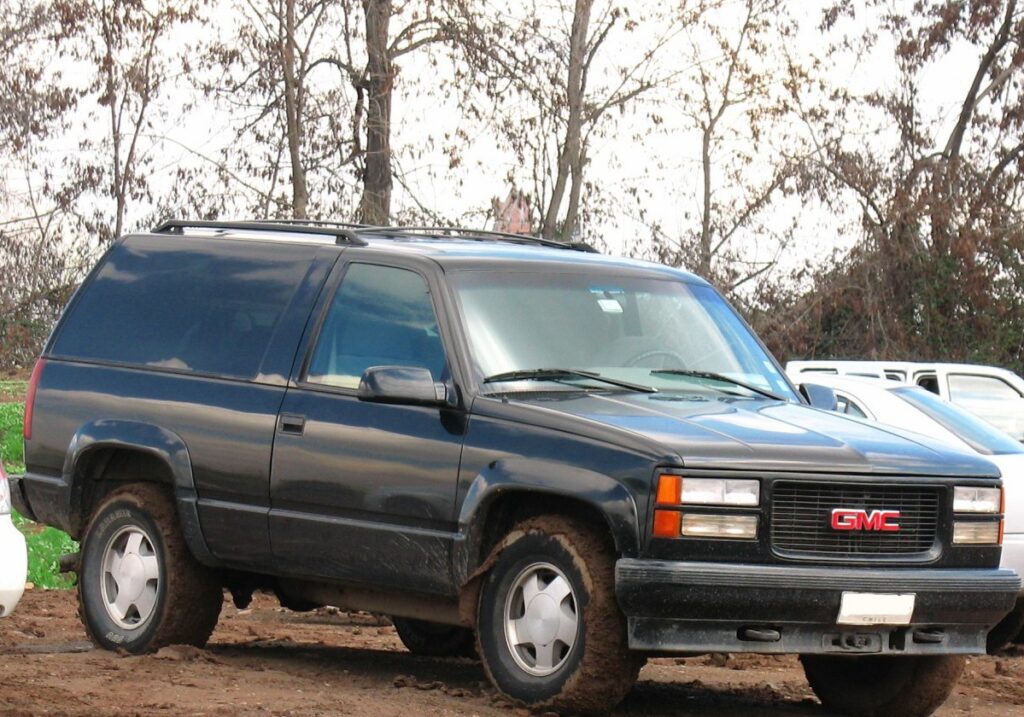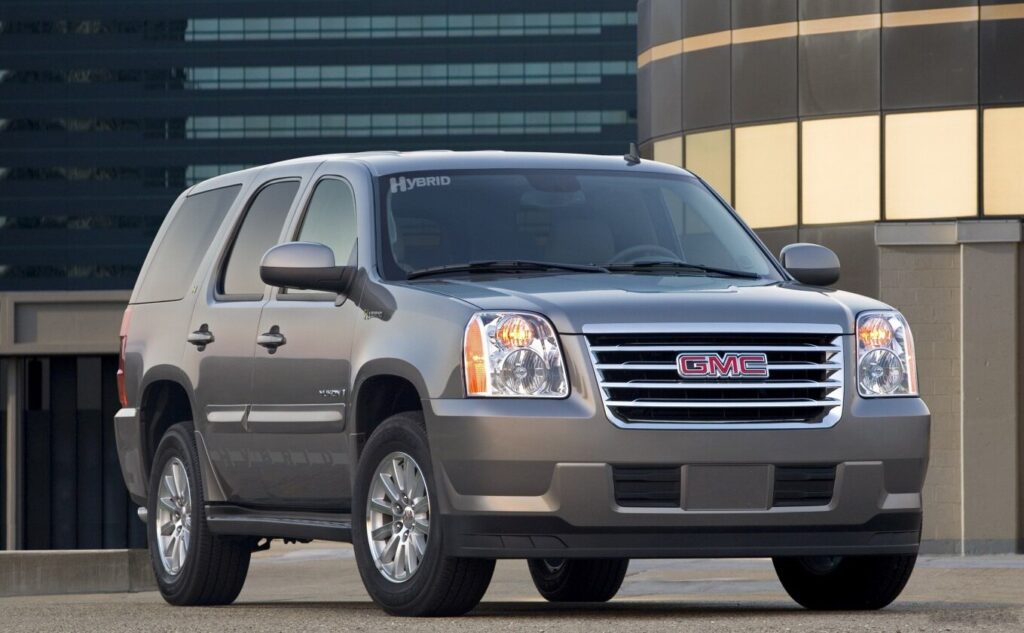
The GMC Yukon III, produced between 2007 and 2014 (as part of the GMT900 platform), represented a significant step forward for GMC’s full-size SUV offerings. The 6.0L V8 Hybrid variant, available from 2008 to 2009, was a particularly noteworthy iteration, aimed at offering improved fuel economy without sacrificing the capability expected of a Yukon. This model year saw GMC attempting to bridge the gap between traditional large SUV demands and the growing interest in hybrid technology. Positioned as a mid-to-upper trim level, it offered a more fuel-conscious alternative to the standard 5.3L and 6.2L V8 options, while still providing substantial power and towing capacity.
Technical Specifications
| Brand | GMC |
| Model | Yukon |
| Generation | Yukon III (GMT900) |
| Type (Engine) | 6.0 V8 16V (332 Hp) Hybrid Automatic |
| Start of production | 2008 |
| End of production | 2009 |
| Powertrain Architecture | FHEV (Full Hybrid Electric Vehicle) |
| Body type | SUV |
| Seats | 8 |
| Doors | 5 |
| Fuel consumption (urban) | 11.2 l/100 km (21 US mpg) |
| Fuel consumption (extra urban) | 10.7 l/100 km (22 US mpg) |
| Fuel Type | Petrol (Gasoline) |
| Weight-to-power ratio | 7.7 kg/Hp |
| Weight-to-torque ratio | 5.1 kg/Nm |
| Electric motor power (x2) | 82 Hp |
| Power | 332 Hp @ 5100 rpm |
| Torque | 498 Nm @ 4100 rpm (367.31 lb.-ft. @ 4100 rpm) |
| Maximum engine speed | 6000 rpm |
| Engine layout | Front, Longitudinal |
| Engine Model/Code | LFA |
| Engine displacement | 5967 cm3 (364.13 cu. in.) |
| Number of cylinders | 8 |
| Engine configuration | V-engine |
| Cylinder Bore | 101.6 mm (4 in.) |
| Piston Stroke | 92 mm (3.62 in.) |
| Compression ratio | 10.8:1 |
| Number of valves per cylinder | 2 |
| Fuel injection system | Multi-port manifold injection |
| Engine oil capacity | 5.7 l (6.02 US qt | 5.02 UK qt) |
| Coolant capacity | 16.9 l (17.86 US qt | 14.87 UK qt) |
| Kerb Weight | 2548 kg (5617.38 lbs.) |
| Max. weight | 3220 kg (7098.88 lbs.) |
| Max load | 672 kg (1481.51 lbs.) |
| Trunk (boot) space – minimum | 478 l (16.88 cu. ft.) |
| Trunk (boot) space – maximum | 3084 l (108.91 cu. ft.) |
| Fuel tank capacity | 92.7 l (24.49 US gal | 20.39 UK gal) |
| Permitted trailer load with brakes (12%) | 2812 kg (6199.4 lbs.) |
| Length | 5130 mm (201.97 in.) |
| Width including mirrors | 2007 mm (79.02 in.) |
| Height | 1954 mm (76.93 in.) |
| Wheelbase | 2946 mm (115.98 in.) |
| Front track | 1732 mm (68.19 in.) |
| Rear (Back) track | 1702 mm (67.01 in.) |
| Ride height (ground clearance) | 229 mm (9.02 in.) |
| Drag coefficient (Cd) | 0.34 |
| Minimum turning circle (turning diameter) | 11.9 m (39.04 ft.) |
| Drivetrain Architecture | Rear wheel drive. FHEV. ICE and electric motor drive rear wheels. |
| Number of gears and type of gearbox | 4 gears, automatic transmission |
| Front suspension | Independent, McPherson with coil spring and anti-roll bar |
| Rear suspension | Independent multi-link suspension, Coil spring |
| Front brakes | Disc, 330×30 mm |
| Rear brakes | Disc, 345×20 mm |
| Tires size | 265/65 R18 112S |
| Wheel rims size | 8J x 18 |
INTRODUCTION
The 2008-2009 GMC Yukon 6.0L V8 Hybrid was a significant offering in the full-size SUV segment. Built on the GMT900 platform, which underpinned the Yukon, Tahoe, and Escalade, this variant aimed to provide a more environmentally conscious option without compromising the spaciousness and towing capacity that buyers expected. The Yukon III generation, produced from 2007-2014, represented a substantial redesign over its predecessor, with improved interior materials, a more refined ride, and the introduction of advanced features like the hybrid powertrain. The hybrid system was designed to improve fuel economy, particularly in city driving, by utilizing electric power at lower speeds and assisting the V8 engine during acceleration.
Powertrain & Engine Architecture
At the heart of the Yukon Hybrid lies the 6.0-liter (5967 cc) V8 engine, designated the LFA engine code. This engine features a cast iron block, aluminum cylinder heads, and a 10.8:1 compression ratio. It utilizes multi-port fuel injection to deliver fuel to the cylinders. The valvetrain employs two valves per cylinder, operated by a single overhead camshaft. What sets this Yukon apart is its Two-Mode Hybrid system. This system incorporates two electric motors, each rated at 82 horsepower, working in conjunction with the 6.0L V8. The transmission is a specialized four-speed automatic, designed to seamlessly integrate with the electric motors and manage power flow between the engine, motors, and wheels. The system allows the vehicle to operate in electric-only mode at low speeds, providing silent and emission-free driving. During acceleration or when higher power is needed, the V8 engine engages, and the electric motors provide supplemental power.
Driving Characteristics
The Yukon Hybrid’s driving experience was noticeably different from its conventionally powered siblings. The electric motors provided instant torque, resulting in brisk acceleration from a standstill. The four-speed automatic transmission, while not as sophisticated as newer transmissions with more gears, was well-tuned to work with the hybrid system. In city driving, the Yukon Hybrid could operate in electric-only mode for short distances, resulting in significantly improved fuel economy. However, on the highway, the benefits of the hybrid system were less pronounced. The added weight of the hybrid components (battery pack and electric motors) did slightly impact handling, making the Yukon Hybrid feel a bit less nimble than the standard V8 models. The gear ratios were optimized for both fuel efficiency and towing capability, providing a balance between performance and economy.
Equipment & Trim Levels
The 6.0L Hybrid Yukon typically came well-equipped, often mirroring the features found on the higher trim levels of the standard Yukon. Standard features included leather upholstery, tri-zone automatic climate control, a premium sound system, and power-adjustable front seats. Optional extras included a navigation system, rear-seat entertainment system, and a sunroof. The interior design was characterized by a spacious cabin and comfortable seating for up to eight passengers. The dashboard layout was functional and user-friendly, with easy-to-read gauges and intuitive controls. The hybrid system’s status was displayed on the instrument cluster, providing drivers with information about energy flow and fuel consumption.
Chassis & Braking
The Yukon Hybrid utilized a body-on-frame construction, providing a robust and durable platform. The front suspension featured an independent McPherson strut design with coil springs and an anti-roll bar. The rear suspension employed an independent multi-link setup, also with coil springs. This suspension configuration provided a comfortable ride, even on rough roads. Braking duties were handled by disc brakes on all four wheels, with ventilated front rotors measuring 330x30mm and rear rotors measuring 345x20mm. The Yukon Hybrid also included ABS (Anti-lock Braking System) as standard equipment, enhancing safety and control during emergency braking situations.
Market Reception & Comparison
The GMC Yukon Hybrid received mixed reviews from critics. While praised for its improved fuel economy compared to the standard V8 models, some reviewers noted that the hybrid system added significant cost and complexity. Compared to the 5.3L V8 Yukon, the Hybrid offered better city fuel economy but a slightly higher price tag. Against the 6.2L V8 Yukon, the Hybrid provided comparable power but with improved fuel efficiency. Reliability was generally good, although the hybrid system’s added complexity did introduce potential points of failure. The Yukon Hybrid appealed to buyers who prioritized fuel economy and environmental responsibility but still needed the space and capability of a full-size SUV.
Legacy
The 2008-2009 GMC Yukon 6.0L V8 Hybrid represents an early attempt by General Motors to integrate hybrid technology into its large SUV lineup. While the hybrid system was relatively complex for its time, it demonstrated the potential for improving fuel economy in this segment. Today, these Yukon Hybrids can be found on the used car market at relatively affordable prices. The powertrain, while aging, has proven to be reasonably durable with proper maintenance. However, potential buyers should be aware of the added complexity of the hybrid system and the potential for costly repairs. The Yukon Hybrid remains a unique and interesting vehicle, representing a transitional period in automotive technology.