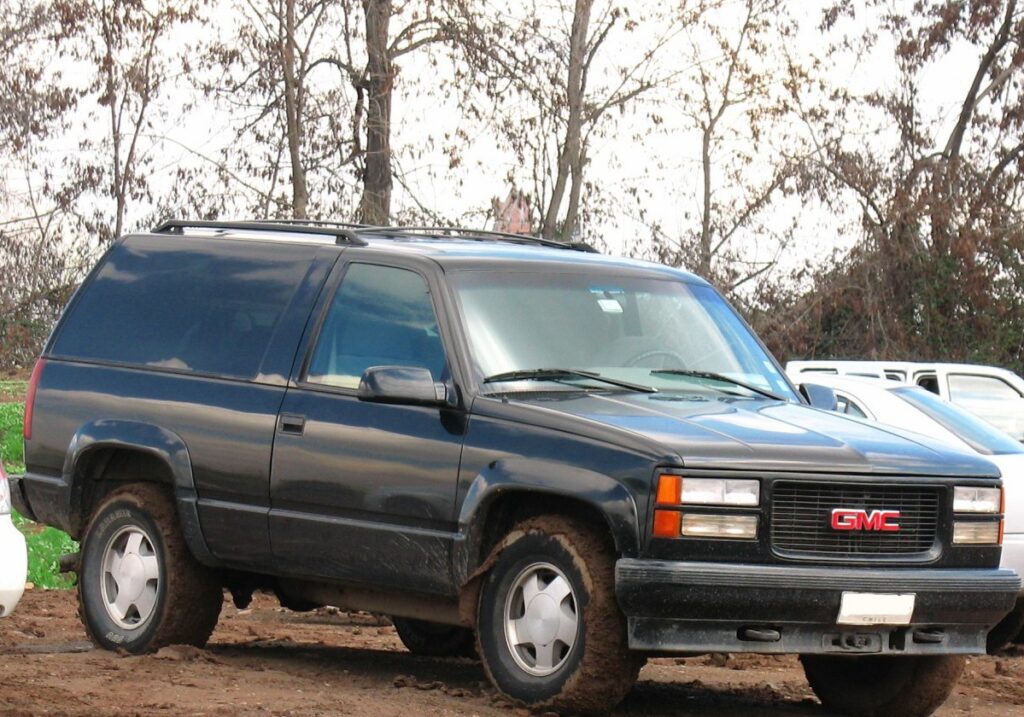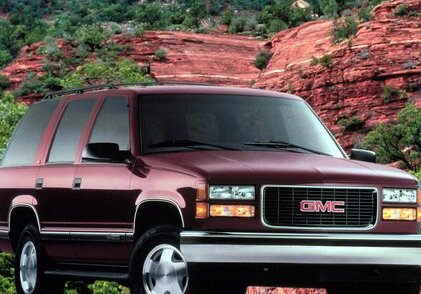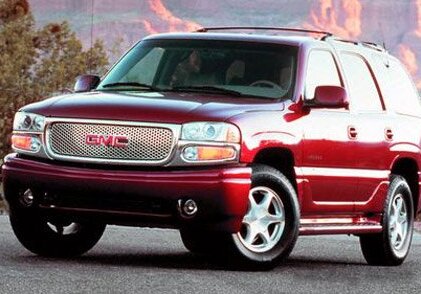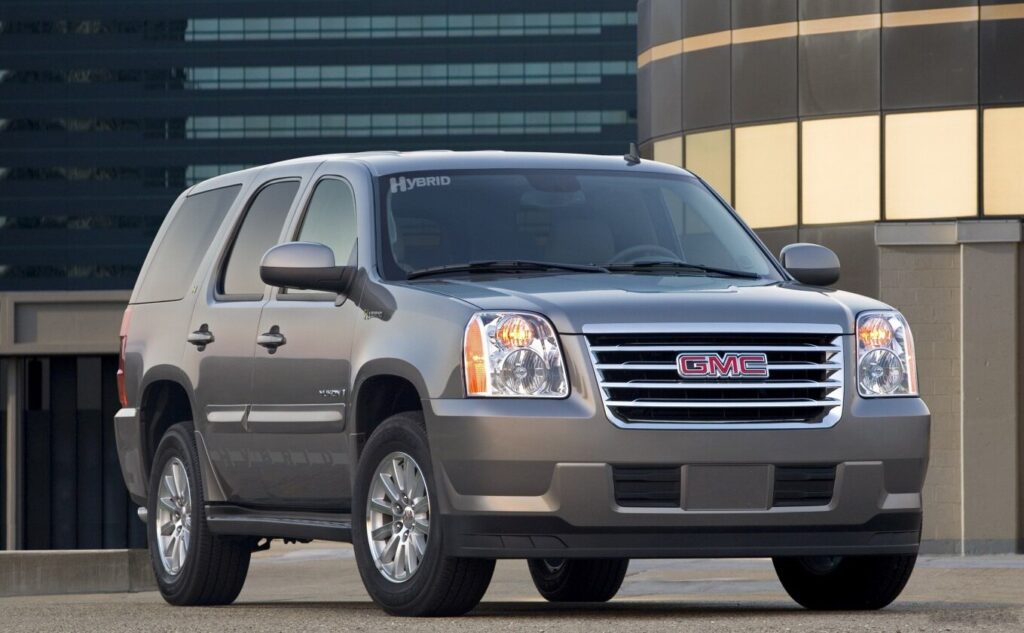
The GMC Yukon III Denali 6.2L V8, produced from 2009 to 2013, represents the pinnacle of luxury and capability within the GMT900 Yukon generation. Positioned as the flagship trim, the Denali offered a significantly more refined experience than the base Yukon models, boasting exclusive styling cues, a more opulent interior, and the most powerful engine option available. This variant catered to buyers seeking a full-size SUV with substantial towing capacity, passenger space, and a premium feel, competing directly with offerings from Cadillac, Lincoln, and other luxury SUV brands. The Yukon III generation itself was a significant update to the popular Yukon line, introducing improved interior materials, enhanced safety features, and a more modern overall design.
Technical Specifications
| Brand | GMC |
| Model | Yukon |
| Generation | Yukon III (GMT900) |
| Type | Denali 6.2 i V8 16V (403 Hp) FlexFuel Automatic |
| Start of production | 2009 |
| End of production | 2013 |
| Powertrain Architecture | Internal Combustion engine |
| Body type | SUV |
| Seats | 8 |
| Doors | 5 |
| Fuel consumption (economy) – urban | 19.6 l/100 km (12 US mpg, 14.4 UK mpg, 5.1 km/l) |
| Fuel consumption (economy) – urban (Ethanol – E85) | 23.5 l/100 km |
| Fuel consumption (economy) – extra urban | 12.4 l/100 km (19 US mpg, 22.8 UK mpg, 8.1 km/l) |
| Fuel consumption (economy) – extra urban (Ethanol – E85) | 16.8 l/100 km |
| Fuel Type | Petrol / Ethanol – E85 |
| Weight-to-power ratio | 6.2 kg/Hp, 161.2 Hp/tonne |
| Weight-to-torque ratio | 4.4 kg/Nm, 226 Nm/tonne |
| Power | 403 Hp @ 5700 rpm |
| Power per litre | 65.4 Hp/l |
| Torque | 565 Nm @ 4300 rpm (416.72 lb.-ft. @ 4300 rpm) |
| Maximum engine speed | 6000 rpm |
| Engine layout | Front, Longitudinal |
| Engine Model/Code | L9H |
| Engine displacement | 6162 cm3 (376.03 cu. in.) |
| Number of cylinders | 8 |
| Engine configuration | V-engine |
| Cylinder Bore | 103.25 mm (4.06 in.) |
| Piston Stroke | 92 mm (3.62 in.) |
| Compression ratio | 10.5:1 |
| Number of valves per cylinder | 2 |
| Fuel injection system | Multi-port manifold injection |
| Engine aspiration | Naturally aspirated engine |
| Valvetrain | VVT |
| Engine oil capacity | 5.7 l (6.02 US qt, 5.02 UK qt) |
| Coolant | 17.1 l (18.07 US qt, 15.05 UK qt) |
| Kerb Weight | 2500 kg (5511.56 lbs.) |
| Max. weight | 3220 kg (7098.88 lbs.) |
| Max load | 720 kg (1587.33 lbs.) |
| Trunk (boot) space – minimum | 479 l (16.92 cu. ft.) |
| Trunk (boot) space – maximum | 3084 l (108.91 cu. ft.) |
| Fuel tank capacity | 98 l (25.89 US gal, 21.56 UK gal) |
| Permitted trailer load with brakes (12%) | 3447 kg (7599.33 lbs.) |
| Length | 5130 mm (201.97 in.) |
| Width | 2009 mm (79.09 in.) |
| Height | 1956 mm (77.01 in.) |
| Wheelbase | 2946 mm (115.98 in.) |
| Front track | 1732 mm (68.19 in.) |
| Rear (Back) track | 1702 mm (67.01 in.) |
| Ride height (ground clearance) | 227 mm (8.94 in.) |
| Minimum turning circle (turning diameter) | 11.9 m (39.04 ft.) |
| Approach angle | 16.02° |
| Departure angle | 21.65° |
| Drivetrain Architecture | The Internal combustion engine (ICE) drives the rear wheels of the vehicle. |
| Drive wheel | Rear wheel drive |
| Number of gears and type of gearbox | 6 gears, automatic transmission |
| Front suspension | Independent, type McPherson with coil spring and anti-roll bar |
| Rear suspension | Independent multi-link suspension, Coil spring |
| Front brakes | Disc, 330×30 mm |
| Rear brakes | Disc, 345×20 mm |
| Assisting systems | ABS (Anti-lock braking system) |
| Steering type | Steering rack and pinion |
| Wheel rims size | 20 |
Powertrain & Engine Architecture
The heart of the Yukon Denali was the 6.2-liter L9H V8 engine. This naturally aspirated powerplant featured a cast iron block with aluminum cylinder heads, and utilized variable valve timing (VVT) to optimize performance and efficiency. The L9H was part of GM’s Vortec engine family, known for its robust construction and relatively simple design. Fuel delivery was handled by a multi-port fuel injection system, providing precise fuel metering for optimal combustion. The engine was designed to run on both regular gasoline and E85 flex-fuel, offering drivers a choice at the pump. Paired with the L9H was a six-speed automatic transmission (6L80E), chosen for its smooth shifting and ability to handle the engine’s substantial torque output. This transmission featured electronically controlled shifting and overdrive capabilities, contributing to both performance and fuel economy.
Driving Characteristics
The 6.2L V8 and six-speed automatic combination delivered a compelling driving experience. While the Yukon Denali wasn’t designed for sporty handling, the engine provided ample power for confident acceleration and effortless highway cruising. The automatic transmission was well-tuned, offering smooth and predictable shifts. Compared to the 5.3L V8 found in lower trims, the 6.2L offered a noticeable increase in power and responsiveness, particularly when towing or carrying a full load of passengers. The gear ratios were optimized for both low-end torque and high-speed cruising, making it a capable all-around performer. However, fuel economy remained a concern, especially in city driving, with the large displacement engine and substantial weight of the vehicle.
Equipment & Trim Levels
The Denali trim was distinguished by its luxurious appointments. Standard features included leather upholstery, heated and ventilated front seats, a premium Bose sound system, tri-zone automatic climate control, and power-adjustable pedals. Exterior features included unique chrome grille and body cladding, along with 20-inch alloy wheels. Optional extras included a rear-seat entertainment system, a navigation system, and power-retractable running boards. The interior was designed to provide a comfortable and refined experience, with attention paid to detail and material quality.
Chassis & Braking
The Yukon Denali utilized a body-on-frame construction, providing a robust and durable platform. The suspension consisted of an independent front suspension with coil springs and an anti-roll bar, and an independent multi-link rear suspension with coil springs. This setup aimed to balance ride comfort with handling stability. Braking duties were handled by disc brakes on all four wheels, with ABS (Anti-lock Braking System) as standard equipment. The Denali’s larger wheels and tires contributed to improved grip and braking performance.
Market Reception & Comparison
The Yukon Denali was generally well-received by critics and consumers alike. It was praised for its spacious interior, powerful engine, and luxurious features. However, its fuel economy was often criticized, as was its relatively high price tag. Compared to the standard Yukon trims, the Denali offered a significant step up in terms of refinement and features, justifying its higher cost for buyers seeking a premium full-size SUV. Against competitors like the Cadillac Escalade and Lincoln Navigator, the Yukon Denali offered a compelling combination of value, capability, and luxury.
Legacy
The GMT900 Yukon Denali, particularly the 6.2L V8 variant, has maintained a relatively good reputation for reliability. The L9H engine is known to be durable, and the 6L80E transmission is generally considered a robust unit. In the used car market, these models continue to be sought after by buyers looking for a spacious, capable, and well-equipped full-size SUV. While maintenance costs can be higher than those of smaller vehicles, the Yukon Denali’s longevity and overall build quality make it a viable option for those needing a large and luxurious vehicle.