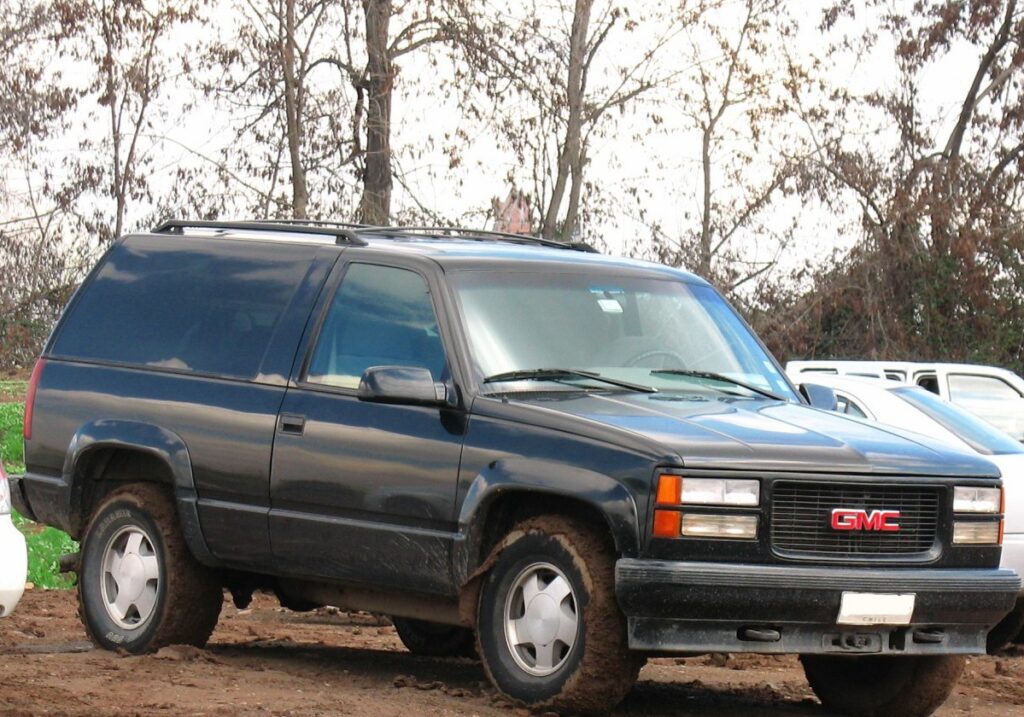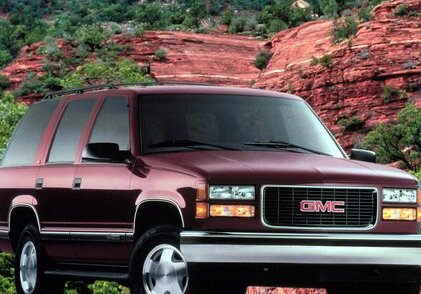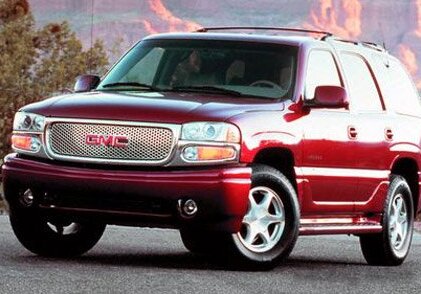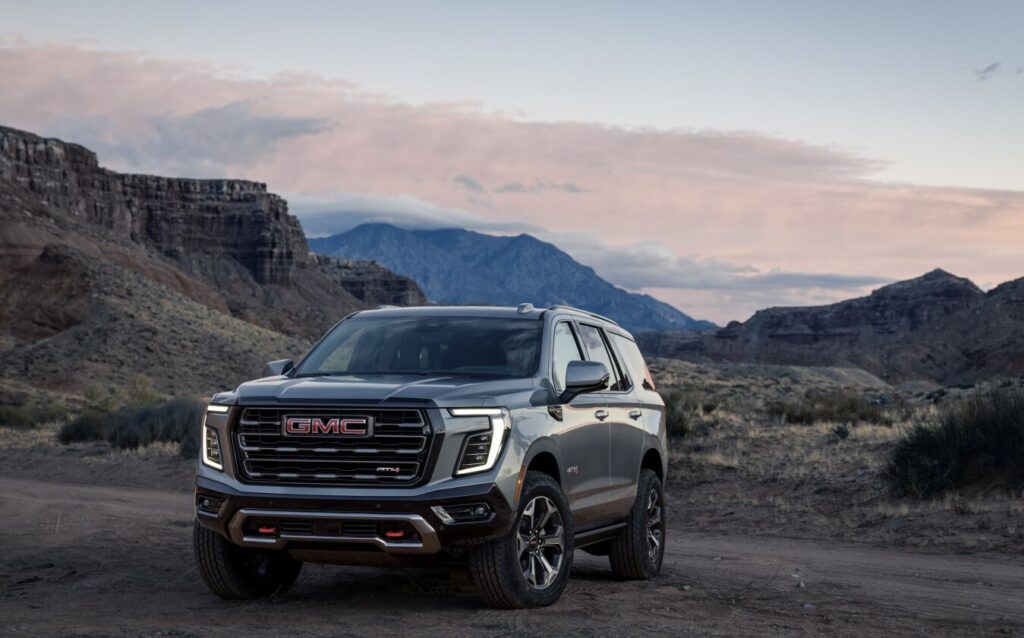
The GMC Yukon V (facelift 2024) represents the latest iteration of GMC’s full-size SUV, positioned as a premium offering within the highly competitive American SUV market. Introduced in 2024 as a refreshed model, the Yukon V with the 6.2-liter V8 engine and four-wheel drive configuration aims to deliver a blend of powerful performance, spaciousness, and advanced technology. This variant sits at the upper end of the Yukon lineup, offering a significant step up in capability and refinement compared to the base models. It builds upon the foundation of the fifth-generation Yukon (introduced in 2021), incorporating styling updates and enhanced features to maintain its appeal against rivals like the Chevrolet Tahoe, Ford Expedition, and Jeep Wagoneer.
Technical Specifications
| Brand | GMC |
| Model | Yukon |
| Generation | Yukon V (facelift 2024) |
| Type (Engine) | 6.2 V8 (420 Hp) 4WD Automatic |
| Start of production | 2024 |
| Powertrain Architecture | Internal Combustion engine |
| Body type | SUV |
| Seats | 7-8 |
| Doors | 5 |
| Fuel Type | Petrol (Gasoline) |
| Power | 420 Hp |
| Power per litre | 68.2 Hp/l |
| Torque | 624 Nm / 460.24 lb.-ft. |
| Engine layout | Front, Longitudinal |
| Engine Model/Code | L87 |
| Engine displacement | 6162 cm3 / 376.03 cu. in. |
| Number of cylinders | 8 |
| Engine configuration | V-engine |
| Cylinder Bore | 103.25 mm / 4.06 in. |
| Piston Stroke | 92 mm / 3.62 in. |
| Number of valves per cylinder | 2 |
| Fuel injection system | Direct injection |
| Engine aspiration | Naturally aspirated engine |
| Valvetrain | OHV, VVT |
| Trunk (boot) space – maximum | 3480 l / 122.9 cu. ft. |
| Permitted trailer load with brakes (12%) | 3810 kg / 8399.61 lbs. |
| Length | 5338 mm / 210.16 in. |
| Width | 2058 mm / 81.02 in. |
| Height | 1938-1941 mm / 76.3 – 76.42 in. |
| Wheelbase | 3071 mm / 120.91 in. |
| Front track | 1737 mm / 68.39 in. |
| Rear (Back) track | 1730 mm / 68.11 in. |
| Ride height (ground clearance) | 189-204 mm / 7.44 – 8.03 in. |
| Minimum turning circle (turning diameter) | 12-12.4 m / 39.37 – 40.68 ft. |
| Drivetrain Architecture | The Internal combustion engine (ICE) drives the rear wheels permanently, and the front wheels are driven through an electrically or mechanically operated clutch if necessary. |
| Drive wheel | All wheel drive (4×4) |
| Number of gears and type of gearbox | 10 gears, automatic transmission |
| Front suspension | Independent coil spring, Transverse stabilizer, Air Suspension – Optional |
| Rear suspension | Independent multi-link spring suspension with stabilizer, Air Suspension – Optional |
| Front brakes | Ventilated discs, 343×30.4 mm |
| Rear brakes | Ventilated discs, 345×20 mm |
| Assisting systems | ABS (Anti-lock braking system) |
| Steering type | Steering rack and pinion |
| Power steering | Electric Steering |
| Tires size | 275/60 R20; 275/50 R22; 285/40 R24 |
| Wheel rims size | 20; 22; 24 |
Powertrain & Engine Architecture
At the heart of the Yukon V is the 6.2-liter L87 V8 engine. This naturally aspirated powerplant utilizes direct fuel injection and features Active Fuel Management (cylinder deactivation) to enhance fuel efficiency during cruising. The engine produces 420 horsepower and 460 lb-ft of torque, providing ample power for towing and accelerating the large SUV. The valvetrain employs an overhead valve (OHV) configuration with variable valve timing (VVT) to optimize performance across the engine’s operating range. The engine is paired with a sophisticated 10-speed automatic transmission, which contributes to smooth shifting and improved fuel economy. This transmission is designed to handle the engine’s substantial torque output and provides a wide range of gear ratios for both on-road and off-road driving.
Driving Characteristics
The 6.2-liter V8 and 10-speed automatic combination delivers a confident and responsive driving experience. Acceleration is brisk, and the Yukon V feels surprisingly agile for its size. The 10-speed transmission allows the engine to remain in its optimal power band, providing strong pull throughout the speed range. Compared to lower-trim Yukon models with smaller engines, the V8 offers significantly more power and torque, making it ideal for hauling heavy loads or navigating challenging terrain. While not as fuel-efficient as the smaller engine options, the cylinder deactivation system helps mitigate fuel consumption during highway driving. The four-wheel-drive system provides enhanced traction in various conditions, making it a capable all-weather vehicle.
Equipment & Trim Levels
The Yukon V (facelift 2024) typically comes well-equipped with standard features, including a large infotainment touchscreen, Apple CarPlay and Android Auto compatibility, a premium sound system, and a suite of advanced safety technologies. Higher trim levels offer additional luxury features such as leather upholstery, heated and ventilated seats, a panoramic sunroof, and advanced driver-assistance systems like adaptive cruise control and lane-keeping assist. Optional extras often include a rear-seat entertainment system, a head-up display, and upgraded towing packages. The interior design emphasizes comfort and spaciousness, with ample room for passengers and cargo.
Chassis & Braking
The Yukon V utilizes a body-on-frame construction, providing a robust and durable platform. The suspension system consists of independent coil springs in the front and an independent multi-link setup in the rear. Available air suspension provides adjustable ride height and enhanced comfort. Braking duties are handled by ventilated disc brakes on all four wheels, providing ample stopping power. Anti-lock braking system (ABS) is standard, along with electronic stability control and traction control. The Yukon V’s chassis is designed to handle the vehicle’s weight and provide a stable and controlled driving experience, even when towing heavy loads.
Market Reception & Comparison
The GMC Yukon V (facelift 2024) has been generally well-received by automotive critics, who praise its powerful engine, spacious interior, and refined driving experience. Compared to other full-size SUVs, the Yukon V stands out for its combination of luxury and capability. While the fuel economy is not class-leading, it is competitive with other V8-powered SUVs. Reliability ratings have been generally positive, although some owners have reported minor issues with the infotainment system. Compared to the Chevrolet Tahoe, which shares the same platform, the Yukon V offers a more upscale interior and a more refined driving experience.
Legacy
The 6.2-liter L87 V8 engine has proven to be a reliable and durable powerplant in various GM vehicles. The 10-speed automatic transmission has also demonstrated good long-term reliability. In the used car market, the 2024 Yukon V is expected to hold its value well due to its desirable features and strong performance. The combination of power, space, and technology makes it a popular choice for families and those who need a capable and comfortable SUV. As technology continues to evolve, the Yukon V represents a transitional point in the full-size SUV segment, bridging the gap between traditional internal combustion engines and the emerging world of electric vehicles.