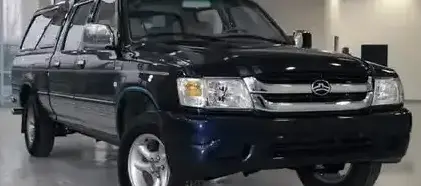
The Great Wall Deer G3 2.2i (105 hp) was a compact pickup truck produced by the Chinese manufacturer Great Wall Motors from 2005 to 2013. Positioned as an affordable and utilitarian vehicle, the G3 aimed to provide a practical transportation solution for both commercial and personal use, primarily within the Chinese domestic market, with limited exports to developing nations. This specific 2.2-liter, 105 horsepower variant represented the base engine option for the G3, offering a balance between cost and capability. It was part of the broader Deer series, which represented Great Wall’s initial foray into the pickup truck segment and helped establish the brand as a significant player in the Chinese automotive industry.
Technical Specifications
| Brand | Great Wall |
| Model | Deer |
| Generation | Deer G3 |
| Type (Engine) | 2.2 i (105 Hp) |
| Start of production | 2005 |
| End of production | 2013 |
| Powertrain Architecture | Internal Combustion engine |
| Body type | Pick-up |
| Seats | 5 |
| Doors | 4 |
| Fuel consumption (economy) – extra urban | 11.8 l/100 km (19.9 US mpg, 23.9 UK mpg, 8.5 km/l) |
| Fuel consumption (economy) – combined | 14 l/100 km (16.8 US mpg, 20.2 UK mpg, 7.1 km/l) |
| Fuel Type | Petrol (Gasoline) |
| Maximum speed | 140 km/h (86.99 mph) |
| Weight-to-power ratio | 15 kg/Hp, 66.7 Hp/tonne |
| Weight-to-torque ratio | 8.3 kg/Nm, 120.6 Nm/tonne |
| Power | 105 Hp @ 4600 rpm |
| Power per litre | 46.9 Hp/l |
| Torque | 190 Nm @ 3200 rpm (140.14 lb.-ft. @ 3200 rpm) |
| Engine layout | Front, Longitudinal |
| Engine displacement | 2237 cm3 (136.51 cu. in.) |
| Number of cylinders | 4 |
| Engine configuration | Inline |
| Number of valves per cylinder | 2 |
| Fuel injection system | Multi-port manifold injection |
| Engine aspiration | Naturally aspirated engine |
| Kerb Weight | 1575 kg (3472.28 lbs.) |
| Max. weight | 2400 kg (5291.09 lbs.) |
| Max load | 825 kg (1818.81 lbs.) |
| Fuel tank capacity | 60 l (15.85 US gal | 13.2 UK gal) |
| Length | 4870 mm (191.73 in.) |
| Width | 1750 mm (68.9 in.) |
| Height | 1800 mm (70.87 in.) |
| Wheelbase | 2850 mm (112.2 in.) |
| Front track | 1450 mm (57.09 in.) |
| Rear (Back) track | 1430 mm (56.3 in.) |
| Drivetrain Architecture | The Internal combustion engine (ICE) drives the rear wheels of the vehicle. |
| Drive wheel | Rear wheel drive |
| Number of gears and type of gearbox | 5 gears, manual transmission |
| Front suspension | Spring Strut |
| Rear suspension | Leaf spring |
| Front brakes | Ventilated discs |
| Rear brakes | Drum |
| Tires size | 215/75 R15 |
| Wheel rims size | 15 |
Powertrain & Engine Architecture
The Great Wall Deer G3 2.2i was powered by a 2.2-liter inline-four cylinder gasoline engine. While specific engine codes varied depending on the year of manufacture, it generally featured a cast iron block and an aluminum cylinder head. The engine utilized a multi-port fuel injection system, providing adequate fuel delivery for its modest power output. The valvetrain employed two valves per cylinder (SOHC), a common configuration for engines of this era focused on simplicity and reliability. The 105 horsepower and 190 Nm (140 lb-ft) of torque were relatively modest figures, but sufficient for typical pickup truck duties such as hauling moderate loads and navigating varied terrain. The engine was mounted longitudinally in the chassis, driving the rear wheels.
Driving Characteristics
The 2.2-liter engine, paired with a five-speed manual transmission, provided adequate, though not exhilarating, performance. Acceleration was leisurely, and the truck was not designed for rapid speeds. The 0-60 mph time was estimated to be around 12-14 seconds. The five-speed gearbox offered a reasonable spread of ratios, allowing the driver to keep the engine within its optimal power band. However, the relatively low horsepower meant that the engine often felt strained when fully loaded or climbing steep hills. Compared to potential upgrades or later variants, this base engine prioritized fuel economy and affordability over outright performance. The rear-wheel-drive configuration provided a traditional pickup truck feel, but also limited traction in slippery conditions.
Equipment & Trim Levels
The Deer G3 2.2i was typically offered with a basic level of equipment, reflecting its position as the entry-level trim. Standard features generally included manual windows and door locks, a basic audio system, and vinyl or cloth upholstery. Air conditioning was often an optional extra. The interior design was functional and utilitarian, prioritizing durability over luxury. Higher trim levels, if available, might have included features such as power windows, central locking, and upgraded interior materials. The dashboard layout was straightforward, with clearly labeled controls.
Chassis & Braking
The Deer G3 utilized a body-on-frame construction, a common design for pickup trucks, providing a robust and durable platform. The front suspension consisted of a spring strut setup, while the rear suspension employed leaf springs, a traditional design known for its load-carrying capacity. The braking system featured ventilated discs on the front wheels and drum brakes on the rear. This configuration was typical for vehicles in this price range and weight class. Steering was typically hydraulic power steering, providing reasonable assistance at low speeds. The 215/75 R15 tires offered a balance between on-road comfort and off-road capability.
Market Reception & Comparison
The Great Wall Deer G3 2.2i was generally well-received in the Chinese market as an affordable and practical pickup truck. Critics noted its robust construction and reasonable fuel economy. However, the engine’s modest power output and basic interior were often cited as drawbacks. Compared to other pickups available in China at the time, the Deer G3 offered a competitive price point. It was often compared to other domestic Chinese pickup trucks, as well as older models from established international brands. The 2.2-liter engine offered a compromise between the smaller, less powerful engines found in some entry-level pickups and the larger, more expensive engines available in higher-end trims.
Legacy
The Great Wall Deer G3 played a significant role in establishing Great Wall Motors as a major player in the Chinese automotive industry. While the Deer series has been superseded by newer models, the G3 remains a relatively common sight on Chinese roads. The 2.2-liter engine, while not known for exceptional performance, proved to be reasonably reliable and durable. In the used car market, the Deer G3 2.2i is often sought after by buyers looking for an affordable and practical work truck. Maintenance costs are generally low, and parts availability is good within China. However, potential buyers should be aware of the truck’s limited power and basic features.