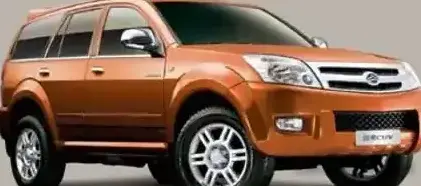
The Great Wall Hover CUV 2.4i, produced from 2005 to 2012, represents a significant early effort by Great Wall Motors to enter the competitive SUV market. Positioned as a mid-range offering within the Hover lineup, this vehicle aimed to provide affordable all-wheel drive capability and a spacious interior to consumers, primarily in China and export markets. It was built on a body-on-frame chassis, a construction method common in SUVs of the era, and offered a blend of practicality and value. The 2.4i variant, equipped with a 130 horsepower engine, was a popular choice, balancing performance with fuel efficiency.
Technical Specifications
| Brand | Great Wall |
| Model | Hover CUV |
| Generation | Hover CUV |
| Type (Engine) | 2.4 i (130 Hp) |
| Start of production | 2005 |
| End of production | 2012 |
| Powertrain Architecture | Internal Combustion engine |
| Body type | SUV |
| Seats | 5 |
| Doors | 5 |
| Fuel consumption (urban) | 14 l/100 km (16.8 US mpg, 20.2 UK mpg, 7.1 km/l) |
| Fuel consumption (combined) | 10 l/100 km (23.5 US mpg, 28.2 UK mpg, 10 km/l) |
| Fuel Type | Petrol (Gasoline) |
| Acceleration 0 – 100 km/h | 12 sec |
| Acceleration 0 – 62 mph | 12 sec |
| Acceleration 0 – 60 mph | 11.4 sec |
| Maximum speed | 170 km/h (105.63 mph) |
| Weight-to-power ratio | 14.1 kg/Hp (71 Hp/tonne) |
| Weight-to-torque ratio | 9.5 kg/Nm (104.9 Nm/tonne) |
| Power | 130 Hp @ 5000 rpm |
| Power per litre | 55.3 Hp/l |
| Torque | 192 Nm @ 2500 rpm (141.61 lb.-ft. @ 2500 rpm) |
| Engine layout | Front, Transverse |
| Engine displacement | 2351 cm3 (143.47 cu. in.) |
| Number of cylinders | 4 |
| Engine configuration | Inline |
| Compression ratio | 9.5:1 |
| Number of valves per cylinder | 4 |
| Fuel injection system | Multi-port manifold injection |
| Engine aspiration | Naturally aspirated engine |
| Kerb Weight | 1830 kg (4034.46 lbs.) |
| Max. weight | 2305 kg (5081.66 lbs.) |
| Max load | 475 kg (1047.2 lbs.) |
| Fuel tank capacity | 74 l (19.55 US gal | 16.28 UK gal) |
| Length | 4620 mm (181.89 in.) |
| Width | 1800 mm (70.87 in.) |
| Height | 1775 mm (69.88 in.) |
| Wheelbase | 2700 mm (106.3 in.) |
| Minimum turning circle | 12.3 m (40.35 ft.) |
| Drive wheel | All wheel drive (4×4) |
| Number of gears | 5 gears, manual transmission |
| Front suspension | Torsion |
| Rear suspension | Coil spring |
| Front brakes | Ventilated discs |
| Rear brakes | Disc |
| Tires size | 235/65 R17 |
| Wheel rims size | 17 |
Powertrain & Engine Architecture
The heart of the Hover CUV 2.4i is the 2351cc inline-four cylinder engine. This engine, designated with various internal codes depending on the specific production year, is a naturally aspirated unit employing a multi-port fuel injection system. The 9.5:1 compression ratio was a common figure for engines of this era, balancing efficiency and performance. The engine produces 130 horsepower at 5000 rpm and 192 Nm (141.61 lb-ft) of torque at 2500 rpm. The five-speed manual transmission was the standard offering, providing a relatively direct connection between the engine and the wheels. The engine’s design prioritized durability and ease of maintenance over outright performance, reflecting the target market’s needs.
Driving Characteristics
The 2.4i engine, paired with the five-speed manual transmission, provided adequate, though not exhilarating, performance. Acceleration from 0 to 100 km/h (0-62 mph) took approximately 12 seconds. The engine’s torque peak at 2500 rpm meant that it felt reasonably responsive in everyday driving situations, particularly when overtaking or climbing hills. Compared to potential higher-output versions (which were not widely available), the 2.4i prioritized fuel economy and a smoother driving experience. The all-wheel drive system provided enhanced traction on loose surfaces, making it suitable for light off-road use, but it wasn’t designed for serious off-roading. The gear ratios were tuned for practicality rather than sporty acceleration.
Equipment & Trim Levels
The Hover CUV 2.4i typically came equipped with basic amenities such as air conditioning, power windows, and a basic audio system. Interior upholstery was generally cloth, with options for upgraded materials available on higher trim levels. Dashboard design was functional, prioritizing usability over aesthetics. Optional extras included alloy wheels, a sunroof, and a more advanced audio system. Safety features were relatively basic by modern standards, typically including dual front airbags and ABS brakes. The trim level largely dictated the availability of these optional features.
Chassis & Braking
The Hover CUV utilized a body-on-frame construction, which provided robustness but also resulted in a higher center of gravity compared to unibody SUVs. Front suspension consisted of torsion bars, while the rear employed coil springs. The braking system featured ventilated discs at the front and solid discs at the rear. The 17-inch wheels were fitted with 235/65 R17 tires, providing a reasonable balance between ride comfort and handling. Stabilizer bars were included to reduce body roll during cornering, but the overall handling characteristics were geared towards comfort and stability rather than sporty dynamics.
Market Reception & Comparison
The Great Wall Hover CUV 2.4i was generally well-received in its target markets as an affordable and capable SUV. Critics noted its spacious interior and all-wheel drive capability as key strengths. However, it was also criticized for its relatively basic interior materials and somewhat unrefined driving experience compared to established competitors from Japan and Europe. Fuel economy was considered average for its class. Compared to other trims within the Hover lineup, the 2.4i offered a good balance between price and performance, making it a popular choice for budget-conscious buyers.
Legacy
The Great Wall Hover CUV 2.4i played a crucial role in establishing Great Wall Motors as a significant player in the SUV market. While not known for exceptional reliability, the powertrain proved to be reasonably durable with proper maintenance. Today, the Hover CUV 2.4i can be found in the used car market at very affordable prices. Its simplicity and relatively low running costs make it an attractive option for those seeking a basic, utilitarian SUV. However, potential buyers should be aware of the vehicle’s age and the potential for wear and tear on components. The Hover CUV paved the way for Great Wall’s subsequent SUV models, which have become increasingly sophisticated and competitive in the global market.