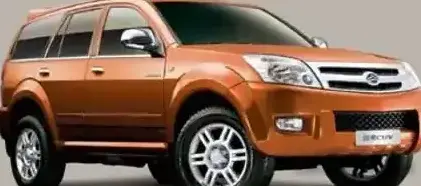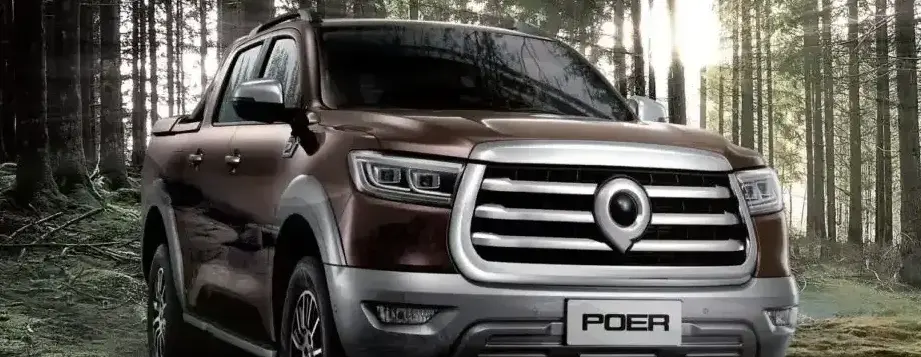
The Great Wall POER Passenger 2.0 Diesel (150 Hp) 4WD Automatic, launched in 2020, represents Great Wall Motors’ entry into the increasingly competitive mid-size pickup truck segment, specifically targeting buyers seeking a blend of work capability and passenger comfort. This variant, positioned as a mid-range offering within the POER lineup, aimed to provide a more refined experience than base models while remaining a more accessible option than the fully-equipped trims. It’s a significant vehicle for Great Wall, representing their ambition to expand beyond their traditional domestic market and establish a foothold in international markets, particularly those where pickup trucks remain popular. The POER (standing for “Power, Off-road, Experience, Reliability”) is built on a non-load-bearing body-on-frame construction, a common approach for pickup trucks, and shares its platform with other Great Wall models.
Technical Specifications
| Brand | Great Wall |
| Model | POER |
| Generation | POER Passenger |
| Type (Engine) | 2.0 Diesel (150 Hp) 4WD Automatic |
| Start of production | 2020 |
| Powertrain Architecture | Internal Combustion engine |
| Body type | Pick-up |
| Seats | 5 |
| Doors | 4 |
| Fuel consumption (economy) – urban | 10.9 l/100 km (21.6 US mpg, 25.9 UK mpg, 9.2 km/l) |
| Fuel consumption (economy) – extra urban | 8.7 l/100 km (27 US mpg, 32.5 UK mpg, 11.5 km/l) |
| Fuel consumption (economy) – combined | 9.5 l/100 km (24.8 US mpg, 29.7 UK mpg, 10.5 km/l) |
| Fuel Type | Diesel |
| Acceleration 0 – 100 km/h | 16 sec |
| Acceleration 0 – 62 mph | 16 sec |
| Acceleration 0 – 60 mph | 15.2 sec |
| Maximum speed | 155 km/h (96.31 mph) |
| Weight-to-power ratio | 14 kg/Hp, 71.6 Hp/tonne |
| Weight-to-torque ratio | 5.2 kg/Nm, 190.9 Nm/tonne |
| Power | 150 Hp @ 3600 rpm |
| Power per litre | 75.2 Hp/l |
| Torque | 400 Nm @ 1500-2500 rpm (295.02 lb.-ft. @ 1500-2500 rpm) |
| Engine layout | Front, Longitudinal |
| Engine displacement | 1996 cm3 (121.8 cu. in.) |
| Number of cylinders | 4 |
| Engine configuration | Inline |
| Cylinder Bore | 83.1 mm (3.27 in.) |
| Piston Stroke | 92 mm (3.62 in.) |
| Compression ratio | 16.2:1 |
| Number of valves per cylinder | 4 |
| Fuel injection system | Diesel Commonrail |
| Engine aspiration | Turbocharger, Intercooler |
| Valvetrain | DOHC |
| Engine oil capacity | 5 l (5.28 US qt | 4.4 UK qt) |
| Coolant | 7.7 l (8.14 US qt | 6.78 UK qt) |
| Kerb Weight | 2095 kg (4618.68 lbs.) |
| Max. weight | 3070 kg (6768.19 lbs.) |
| Max load | 975 kg (2149.51 lbs.) |
| Fuel tank capacity | 78 l (20.61 US gal | 17.16 UK gal) |
| Permitted trailer load with brakes (12%) | 2250 kg (4960.4 lbs.) |
| Permitted trailer load without brakes | 750 kg (1653.47 lbs.) |
| Length | 5403 mm (212.72 in.) |
| Width | 1934 mm (76.14 in.) |
| Height | 1886 mm (74.25 in.) |
| Wheelbase | 3230 mm (127.17 in.) |
| Front track | 1596 mm (62.83 in.) |
| Rear (Back) track | 1596 mm (62.83 in.) |
| Front overhang | 945 mm (37.2 in.) |
| Rear overhang | 1228 mm (48.35 in.) |
| Ride height (ground clearance) | 232 mm (9.13 in.) |
| Approach angle | 27° |
| Departure angle | 25° |
| Ramp-over (brakeover) angle | 21° |
| Wading depth | 500 mm (19.69 in.) |
| Drivetrain Architecture | The Internal combustion engine (ICE) drives the rear wheels permanently, and the front wheels are driven through an electrically or mechanically operated clutch if necessary. |
| Drive wheel | All wheel drive (4×4) |
| Number of gears and type of gearbox | 8 gears, automatic transmission |
| Front suspension | Double wishbone, Transverse stabilizer |
| Rear suspension | Rigid axle suspension, Leaf spring |
| Front brakes | Disc |
| Rear brakes | Disc |
| Assisting systems | ABS (Anti-lock braking system) |
| Steering type | Steering rack and pinion |
| Power steering | Electric Steering |
| Tires size | 265/60 R18 |
| Wheel rims size | 18 |
Powertrain & Engine Architecture
The heart of the POER Passenger 2.0 Diesel 4WD Automatic is the GW4D20 engine, a 2.0-liter inline-four cylinder diesel. This engine utilizes a common rail direct injection system, delivering fuel at extremely high pressures for improved combustion efficiency and reduced emissions. The engine is turbocharged and intercooled, boosting power output and torque. The DOHC (Double Overhead Camshaft) valvetrain, with four valves per cylinder, further enhances breathing and contributes to the engine’s overall performance. The engine produces 150 horsepower at 3600 rpm and a substantial 400 Nm (295 lb-ft) of torque between 1500 and 2500 rpm. This torque band is particularly useful for towing and hauling, key capabilities for a pickup truck. The engine is longitudinally mounted, a configuration common in rear-wheel-drive and four-wheel-drive vehicles. Paired with the engine is an 8-speed automatic transmission, providing smooth gear changes and contributing to fuel efficiency. The transmission is electronically controlled, adapting to driving conditions and driver input.
Driving Characteristics
The 150 hp and 400 Nm output of this powertrain configuration delivers adequate, though not exhilarating, performance. Acceleration from 0-60 mph takes around 15.2 seconds, and the top speed is limited to 155 km/h (96 mph). The strength of this setup lies in its mid-range torque, making it capable of comfortably handling everyday driving situations and moderate towing loads. Compared to higher-output versions of the POER, such as those with more powerful diesel engines, this variant feels less responsive during quick acceleration. However, the 8-speed automatic transmission helps to keep the engine in its optimal power band, mitigating some of the performance deficit. The automatic transmission offers a smooth and refined driving experience, particularly on the highway. The 4WD system provides enhanced traction in challenging conditions, making it suitable for off-road use, though it’s not designed for extreme rock crawling.
Equipment & Trim Levels
The 2.0 Diesel 4WD Automatic POER Passenger typically came equipped with a reasonable level of standard features. These generally included air conditioning, power windows and locks, a basic infotainment system with Bluetooth connectivity, and alloy wheels. Safety features such as ABS (Anti-lock Braking System) and airbags were also standard. Interior upholstery was typically cloth, with options for leather upgrades on higher trim levels. Optional extras could include a larger touchscreen infotainment system with navigation, a rearview camera, parking sensors, and a sunroof. The “Passenger” designation indicates a focus on interior comfort and features compared to more utilitarian work-oriented POER models.
Chassis & Braking
The POER utilizes a body-on-frame construction, providing a robust and durable chassis. The front suspension consists of a double wishbone setup with a transverse stabilizer bar, while the rear suspension employs a rigid axle with leaf springs. This configuration is typical for pickup trucks, prioritizing load-carrying capacity and durability over outright handling precision. Braking duties are handled by disc brakes on all four wheels, providing adequate stopping power. The ABS system helps to prevent wheel lockup during hard braking, enhancing stability and control.
Market Reception & Comparison
The Great Wall POER Passenger 2.0 Diesel 4WD Automatic was generally well-received as a value-for-money option in the mid-size pickup truck segment. Critics praised its comfortable ride, spacious interior, and capable 4WD system. However, some reviewers noted that the engine lacked the refinement and power of some of its competitors. Fuel economy was considered average for a diesel pickup truck, with combined figures around 9.5 l/100 km (24.8 US mpg). Compared to other trims in the POER lineup, this variant offered a good balance between performance, fuel efficiency, and price. The higher-output diesel engines provided more power but came at a higher cost and with slightly lower fuel economy.
Legacy
The GW4D20 engine, while not without its quirks, has proven to be a relatively reliable powertrain when properly maintained. Common issues reported by owners include occasional problems with the diesel particulate filter (DPF) and the fuel injection system. However, these issues are not uncommon in modern diesel engines. On the used car market, the POER Passenger 2.0 Diesel 4WD Automatic represents a relatively affordable entry point into the mid-size pickup truck segment. Its combination of practicality, comfort, and 4WD capability makes it a popular choice for buyers seeking a versatile vehicle for both work and leisure.