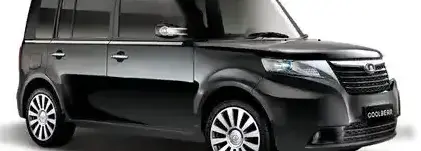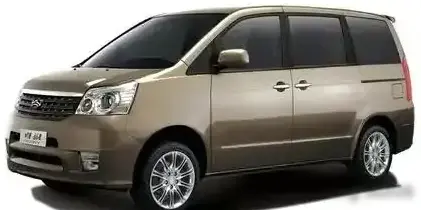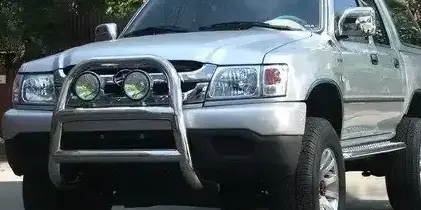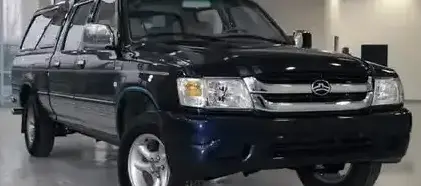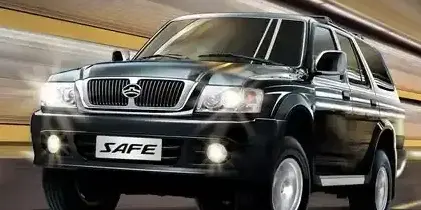
The Great Wall Safe 2.2i, produced from 2002 to 2009, represents a significant early effort by Great Wall Motors to enter the competitive SUV market. Positioned as a relatively affordable and rugged vehicle, the Safe aimed to provide a practical, all-wheel-drive option for buyers in China and export markets. This particular 2.2i variant, generating 105 horsepower, served as a core offering within the Safe lineup, balancing cost with capability. It was a key model for Great Wall as they established themselves as a vehicle manufacturer.
Technical Specifications
| Brand | Great Wall |
| Model | Safe |
| Generation | Safe |
| Type (Engine) | 2.2i (105 Hp) |
| Start of production | 2002 |
| End of production | 2009 |
| Powertrain Architecture | Internal Combustion engine |
| Body type | SUV |
| Seats | 5 |
| Doors | 5 |
| Fuel Type | Petrol (Gasoline) |
| Maximum speed | 140 km/h (86.99 mph) |
| Weight-to-power ratio | 15.6 kg/Hp, 64 Hp/tonne |
| Weight-to-torque ratio | 8.6 kg/Nm, 115.9 Nm/tonne |
| Power | 105 Hp @ 4600 rpm |
| Power per litre | 46.9 Hp/l |
| Torque | 190 Nm @ 3200 rpm (140.14 lb.-ft. @ 3200 rpm) |
| Engine layout | Front, Longitudinal |
| Engine displacement | 2237 cm3 (136.51 cu. in.) |
| Number of cylinders | 4 |
| Engine configuration | Inline |
| Number of valves per cylinder | 2 |
| Fuel injection system | Multi-port manifold injection |
| Engine aspiration | Naturally aspirated engine |
| Kerb Weight | 1640 kg (3615.58 lbs) |
| Max. weight | 2085 kg (4596.64 lbs) |
| Max load | 445 kg (981.06 lbs) |
| Length | 4860 mm (191.34 in) |
| Height | 1820 mm (71.65 in) |
| Front track | 1470 mm (57.87 in) |
| Rear (Back) track | 1480 mm (58.27 in) |
| Minimum turning circle | 12 m (39.37 ft) |
| Drive wheel | All wheel drive (4×4) |
| Number of gears | 5 gears, manual transmission |
| Tires size | 235/75 R15 |
| Wheel rims size | 15 |
Powertrain & Engine Architecture
The heart of the Great Wall Safe 2.2i is a 2.2-liter inline-four cylinder gasoline engine. This engine, while not particularly sophisticated, was chosen for its relative simplicity and cost-effectiveness. It utilizes a naturally aspirated configuration with two valves per cylinder and a multi-port fuel injection system. The engine’s 105 horsepower peak is reached at 4600 rpm, while its 190 Nm (140 lb-ft) of torque is available at 3200 rpm. The engine is mounted longitudinally in the chassis, a configuration common in vehicles designed for four-wheel drive. The 5-speed manual transmission was the only transmission option available for this variant. The transmission’s gear ratios were tuned for a balance of on-road drivability and off-road capability, prioritizing torque delivery over outright acceleration.
Driving Characteristics
The Safe 2.2i, with its 105 hp engine and manual transmission, offered modest performance. Acceleration was adequate for everyday driving, but not particularly brisk. The all-wheel-drive system provided enhanced traction on loose surfaces, making it suitable for light off-road use. The manual transmission allowed for greater driver control, but the engine’s limited power meant frequent downshifting was necessary, especially when climbing hills or overtaking. Compared to potential future turbocharged variants, the 2.2i felt noticeably less responsive. The suspension, tuned for comfort and durability, provided a reasonably smooth ride on paved roads, but could feel somewhat soft and wallowy during more aggressive driving.
Equipment & Trim Levels
The Great Wall Safe 2.2i was generally equipped with basic, functional features. Standard equipment typically included air conditioning, power steering, and a basic audio system. Interior upholstery was typically cloth, and the dashboard featured a straightforward layout with minimal ornamentation. Optional extras, depending on the market, could include alloy wheels, a more advanced audio system, and power windows. The 2.2i trim level generally represented the entry point into the Safe range, offering a no-frills package focused on practicality and affordability. Higher trim levels, if available, would have added features like leather upholstery, upgraded audio systems, and additional safety equipment.
Chassis & Braking
The Great Wall Safe utilized a body-on-frame construction, a traditional SUV design that prioritized robustness and off-road capability. The suspension consisted of independent front suspension and a multi-link rear suspension. Braking was typically accomplished with disc brakes on the front wheels and drum brakes on the rear. The braking system was adequate for the vehicle’s weight and performance, but lacked the sophistication of more modern braking systems. A stabilizer bar was included at the front to reduce body roll during cornering. The all-wheel-drive system was typically a part-time system, allowing the driver to switch between two-wheel drive and four-wheel drive as needed.
Market Reception & Comparison
The Great Wall Safe 2.2i received mixed reviews. Critics generally praised its affordability and ruggedness, but noted its lack of refinement and relatively low power output. Compared to other SUVs available at the time, the Safe offered a competitive price point, but lacked the brand recognition and established reputation of more established manufacturers. Fuel economy was reasonable for a vehicle of its size and type, but not exceptional. Reliability was generally considered to be acceptable, but concerns were raised about the long-term durability of some components. Within the Safe lineup, the 2.2i was positioned as the entry-level model, appealing to buyers who prioritized affordability and practicality over performance and luxury.
Legacy
The Great Wall Safe 2.2i played an important role in establishing Great Wall Motors as a viable automotive manufacturer. While not a groundbreaking vehicle, it demonstrated the company’s ability to produce a functional and affordable SUV. The 2.2i powertrain, while not known for its exceptional performance or longevity, proved to be reasonably reliable in many applications. Today, the Safe 2.2i is a relatively rare sight on the roads, but it remains a popular choice among enthusiasts looking for a simple, rugged, and affordable SUV. Its legacy lies in its contribution to the growth of the Chinese automotive industry and its role as a stepping stone for Great Wall Motors.