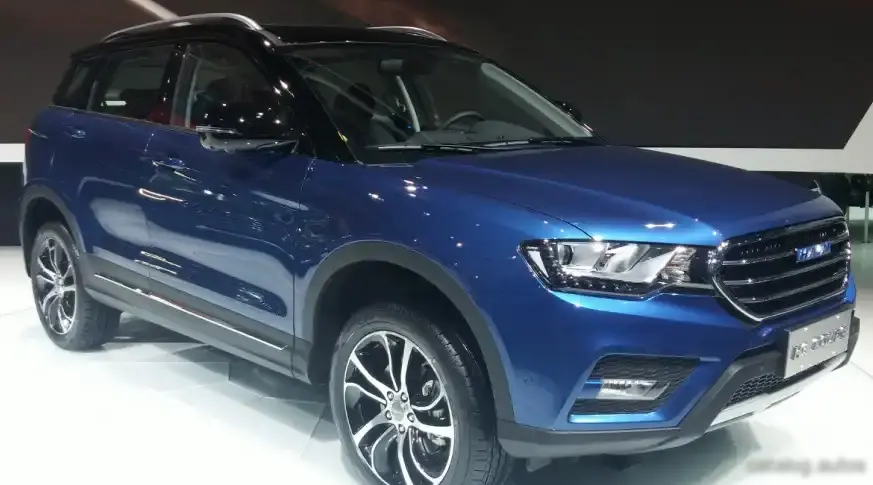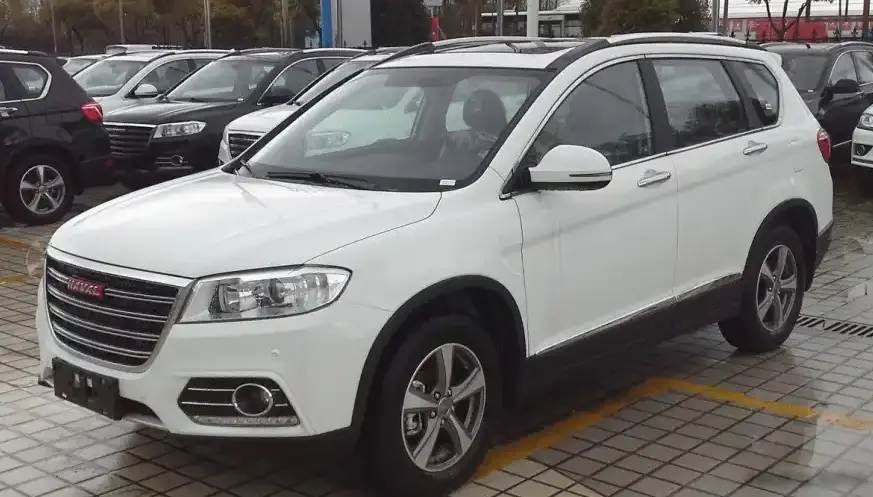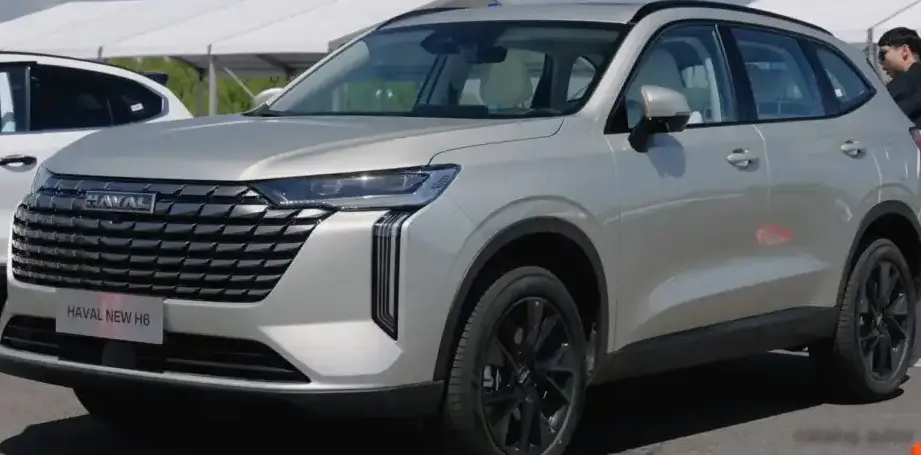
The Haval H6 III Hi4 1.5T (364 Hp) Plug-in Hybrid AWD DHT, introduced in 2024, represents a significant step forward in Haval’s compact SUV offerings. This variant, part of the facelifted third-generation H6 series, is positioned as a premium, performance-oriented option within the H6 lineup, emphasizing both fuel efficiency and dynamic driving capabilities. Built by the Great Wall Motor subsidiary, Haval, the H6 has become a cornerstone of the brand’s success, particularly in the Chinese market, and this plug-in hybrid version aims to broaden its appeal to environmentally conscious consumers seeking a powerful and technologically advanced SUV. The H6 III utilizes the 1HX0 platform, shared with other Great Wall models, and the Hi4 variant specifically integrates a sophisticated plug-in hybrid system with all-wheel drive.
Technical Specifications
| Brand | Haval |
| Model | H6 |
| Generation | H6 III (facelift 2024) |
| Type (Engine) | Hi4 1.5T (364 Hp) Plug-in Hybrid AWD DHT |
| Start of production | 2024 |
| Powertrain Architecture | PHEV (Plug-in Hybrid Electric Vehicle) |
| Body type | SUV |
| Seats | 5 |
| Doors | 5 |
| Fuel consumption (combined) | 1.1-5.3 l/100 km (213.8 – 44.4 US mpg, 256.8 – 53.3 UK mpg, 90.9 – 18.9 km/l) |
| CO2 emissions | 25 g/km |
| Fuel Type | Petrol / electricity |
| Acceleration 0 – 100 km/h | 4.8 sec |
| Acceleration 0 – 62 mph | 4.8 sec |
| Acceleration 0 – 60 mph | 4.6 sec |
| Weight-to-power ratio | 5.4 kg/Hp, 183.8 Hp/tonne |
| Weight-to-torque ratio | 2.6 kg/Nm, 383.8 Nm/tonne |
| Gross battery capacity | 19.09 kWh |
| Battery technology | Lithium iron phosphate (LiFePO4) |
| Battery location | Below the floor |
| All-electric range (NEDC) | 100 km (62.14 mi) |
| Average Energy consumption (NEDC) | 18.6 kWh/100 km (29.93 kWh/100 mi, 113 MPGe, 5.4 km/kWh, 3.3 mi/kWh) |
| Electric motor power (1) | 109 Hp |
| Electric motor Torque (1) | 170 Nm (125.39 lb.-ft.) |
| Electric motor location (1) | Integrated into the transmission |
| Electric motor type (1) | Synchronous |
| Electric motor power (2) | 204 Hp |
| Electric motor Torque (2) | 350 Nm (258.15 lb.-ft.) |
| Electric motor location (2) | Rear axle, Transverse |
| Electric motor type (2) | Synchronous |
| System power | 364 Hp |
| System torque | 760 Nm (560.55 lb.-ft.) |
| Engine Power | 150 Hp @ 5500-6000 rpm |
| Engine Torque | 240 Nm @ 1800-4000 rpm (177.01 lb.-ft. @ 1800-4000 rpm) |
| Engine layout | Front, Transverse |
| Engine displacement | 1499 cm3 (91.47 cu. in.) |
| Number of cylinders | 4 |
| Engine configuration | Inline |
| Cylinder Bore | 75 mm (2.95 in.) |
| Piston Stroke | 84.9 mm (3.34 in.) |
| Compression ratio | 10.9:1 |
| Number of valves per cylinder | 4 |
| Fuel injection system | Direct injection |
| Engine aspiration | Turbocharger, Intercooler |
| Valvetrain | DOHC |
| Engine oil capacity | 4 l (4.23 US qt | 3.52 UK qt) |
| Kerb Weight | 1980 kg (4365.15 lbs.) |
| Max. weight | 2400 kg (5291.09 lbs.) |
| Max load | 420 kg (925.94 lbs.) |
| Trunk (boot) space – minimum | 560 l (19.78 cu. ft.) |
| Trunk (boot) space – maximum | 1445 l (51.03 cu. ft.) |
| Fuel tank capacity | 55 l (14.53 US gal | 12.1 UK gal) |
| Permitted trailer load with brakes (12%) | 1500 kg (3306.93 lbs.) |
| Permitted trailer load without brakes | 750 kg (1653.47 lbs.) |
| Length | 4703 mm (185.16 in.) |
| Width | 1886 mm (74.25 in.) |
| Height | 1730 mm (68.11 in.) |
| Wheelbase | 2738 mm (107.8 in.) |
| Minimum turning circle | 11.9 m (39.04 ft.) |
| Drivetrain Architecture | ICE drives front wheels, electric motors drive front and rear wheels. |
| Drive wheel | All wheel drive (4×4) |
| Number of gears and type of gearbox | 2 gears, automatic transmission DHT |
| Front suspension | Independent, McPherson with coil spring and anti-roll bar |
| Rear suspension | Independent multi-link spring suspension with stabilizer |
| Front brakes | Ventilated discs |
| Rear brakes | Ventilated discs |
| Steering type | Steering rack and pinion |
| Power steering | Electric |
| Tires size | 235/55 R19 |
| Wheel rims size | 7J x 19 |
Powertrain & Engine Architecture
The Hi4 1.5T utilizes a sophisticated plug-in hybrid system. The core of the powertrain is a 1.5-liter turbocharged inline-four cylinder gasoline engine (code GW4B15T) producing 150 horsepower and 240 Nm (177 lb-ft) of torque. This engine features direct fuel injection and a dual overhead camshaft (DOHC) valvetrain. It’s paired with two electric motors: a 109 hp motor integrated with the front-wheel-drive transmission and a 204 hp motor powering the rear axle. The combined system output reaches a substantial 364 horsepower and 760 Nm (560 lb-ft) of torque. Haval employs its Dedicated Hybrid Transmission (DHT) – a two-speed automated transmission – to seamlessly manage power delivery between the engine and electric motors. The DHT system allows for all-electric driving, hybrid operation, and engine-only operation, optimizing for efficiency and performance. The 19.09 kWh lithium iron phosphate (LiFePO4) battery pack, located under the floor, provides an all-electric range of 100 km (62 miles) under NEDC testing conditions.
Driving Characteristics
The Hi4 1.5T delivers a noticeably different driving experience compared to lower-powered H6 variants. The combined output results in brisk acceleration, with a 0-100 km/h (0-62 mph) time of just 4.8 seconds. The dual-motor all-wheel-drive system provides excellent traction and stability, particularly in adverse weather conditions. The DHT transmission offers smooth and responsive shifts, and the electric motors provide instant torque, enhancing responsiveness. Compared to a standard 1.5T H6, the Hi4 offers significantly more power and a more refined driving experience. While the added weight of the battery pack does slightly impact handling agility, the benefits of the hybrid system – including quiet operation in electric mode and strong acceleration – outweigh this drawback for many drivers. The two-speed transmission is geared for both efficient cruising and rapid acceleration.
Equipment & Trim Levels
The Hi4 1.5T typically comes well-equipped, reflecting its position as a premium trim level. Standard features generally include leather upholstery, a large touchscreen infotainment system with navigation, a panoramic sunroof, advanced driver-assistance systems (ADAS) such as adaptive cruise control and lane-keeping assist, and automatic climate control. Optional extras often include premium audio systems, ventilated front seats, and a 360-degree camera system. Interior trim levels are typically focused on providing a luxurious and modern aesthetic, with high-quality materials and attention to detail.
Chassis & Braking
The H6 III Hi4 utilizes an independent suspension setup, with McPherson struts at the front and a multi-link system at the rear, both incorporating stabilizer bars. This configuration provides a comfortable ride quality while maintaining reasonable handling characteristics. The braking system consists of ventilated discs on all four wheels, providing ample stopping power. Anti-lock braking system (ABS) is standard, along with electronic brake-force distribution (EBD) and brake assist. The chassis is reinforced to accommodate the added weight of the battery pack and hybrid components.
Market Reception & Comparison
The Haval H6 Hi4 1.5T has been well-received in the Chinese market, where it competes with other plug-in hybrid SUVs from both domestic and international brands. Critics have praised its strong performance, long electric range, and comprehensive feature set. Compared to other H6 variants, the Hi4 commands a higher price point, reflecting its advanced technology and increased performance. Fuel economy is a key selling point, with combined fuel consumption figures ranging from 1.1 to 5.3 l/100 km. Reliability reports are still emerging, but early indications suggest that the hybrid system is generally robust.
Legacy
The Haval H6 Hi4 1.5T represents a significant step in Haval’s transition towards electrification. Its advanced plug-in hybrid technology and strong performance position it as a competitive offering in the rapidly growing SUV market. The long-term reliability of the powertrain remains to be seen, but the use of a proven 1.5-liter engine and robust electric motors suggests a reasonable expectation of durability. As the used car market matures, the Hi4 is likely to become a sought-after option for buyers seeking a fuel-efficient and technologically advanced SUV.