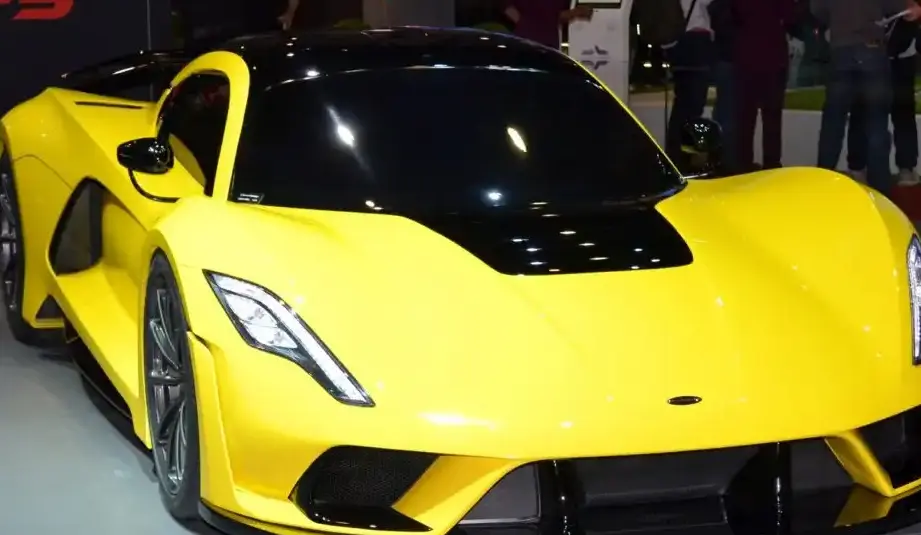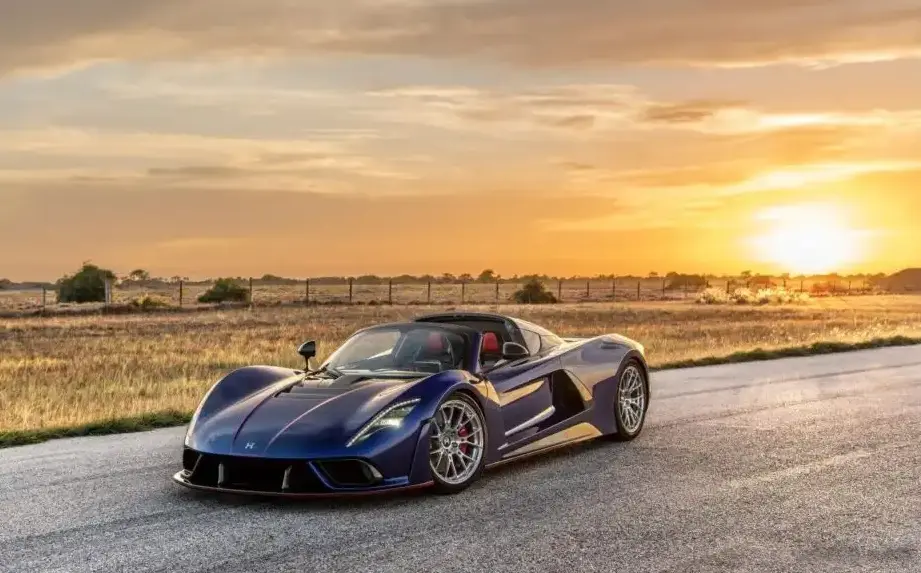
The Hennessey Venom GT 7.0 V8 (1261 Hp) is an American-built hypercar produced by Hennessey Performance Engineering from 2014 to 2017. Designed as a direct competitor to established high-performance manufacturers like Bugatti and Koenigsegg, the Venom GT aimed to deliver unparalleled speed and acceleration. Built on a heavily modified Lotus Exige chassis, the Venom GT distinguished itself through its massive power output and record-breaking top speed runs. The model represents Hennessey’s ambition to create a world-beating performance machine, focusing on raw power and aerodynamic efficiency rather than complex technological systems. It was produced in a limited run, further enhancing its exclusivity.
Technical Specifications
| Brand | Hennessey |
| Model | Venom GT |
| Generation | Venom GT |
| Type (Engine) | 7.0 V8 (1261 Hp) |
| Start of production | 2014 |
| End of production | 2017 |
| Powertrain Architecture | Internal Combustion engine |
| Body type | Coupe |
| Seats | 2 |
| Doors | 2 |
| Fuel Type | Petrol (Gasoline) |
| Acceleration 0 – 60 mph | 2.4 sec |
| Acceleration 0 – 300 km/h | 13.63 sec |
| Maximum speed | 435 km/h / 270.3 mph |
| Weight-to-power ratio | 1 kg/Hp, 1013.7 Hp/tonne |
| Weight-to-torque ratio | 0.8 kg/Nm, 1258.8 Nm/tonne |
| Power | 1261 Hp @ 6600 rpm |
| Power per litre | 180.1 Hp/l |
| Torque | 1566 Nm @ 4400 rpm / 1155.02 lb.-ft. @ 4400 rpm |
| Maximum engine speed | 7200 rpm |
| Engine layout | Middle, Longitudinal |
| Engine displacement | 7000 cm3 / 427.17 cu. in. |
| Number of cylinders | 8 |
| Engine configuration | V-engine |
| Compression ratio | 9.2:1 |
| Number of valves per cylinder | 2 |
| Fuel injection system | Multi-port manifold injection |
| Engine aspiration | Twin-Turbo, Intercooler |
| Valvetrain | OHV |
| Kerb Weight | 1244 kg / 2742.55 lbs |
| Fuel tank capacity | 70 l / 18.49 US gal | 15.4 UK gal |
| Length | 4655 mm / 183.27 in |
| Width | 1960 mm / 77.17 in |
| Height | 1135 mm / 44.69 in |
| Wheelbase | 2800 mm / 110.24 in |
| Front track | 1612 mm / 63.46 in |
| Rear track | 1604 mm / 63.15 in |
| Ride height (ground clearance) | 90-150 mm / 3.54 – 5.91 in |
| Drivetrain Architecture | The Internal combustion engine (ICE) drives the rear wheels of the vehicle. |
| Drive wheel | Rear wheel drive |
| Number of gears and type of gearbox | 6 gears, manual transmission |
| Front suspension | Double wishbone |
| Rear suspension | Double wishbone |
| Front brakes | Ventilated discs |
| Rear brakes | Ventilated discs |
| Steering type | Steering rack and pinion |
| Power steering | Electric Steering |
| Tires size | 265/30 R19; 345/30 R20 |
| Wheel rims size | 9.5J x 19; 12.5J x 20 |
Powertrain & Engine Architecture
The heart of the Venom GT is its 7.0-liter twin-turbocharged V8 engine. This engine is derived from a GM LS7 block, but extensively modified by Hennessey. Key upgrades include forged internals, upgraded cylinder heads, and a robust twin-turbocharger system with intercooling. The engine utilizes multi-port fuel injection, delivering fuel directly into the intake ports. The valvetrain employs an overhead valve (OHV) configuration, a relatively traditional design chosen for its durability and simplicity. The engine produces a staggering 1261 horsepower at 6600 rpm and 1566 Nm (1155 lb-ft) of torque at 4400 rpm. Power is delivered to the rear wheels through a 6-speed manual transmission. The engine’s longitudinal mid-engine layout contributes to optimal weight distribution and handling.
Driving Characteristics
The Venom GT’s driving experience is dominated by its immense power. Acceleration is brutal, with a 0-60 mph time of just 2.4 seconds and a 0-300 km/h (0-186 mph) time of 13.63 seconds. The car’s lightweight construction (1244 kg / 2742.55 lbs) and powerful engine result in an exceptional power-to-weight ratio. The manual transmission requires skilled operation to manage the engine’s output effectively. While the chassis is based on the Lotus Exige, Hennessey made significant modifications to the suspension and aerodynamics to improve stability at high speeds. However, the Venom GT is not designed for everyday comfort; it’s a focused performance machine prioritizing speed and track capability over refinement.
Equipment & Trim Levels
Given its limited production run and focus on performance, the Venom GT offered minimal trim levels. The interior was spartan, prioritizing weight reduction. Standard features included racing seats, a basic infotainment system, and air conditioning. The interior materials were upgraded compared to the base Lotus Exige, but remained functional rather than luxurious. Optional extras included carbon fiber interior trim, upgraded audio systems, and bespoke paint finishes. The emphasis was on creating a driver-focused environment, minimizing distractions and maximizing the connection between driver and machine.
Chassis & Braking
The Venom GT utilizes a heavily modified chassis derived from the Lotus Exige. Hennessey reinforced the chassis to handle the increased power and stresses. The suspension features double wishbone setups at both the front and rear, tuned for performance. Braking is provided by ventilated discs at all four corners, offering substantial stopping power. The car’s aerodynamic package is crucial to its high-speed stability, featuring a large rear wing, front splitter, and optimized underbody airflow. The tires are high-performance compounds, sized 265/30 R19 at the front and 345/30 R20 at the rear, designed to maximize grip.
Market Reception & Comparison
The Hennessey Venom GT received significant attention from the automotive press, largely due to its record-breaking speed runs. Critics praised its incredible acceleration and performance, but also noted its raw and uncompromising nature. Compared to rivals like the Bugatti Veyron, the Venom GT offered a more visceral and engaging driving experience, but lacked the Veyron’s refinement and luxury. The Venom GT’s focus on power and lightweight construction resulted in superior acceleration and a higher top speed, but it was less forgiving to drive. Reliability was also a concern, given the car’s high-stress engine and limited production volume.
Legacy
The Hennessey Venom GT cemented Hennessey Performance Engineering’s reputation as a builder of extreme performance vehicles. While production was limited to just a handful of examples, the Venom GT achieved its goal of challenging the established hypercar elite. The car’s record-breaking speed runs and impressive performance figures continue to be celebrated by enthusiasts. On the used car market, Venom GTs command high prices, reflecting their rarity and performance potential. The powertrain, while demanding in terms of maintenance, has proven relatively durable when properly cared for. The Venom GT paved the way for Hennessey’s subsequent hypercar, the Venom F5, which builds upon the lessons learned from its predecessor.