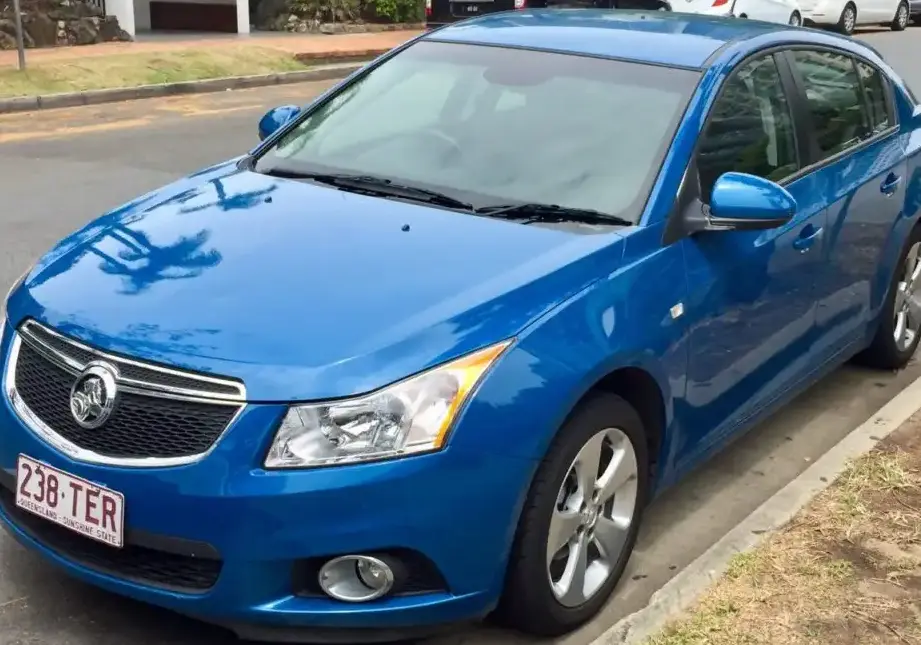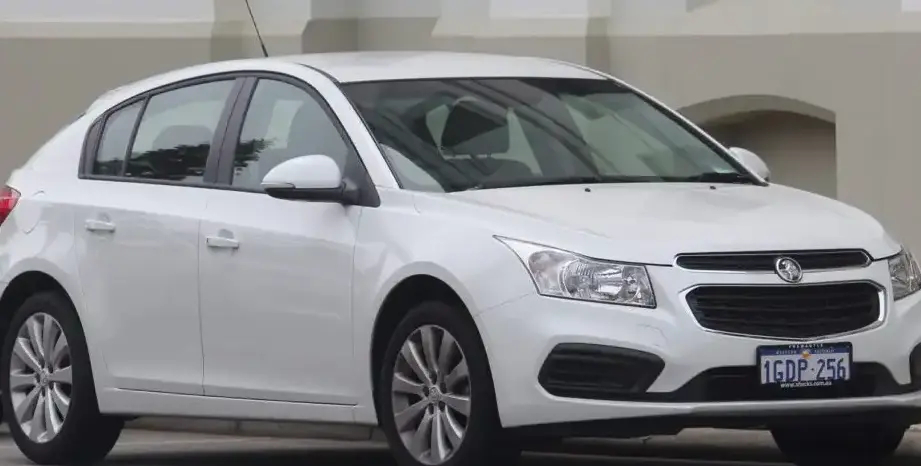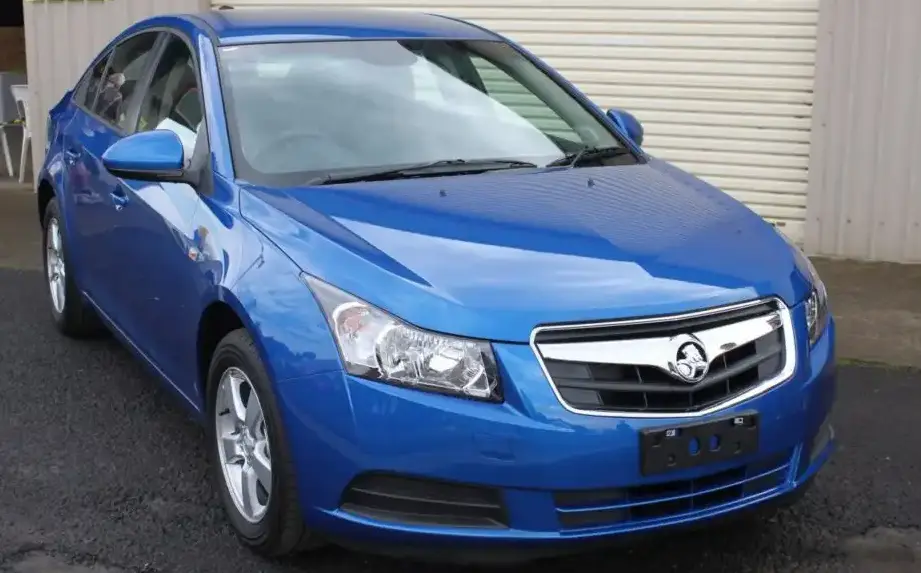
The Holden Cruze Sedan (JG) 1.8 ECOTEC, produced between May 2009 and March 2011, represented a key entry point into the Cruze range for the Australian market. Positioned as a mainstream compact sedan, it aimed to offer a balance of practicality, fuel efficiency, and affordability. This variant was part of the broader JG series, based on the Delta platform, and served as a crucial model in Holden’s attempt to compete in the highly contested small car segment. The 1.8-liter engine and five-speed manual transmission combination was designed to appeal to buyers prioritizing economy and ease of driving over outright performance.
Technical Specifications
| Brand | Holden |
| Model | Cruze |
| Generation | Cruze Sedan (JG) |
| Type (Engine) | 1.8 ECOTEC (141 Hp) |
| Start of production | May, 2009 |
| End of production | March, 2011 |
| Powertrain Architecture | Internal Combustion engine |
| Body type | Sedan |
| Seats | 5 |
| Doors | 4 |
| Fuel consumption (combined) | 7 l/100 km (33.6 US mpg, 40.4 UK mpg, 14.3 km/l) |
| CO2 emissions | 166 g/km |
| Fuel Type | Petrol (Gasoline) |
| Emission standard | Euro 4 |
| Power | 141 Hp @ 6200 rpm |
| Power per litre | 78.5 Hp/l |
| Torque | 176 Nm @ 3800 rpm (129.81 lb.-ft. @ 3800 rpm) |
| Engine layout | Front, Transverse |
| Engine Model/Code | A18XER |
| Engine displacement | 1796 cm3 (109.6 cu. in.) |
| Number of cylinders | 4 |
| Engine configuration | Inline |
| Cylinder Bore | 80.5 mm (3.17 in.) |
| Piston Stroke | 88.2 mm (3.47 in.) |
| Compression ratio | 10.5:1 |
| Number of valves per cylinder | 4 |
| Fuel injection system | Multi-port manifold injection |
| Engine aspiration | Naturally aspirated engine |
| Valvetrain | DOHC, DCVCP |
| Engine oil capacity | 4.5 l (4.76 US qt | 3.96 UK qt) |
| Coolant | 6.5 l (6.87 US qt | 5.72 UK qt) |
| Trunk (boot) space – minimum | 400 l (14.13 cu. ft.) |
| Fuel tank capacity | 60 l (15.85 US gal | 13.2 UK gal) |
| Permitted trailer load with brakes (12%) | 1200 kg (2645.55 lbs.) |
| Permitted trailer load without brakes | 695 kg (1532.21 lbs.) |
| Length | 4597 mm (180.98 in.) |
| Width | 1788 mm (70.39 in.) |
| Height | 1477 mm (58.15 in.) |
| Wheelbase | 2685 mm (105.71 in.) |
| Front track | 1544 mm (60.79 in.) |
| Rear (Back) track | 1558 mm (61.34 in.) |
| Minimum turning circle (turning diameter) | 10.9 m (35.76 ft.) |
| Drivetrain Architecture | The Internal combustion engine (ICE) drives the front wheels of the vehicle. |
| Drive wheel | Front wheel drive |
| Number of gears and type of gearbox | 5 gears, manual transmission |
| Front suspension | Independent, type McPherson with coil spring and anti-roll bar |
| Rear suspension | Coil spring, Torsion |
| Front brakes | Ventilated discs, 276 mm |
| Rear brakes | Disc, 268 mm |
| Assisting systems | ABS (Anti-lock braking system) |
| Steering type | Steering rack and pinion |
| Power steering | Hydraulic Steering |
| Tires size | 205/60 R16; 215/50 R17 |
| Wheel rims size | 6.5J x 16; 7J x 17 |
Powertrain & Engine Architecture
The heart of this Cruze variant was the A18XER 1.8-liter inline-four cylinder engine. This engine was part of Holden’s ‘ECOTEC’ family, known for its relatively lightweight construction and focus on fuel efficiency. It featured a dual overhead camshaft (DOHC) valvetrain with variable valve timing (DCVCP – Dual Continuous Variable Cam Phasing) to optimize performance and economy across the rev range. Fuel delivery was handled by a multi-port fuel injection system. The engine produced 141 horsepower at 6200 rpm and 176 Nm (129.81 lb-ft) of torque at 3800 rpm. The five-speed manual transmission was a standard offering, providing a relatively conventional gear ratio spread designed for everyday driving. The transmission was a front-wheel-drive configuration.
Driving Characteristics
The 1.8-liter Cruze with the five-speed manual offered a predictable and generally pleasant driving experience. While not particularly sporty, it provided adequate acceleration for typical urban and highway driving. The engine felt somewhat strained when pushed hard, particularly when fully loaded or climbing hills. The gear ratios were spaced to prioritize fuel economy, meaning frequent shifting was often required to maintain optimal power delivery. Compared to the later 1.6L diesel or the more powerful 1.8L turbocharged variants, this version lacked the low-end torque and overall responsiveness of those engines. However, it offered a smoother and quieter experience than the diesel, and was less complex and potentially more reliable than the turbocharged petrol engine.
Equipment & Trim Levels
The base model 1.8-liter Cruze typically came equipped with air conditioning, a basic audio system (usually with CD player and auxiliary input), power windows, and central locking. Safety features included dual front airbags, ABS brakes, and electronic stability control. Higher trim levels, such as the CDX, added features like alloy wheels, upgraded audio systems, cruise control, and automatic climate control. Interior upholstery was generally cloth, with a relatively simple dashboard layout. Optional extras included a sunroof, upgraded sound systems, and parking sensors.
Chassis & Braking
The Cruze JG utilized a McPherson strut front suspension setup with a coil spring and anti-roll bar, providing a comfortable ride quality. The rear suspension employed a torsion beam configuration, which was a cost-effective solution for compact cars. Braking duties were handled by ventilated discs at the front and solid discs at the rear. The ABS system provided enhanced braking control in emergency situations. The suspension tuning was geared towards comfort rather than sporty handling, resulting in a relatively soft and forgiving ride.
Market Reception & Comparison
The Holden Cruze 1.8-liter manual received mixed reviews. Critics generally praised its fuel efficiency and comfortable ride, but noted its lack of outright performance and somewhat bland interior design. Compared to rivals like the Toyota Corolla and Mazda3, the Cruze was often seen as offering a less refined driving experience. However, it was generally considered to be competitively priced and offered good value for money. Fuel economy figures of around 7.0 liters per 100 kilometers were typical, making it an attractive option for budget-conscious buyers. Reliability reports were generally positive, although some owners reported minor issues with the engine management system.
Legacy
The Holden Cruze 1.8 ECOTEC, while not a standout performer, played a significant role in Holden’s sales figures during its production run. The A18XER engine proved to be reasonably reliable, and parts availability remains good in the used car market. Today, these Cruzes are often found as affordable and practical transportation options. While they may not appeal to driving enthusiasts, they offer a comfortable and economical ride for everyday use. The simplicity of the 1.8-liter engine and five-speed manual transmission combination makes it a relatively easy and inexpensive vehicle to maintain, contributing to its continued presence on Australian roads.