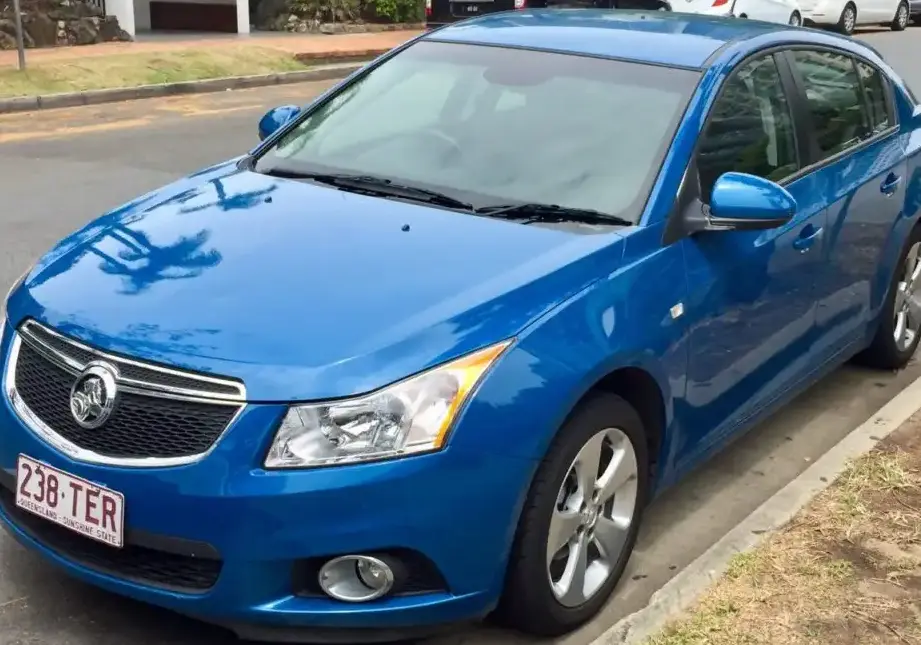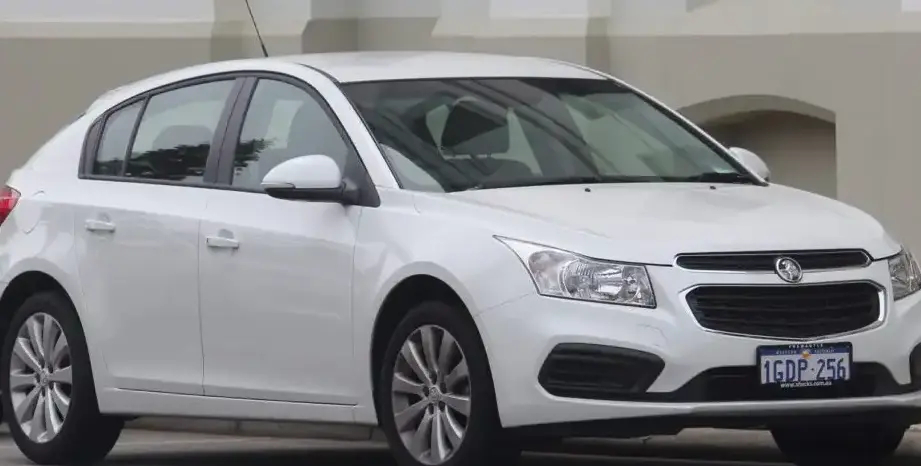
The Holden Cruze Sportwagon (JH) 2.0 TD, produced between December 2012 and December 2014, was a practical and fuel-efficient vehicle offered in the Australian market. Positioned as a mid-range variant within the JH series Cruze Sportwagon lineup, this model combined a turbocharged diesel engine with a six-speed automatic transmission, appealing to buyers who desired a balance of economy, performance, and versatility in a wagon body style. It was built on the global Delta II platform, shared with the Chevrolet Cruze and other General Motors vehicles. The Sportwagon body style was relatively uncommon in Australia, making the Cruze a notable choice for those needing increased cargo capacity.
Technical Specifications
| Brand | Holden |
| Model | Cruze |
| Generation | Cruze Sportwagon (JH) |
| Type (Engine) | 2.0 TD (163 Hp) Automatic |
| Start of production | December, 2012 |
| End of production | December, 2014 |
| Powertrain Architecture | Internal Combustion engine |
| Body type | Station wagon (estate) |
| Seats | 5 |
| Doors | 5 |
| Fuel Type | Diesel |
| Power | 163 Hp @ 3800 rpm |
| Power per litre | 81.6 Hp/l |
| Torque | 360 Nm @ 2000 rpm / 265.52 lb.-ft. @ 2000 rpm |
| Engine layout | Front, Transverse |
| Engine Model/Code | Z20S1 |
| Engine displacement | 1998 cm3 / 121.93 cu. in. |
| Number of cylinders | 4 |
| Engine configuration | Inline |
| Cylinder Bore | 86 mm / 3.39 in. |
| Piston Stroke | 86 mm / 3.39 in. |
| Compression ratio | 16.3:1 |
| Number of valves per cylinder | 4 |
| Fuel injection system | Diesel Commonrail |
| Engine aspiration | Turbocharger, Intercooler |
| Valvetrain | DOHC |
| Engine oil capacity | 5.4 l / 5.71 US qt | 4.75 UK qt |
| Coolant | 7.5 l / 7.93 US qt | 6.6 UK qt |
| Trunk (boot) space – minimum | 686 l / 24.23 cu. ft. |
| Trunk (boot) space – maximum | 1478 l / 52.2 cu. ft. |
| Fuel tank capacity | 60 l / 15.85 US gal | 13.2 UK gal |
| Permitted trailer load with brakes (12%) | 1200 kg / 2645.55 lbs. |
| Permitted trailer load without brakes | 750 kg / 1653.47 lbs. |
| Length | 4675 mm / 184.06 in. |
| Width | 1797 mm / 70.75 in. |
| Height | 1521 mm / 59.88 in. |
| Wheelbase | 2685 mm / 105.71 in. |
| Front track | 1544 mm / 60.79 in. |
| Rear (Back) track | 1558 mm / 61.34 in. |
| Drivetrain Architecture | The Internal combustion engine (ICE) drives the front wheels of the vehicle. |
| Drive wheel | Front wheel drive |
| Number of gears and type of gearbox | 6 gears, automatic transmission |
| Front suspension | Independent, type McPherson with coil spring and anti-roll bar |
| Rear suspension | Coil spring, Torsion |
| Front brakes | Ventilated discs |
| Rear brakes | Disc |
| Assisting systems | ABS (Anti-lock braking system) |
| Steering type | Steering rack and pinion |
| Power steering | Electric Steering |
| Tires size | 205/60 R16; 225/50 R17 |
| Wheel rims size | 6.5J x 16; 7J x 17 |
Powertrain & Engine Architecture
The Cruze Sportwagon 2.0 TD’s engine was the Z20S1, a 2.0-liter inline-four cylinder diesel. This engine employed a common rail direct injection system, injecting fuel directly into the combustion chamber at high pressure for improved efficiency and reduced emissions. A turbocharger with an intercooler boosted power output to 163 horsepower at 3800 rpm, and a substantial 360 Nm (265.52 lb-ft) of torque at 2000 rpm. The engine featured a double overhead camshaft (DOHC) valvetrain with four valves per cylinder, optimizing gas flow for enhanced performance. The six-speed automatic transmission was designed to complement the diesel engine’s torque curve. While not known for exceptionally quick shifts, it provided smooth and predictable operation suitable for daily driving.
Driving Characteristics
The 2.0 TD automatic Cruze Sportwagon delivered a comfortable and relaxed driving experience. The abundant low-end torque made it well-suited for commuting and highway cruising. Acceleration was adequate, though not sporty, with the automatic transmission prioritizing fuel efficiency. Compared to the manual transmission versions of the same engine, the automatic offered less driver engagement but greater convenience. Against higher-output petrol variants, the diesel lacked the same responsiveness, but it compensated with significantly better fuel economy. The automatic transmission’s gear ratios were tuned for efficiency, resulting in a quiet cabin at highway speeds.
Equipment & Trim Levels
The 2.0 TD automatic trim typically included standard features such as air conditioning, power windows, power mirrors, a basic audio system with USB connectivity, and alloy wheels. Safety features like ABS, electronic stability control, and multiple airbags were also standard. Higher trim levels, available as optional packages, added features like a touchscreen infotainment system, rear parking sensors, cruise control, and upgraded interior upholstery. Interior materials were of good quality for the price point, though not luxurious. The dashboard layout was functional and straightforward, prioritizing ease of use.
Chassis & Braking
The Cruze Sportwagon used a McPherson strut front suspension and a torsion beam rear suspension, providing a balance between ride comfort and handling. The front suspension incorporated a stabilizer bar to reduce body roll during cornering. Braking was handled by ventilated discs at the front and solid discs at the rear. The ABS system enhanced braking control in emergency situations. The steering was electrically assisted, offering light and precise steering feel. Tire sizes varied depending on the trim level, with 205/60 R16 and 225/50 R17 being common options.
Market Reception & Comparison
The Holden Cruze Sportwagon 2.0 TD was generally well-received by Australian motoring journalists as a practical and economical option. Critics praised its fuel efficiency and spacious cargo area, but some noted the automatic transmission could feel sluggish. Compared to other diesel wagons available in Australia, such as the Volkswagen Golf Wagon, the Cruze offered a more affordable price but lacked the same level of refinement. Fuel economy was a key selling point, consistently achieving figures in the region of 5.5-6.5 liters per 100 kilometers on the combined cycle. Reliability was considered average, with some reports of issues with the diesel particulate filter (DPF).
Legacy
The Holden Cruze, and specifically the 2.0 TD automatic Sportwagon, has become a common sight on the used car market in Australia. The Z20S1 diesel engine has proven reasonably durable, although regular maintenance, including DPF servicing, is crucial. The automatic transmission, while not known for sportiness, has generally held up well over time. Today, these vehicles represent an affordable and practical option for buyers seeking a fuel-efficient wagon with a decent amount of space. However, potential buyers should be aware of the potential for DPF-related issues and ensure the vehicle has been properly maintained.