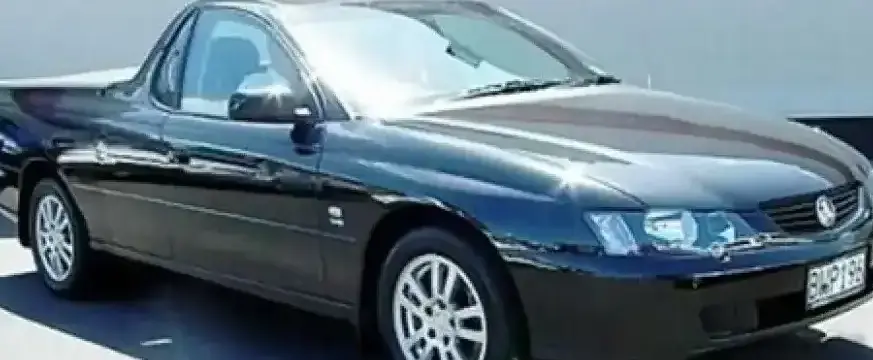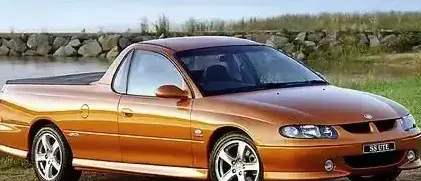
The Holden Ute I 3.8i V6, produced between 2000 and 2002, represented a significant offering in the Australian automotive market. As part of the first generation of the Holden Ute (based on the Commodore platform), this variant aimed to blend practicality with a degree of performance, appealing to both commercial users and those seeking a versatile vehicle for personal use. It occupied a mid-range position within the Ute I lineup, offering a step up in power and refinement compared to the base models, but remaining more accessible than the higher-performance V8 options. The Ute I was a crucial model for Holden, solidifying their presence in the popular Australian utility vehicle segment.
Technical Specifications
| Brand | Holden |
| Model | Ute |
| Generation | Ute I |
| Type (Engine) | 3.8i V6 (200 Hp) |
| Start of production | 2000 |
| End of production | 2002 |
| Powertrain Architecture | Internal Combustion engine |
| Body type | Pick-up |
| Seats | 2 |
| Doors | 2 |
| Fuel Type | Petrol (Gasoline) |
| Acceleration 0 – 100 km/h | 9 sec |
| Acceleration 0 – 62 mph | 9 sec |
| Acceleration 0 – 60 mph | 8.6 sec |
| Maximum speed | 200 km/h (124.27 mph) |
| Weight-to-power ratio | 7.3 kg/Hp, 137.9 Hp/tonne |
| Weight-to-torque ratio | 4.8 kg/Nm, 209.7 Nm/tonne |
| Power | 200 Hp @ 5200 rpm |
| Power per litre | 52.8 Hp/l |
| Torque | 304 Nm @ 3600 rpm (224.22 lb.-ft. @ 3600 rpm) |
| Engine layout | Front, Longitudinal |
| Engine displacement | 3791 cm3 (231.34 cu. in.) |
| Number of cylinders | 6 |
| Engine configuration | V-engine |
| Cylinder Bore | 96.5 mm (3.8 in.) |
| Piston Stroke | 86.4 mm (3.4 in.) |
| Compression ratio | 9.4:1 |
| Number of valves per cylinder | 2 |
| Fuel injection system | Multi-port manifold injection |
| Engine aspiration | Naturally aspirated engine |
| Engine oil capacity | 4.8 l (5.07 US qt | 4.22 UK qt) |
| Coolant | 10 l (10.57 US qt | 8.8 UK qt) |
| Kerb Weight | 1450 kg (3196.7 lbs.) |
| Fuel tank capacity | 80 l (21.13 US gal | 17.6 UK gal) |
| Length | 4861 mm (191.38 in.) |
| Width | 1794 mm (70.63 in.) |
| Height | 1448 mm (57.01 in.) |
| Wheelbase | 2731 mm (107.52 in.) |
| Front track | 1491 mm (58.7 in.) |
| Rear track | 1491 mm (58.7 in.) |
| Drivetrain Architecture | The Internal combustion engine (ICE) drives the front wheels of the vehicle. |
| Drive wheel | Front wheel drive |
| Number of gears and type of gearbox | 5 gears, manual transmission |
| Front suspension | Coil spring |
| Rear suspension | Coil spring |
| Front brakes | Ventilated discs |
| Rear brakes | Drum |
| Steering type | Steering rack and pinion |
| Tires size | 205/65 R15 |
Powertrain & Engine Architecture
The heart of the Ute I 3.8i V6 is Holden’s 3.8-liter (3791cc) naturally aspirated V6 engine. This engine, internally designated as the VK3800, was a mainstay of Holden’s lineup for many years. It featured a 90-degree V-configuration, two valves per cylinder, and a multi-port fuel injection system. The engine produced 200 horsepower at 5200 rpm and 304 Nm (224.22 lb-ft) of torque at 3600 rpm. The engine’s architecture was relatively simple and robust, contributing to its reputation for reliability. The 5-speed manual transmission was the standard offering, providing a direct connection to the engine’s power. The engine’s longitudinal mounting allowed for a front-engine, rear-wheel-drive configuration, a traditional layout for Australian utes.
Driving Characteristics
The 3.8i V6-equipped Ute I offered a balanced driving experience. While not as overtly powerful as the V8 models, the V6 provided ample torque for everyday tasks and hauling loads. Acceleration from 0-100 km/h took approximately 9 seconds, which was respectable for the time. The 5-speed manual transmission allowed drivers to keep the engine in its optimal power band, providing good responsiveness. The gear ratios were tuned for a blend of acceleration and fuel efficiency. Compared to the V8, the V6 offered a smoother, more refined driving experience, with less engine noise and vibration. The rear-wheel-drive configuration provided good handling characteristics, particularly when carrying a load.
Equipment & Trim Levels
The Ute I 3.8i V6 typically came equipped with standard features such as power steering, central locking, and an AM/FM radio. Interior upholstery was typically cloth, with a durable and practical design. Optional extras included air conditioning, power windows, and upgraded sound systems. The dashboard layout was functional and straightforward, prioritizing ease of use. The Ute I was available in a range of colors, and buyers could choose from various accessory options, such as tonneau covers and sports bars, to customize their vehicle.
Chassis & Braking
The Ute I utilized a body-on-frame construction, providing a robust and durable chassis. Suspension consisted of coil springs all around, offering a comfortable ride quality. The front suspension featured independent coil springs, while the rear suspension used a live axle with coil springs. Braking was handled by ventilated discs at the front and drum brakes at the rear. The braking system was adequate for most driving conditions, but lacked the stopping power of more modern systems. Steering was via a rack and pinion system, providing precise and responsive handling.
Market Reception & Comparison
The Holden Ute I 3.8i V6 was generally well-received by Australian buyers. Critics praised its blend of practicality, performance, and affordability. It offered a compelling alternative to the base model Utes, providing a noticeable increase in power and refinement. Compared to the V8 models, the 3.8i V6 was more fuel-efficient and easier to live with on a daily basis. However, some critics noted that the V6 lacked the outright performance of the V8. In terms of reliability, the 3.8i V6 engine proved to be very durable, with many examples still on the road today.
Legacy
The Holden Ute I 3.8i V6 remains a popular choice among enthusiasts and collectors. Its robust engine, simple mechanicals, and practical design make it a reliable and enjoyable vehicle to own. The 3.8-liter V6 engine is known for its longevity and relatively low maintenance costs. In the used car market, well-maintained examples of the Ute I 3.8i V6 command reasonable prices. The Ute I, and particularly the 3.8i V6 variant, represents a significant chapter in Australian automotive history, embodying the spirit of the country’s ute culture.